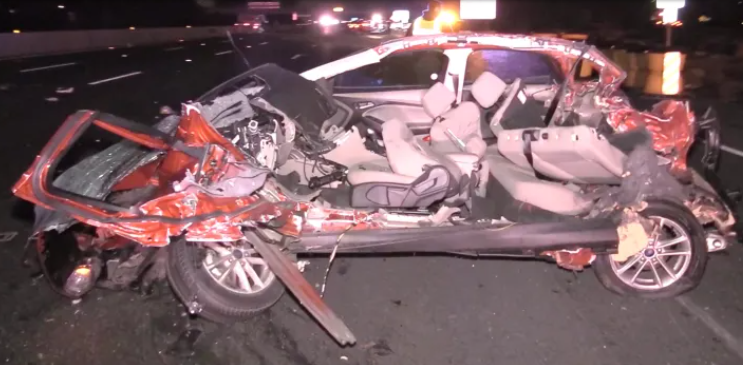
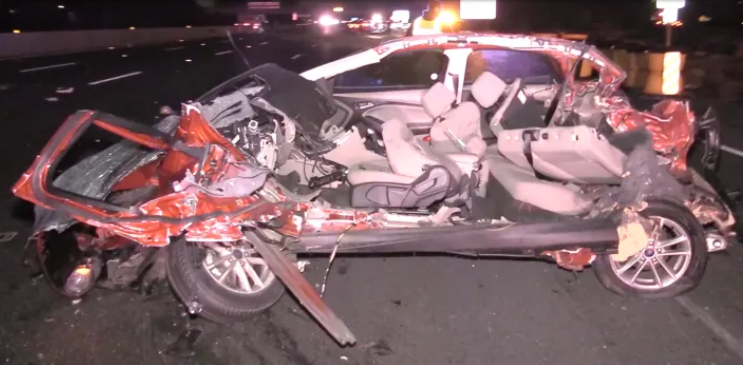
California apparently has won the DUI sweepstakes.
It’s a distinction by two studies based on national statistics — one conducted by the Florida-based Law firms of Anidjar and Levine, and the other by LendingTree, an online loan marketing firm.
The law firm study zeroed on the USA cities with the most DUI-related fatal crashes in 2025.
Three California cities made that list.
Fresno came in at No. 2, Oakland No. 5, and Sacramento No. 6.
LendingTree focused on DUI rates based on arrests.
A sobering six California cities made the top 10 nationally for having the highest DUI arrest rates.
San Jose secured the No. 2 spot, Sacramento No. 3, Fresno No. 5, Long Beach No. 7, Bakersfield No. 8, and Oakland No. 9.
Now, as the late Paul Harvey used to say, for the rest of the story.
Data compiled in 2024 by the Robert Wood Johnson Foundation and the University of Wisconsin Population Health Institute was analyzed to determine the ranking of “drunkenness” in 281 metro areas in the United States.
The study targeted the percentage of the population that reported either binge drinking or drinking heavily — meaning 4 to 5 drinks in a sitting or 15 or more drinks per week, respectively — during a 30-day period.
Not one California city made the top 20 list that was led by Green Bay in Wisconsin.
The top four heaviest drinking metro areas are in Wisconsin with seven of the top 10 in the Dairy State and 10 in the top 20.
As a side note, only two cities in the top 20 for drunkenness were not in the Midwest while 13 of the cities were either in Wisconsin, Minnesota, or North Dakota.
But then when look at alcohol spending per capita from economic data compiled by SmartAsset, those three states fill below the 2024 state average of $897.57.
Alaska topped the list at $1,249.76.
California came in at a surprising low 14th at $1,001.37.
Surprisingly low, given the taxes and general cost of doing business in the Golden State means beer, wine, and liquor cost more.
Now for cannabis.
Insider Monkey isn’t the University of Chicago when it comes to economic research, but they did use legal pot sales in cities of 45,000 or more that they divided the dollars spent on weed with the overall money spent based on state regulatory reporting.
Keep in mind, that various experts in government agencies place the black market at between 50 and 75 percent of all cannabis sales.
Based on per capita consumption, Los Angles in 2023 came in 13th among the top 30 cities in the United States with 10.1 grams annually.
Keep in mind, California is the largest recreational cannabis market in the United States with $5.1 billon in sales during 2023.
A quarter of the nation’s dispensaries are in California with 1,481 in Los Angeles County alone.
Los Angeles was the only California city on the list.
The City of Angeles was topped on the list by Cheyene, the Capital of Wyoming — also known as the Cowboy State.
The per capita weed consumption was 20.3 grams, or twice that of Los Angeles.
How they arrived at the figure really isn’t clear given the state hasn’t decriminalized marijuana.
That’s not the case with Connecticut where the No. 1 city for cannabis consumption is located, New Britian.
They had legal sales numbers to work with to pin the per capita cannabis consumption at 43.15 grams.
What does all of this mean?
The answer can be found in a line popularized by Mark Twain, “There are three kinds of lies: lies, damned lies, and statistics.”
Keep in mind “DUI” stands for driving under the influence although many assume that it means drunk driving and that’s it.
Cannabis can impair your driving. So can prescription drugs.
And, of course, so can most illegal drugs impair your reaction time and your ability to drive safely.
Based on the studies mentioned initially by the law firm and LendingTree, the statistics would lead you to believe California has a drinking problem.
But the per capita sales don’t seem to match the carnage.
Perhaps cannabis is the reason for the high DUI arrest rate and DUI related deaths.
Yet, it doesn’t seem that cannabis consumption stats bear that out.
But since the illegal alcohol market is miniscule compared to the black market for marijuana it would be difficult to hang the most responsibility on booze or pot.
And if you think it’s because California has too many cars, here’s another set of stats gleaned from the federal Bureau of Transportation Statistics.
California with 31.3 million registered vehicles has the most cars by far as Texas comes in with 23 million at No. 2.
But when it comes to vehicles per capita, California sinks down to 41st on the list at 0.81 vehicles per person.
Montana tops the list at 1.934 vehicles per person.
However, when it comes to registered licensed drivers per 1,000 driving age people overall, California is below the national average and in 37th place among the states with 861.
New Hampshire tops the list with almost everyone is licensed to drive.
Of course, the fun part is everyone tries to read in their own take on what all the statistics mean.
LendingTree concluded it was California’s nice climate and tough DUI laws that lead to so many arrests for driving under the influence.
Yet another law firm — this time the Shah Law Firm in Arizona — analyzed the states with the toughest DUI laws and California didn’t make the top 10.
What those top 10 states for tough DUI laws have in common is requiring all drunk driving offenders to have ignition interlocks on their vehicles after their first offense. California doesn’t require it until the second DUI to avoid suspension of their driving privilege.
There are no Arizona cities on the lists that California cities dominate.
Could it be LendingTree is wrong in their conclusion as to why California has so many DUI arrests is because the laws are “so tough” yet Golden State cities still rack up the DUI carnage.
Now for two straight-forward facts.
*Drunk driving deaths have seen a roughly 25% increase over the decade from 2014 to 2023
*In 2023, there were 12,429 alcohol-impaired driving fatalities in the United States, representing approximately 30 to 32% of all annual traffic-related fatalities. While fatalities fluctuate, they have risen by over 20% since 2019.
Those are based on raw numbers of DUI deaths and the country’s population provided by the Office of Traffic Safety and the National Highway Traffic Safety Administration.
The real question is what happened in 2020?
Could many of us developed an unhealthy compact with society due to the pandemic?
It’s a question that statistics can’t answer but if you see how we regard others as measured by how social media is used, there might be an answer in there somewhere.
Meanwhile, a small cottage industry will continue to come up with top 10 lists and all sorts of reasons for high DUI numbers and such without ever pinpointing something as obvious as the lack of personal accountability.
This column is the opinion of editor, Dennis Wyatt, and does not necessarily represent the opinions of The Bulletin or 209 Multimedia. He can be reached at dwyatt@mantecabulletin.com