Manteca’s new dog park and adjoining sidewalk along Eucalyptus Street might have been built for at least 20 percent less than the $235,000 price tag the city paid.
How, you might ask? The same way the city’s new neighborhood parks are built.
Manteca’s neighborhood parks are put in by developers and turned over to the city. If the city did the work — or contracted it out — labor costs would run 20 to 30 percent higher due to a state requirement that when public funds to any degree are spent on a project prevailing wages must be paid.
The best example of a developer working with a city to provide a public project was the remodel of the former ACE Hardware store in Ripon as a new library for that community.
Instead of paying growth fees per se McRoy Wilbur Communities directly paid for the remodeling. It was part of a deal that allowed them to build homes.
The community park fee on a new home in Manteca is $3,840. Let’s say a developer not paying prevailing wages could built the dog park for $195,000. That means instead of paying the community park fee on 51 homes the developer would build the dog park instead.
Why would a developer want to do this given it is a zero sum situation as they are still paying the same amount of money? First, there is goodwill. But more important it is enhancing Manteca as a place where they can keep selling homes down the road.
As it is now community park fees are collected and stockpiled for years before they are spent. Meanwhile the promise of what those fees would bring to new homebuyers and residents are going unkept.
The advantages for the city are significant. Interest earned on money kept in relatively safe havens that growth fees are required to be placed until such time the city spends the money can never match construction inflation. The value of the money the city collects erodes in purchasing value. It can get projects in place sooner as well as get about 20 percent more bang for the buck.
Now let’s think out of the box a bit more.
What if Manteca built a branch library and teen center mirroring the Lathrop Generations Center either at Woodward Park where tennis courts were supposed to go or at one of the parks proposed as part of Griffen Park — some 1,000 plus homes a group headed by Bill Filios are pursuing further south? A teen center and an expanded library system where among the larger desires culled from community surveys conducted on behalf of the city. The community park fees from 1,000 homes would generate $3.84 million for projects built at prevailing wages. A developer built facility that is then turned over the city possibly get the city the equivalent of a $4.5 million facility they didn’t have to pay prevailing wages.
And if developers were reluctant to do something that would financially leave them whole, the city could always “bill” the project at the prevailing wage and apply applicable fees toward it with an agreement of anything saved the developer could keep 50 percent of the savings.
As an example let’s say there is a parks facility project that costs $1,152,000. A builder has 300 lots he wants to develop that collectively generates $1,152,000 based on a $3,840 per home community park fee.
Since the developer is not paying prevailing wages, the work could get done for 20 percent or $230,000 less. If that is the case, the developer gets to keep $115,000 while the city saves $115,000 to go toward another parks project.
The developer saves $115,000 and gets goodwill. And if the amenity being built is located on a park within the developer’s project, on the edge of it, or fairly close by they get an additional selling tool to lure new home buyers.
The city gets the parks project built years ahead of schedule and at a lower cost. The city also gets goodwill for the timely development of amenities.
It’s not that the development community hasn’t proposed such arrangements only to have myopic city leadership swat them down. Toni and Bob Raymus in the early planning stages of Oleander Estates were willing to supersize a neighborhood park and build a facility that would have double duty as a second Boys & Girls Clubhouse as well as small community center of sorts in lieu of community park fees. The thought was to have the non-profit run it as well as oversee the use of the community center aspect so the city general fund wouldn’t occur any operating expenses per se.
They saw a need for an after school and summer program that was supervised south of the 120 Bypass to keep kids out of mischief. They also came up with a way to make it work and cost the city next to nothing for the ongoing operations. The city staff labored mightily to find 101 ways why it wouldn’t work.
More than a decade later with the area south of the 120 Bypass is posed to have 60 percent of the city’s population by 2030 if not sooner, there is no such amenity on the horizon.
Go check out the Ripon Library. Then ask your elected officials why Manteca can’t forge such an amicable relationship with developers for the benefit of everyone.
Park projects dont have to take 99 years


Latest
-
 Risky behavior: The person doing it needs to assume part or all of the responsibility for the consequences
 -
 The real miracle is the Bulletin didn’t look like a newspaper version of 52-card pickup
 -
 Enough of rolling flash mobs & society thinking ‘group rides’ taking over Manteca streets is 1990s innocence
 -
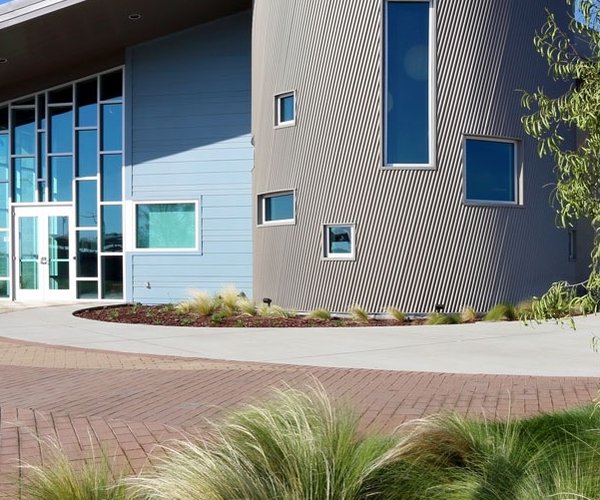 Listen to Lackey: Councilwoman makes a strong case for weighing need for decentralized community facilities