Sonny Bono died in 1998 doing something inherently dangerous.
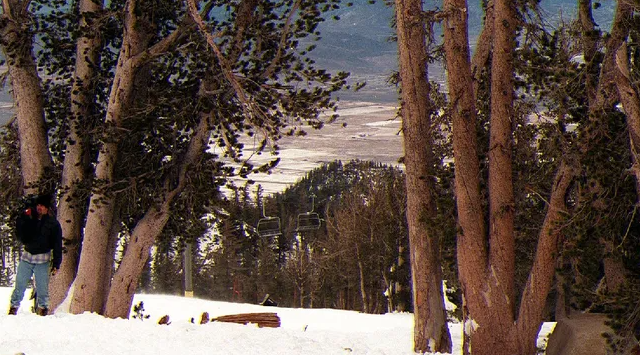
The 62 year-old congressman and former pop star of the act known as Sonny & Cher was skiing downhill at Heavenly Ski Resort when he slammed into a tree.
His death came a year after, 39 year-old Michael Kennedy — the son of the late Senator Robert F. Kenndy — also skied into a tree. He did so while playing a game of football on skis with family members at Copper Bowl Ski Run in Aspen, Colorado.
Last year, 50 people died while 63 ended up with “catastrophic injuries” such as broken necks or backs while skiing in the United States.
There are 150 people, on average, killed each year around the globe by avalanches with most of them dying while skiing.
The United States’ annual avalanche death count is 27.
Last month, at least 12 skiers died in California.
There were nine killed in the avalanche near Castle Peak, a back country ski area south of Soda Springs Ski Resort. Two died several weeks apart at Northstar. Another died at Mammoth Mountain.
There has been some grumbling about ski resorts over the years not being regulated enough to ensure optimum safety.
In reality, how do you regulate high risk undertakings?
It is one thing to pin airlines to the wall when it comes to safety regulations.
But how far should the government go in regulating what happens when people jump out of perfectly good airplanes?
There are many who believe the deadliest parachuting center can be found in the 209’s own backyard at Highway 99 at the Lodi Airport.
The Sacramento Bee in December 2023 reported there had been 28 skydiving deaths at the Lodi Airport since 1985 including one woman who slammed into a big rig as it was driving on Highway 99.
Clearly, sky diving and skiing have built in risks.
Courts have consistently upheld liability waivers and agreed that such activities as sky diving and skiing are inherently dangerous.
As a result, those trying to sue ski resorts or skydiving centers have extremely tough times prevailing.
And unless something is deliberate or wantonly careless, it is reasonable the outcome for plaintiffs is next to none in lawsuits.
Deliberately participating in an activity that has a high risk means just that — an individual is deliberately taking a high risk.
That said, we have evolved as a society seemingly dedicated to eliminating the risks that come with life and certain behaviors.
It is reflected in insurance and health care costs.
There was a time when routine medical costs such as checkups, office visits for garden variety illnesses, and such were not covered by insurance.
Health costs once upon a time were relatively low as were insurance premiums.
But as more and more routine costs were being covered in part by insurance, the dynamics changed.
Add to that the belief that everything from birth to death should be risk free and you’ve set the stage for out of control costs.
Childbirth in the 1800s was extremely risky — although not as risky as in previous centuries — with maternal mortality rates often ranging between 1 in 100 to 1 in 200 births.
The Centers for Disease Control reported on March 4 that the United States maternal mortality rate in 2024 was 17.9 deaths per 100,000 live births.
To reflect the realty of the 19th century, the maternal mortality rate in 2024 would need to have been between 1,000 and 2,000 deaths per 100,000.
Advances in prenatal care and delivery have clearly reduced the risk. But it hasn’t elininated risk.
There are a number of experts that note the first week of life and the last week of life are the most expensive in a typcial person’s life.
And while a lot of money is spent when it comes to medical care surrounding birth, it hasn’t been able to eliminmate all deaths. Resulting lawsuits because of many of those deaths have added to the cost.
There is a lot of agreement that certain behaviors — drug use, excessive drinking, consistently overindulging, cigarette smoking, and such — can signficantly increase the odds of serious health issues.
Yet we demand inusrance coverage be robost enough to cushion the expense of behavior that is risky to our health and general overall well-being yet cost us next to nothing whether it is inurance premiums or co-payments.
We exceed posted speed limits and then when we ram into roundabouts, we sue as if excessive speed and not watching where one was driving weren’t the real issue.
Snow conditions — especially in mountainous terrain — are always changing.
Climate change, the go-to bogeyman that apparently absolves everyone of bad decision making, has nothing to do with dying in an avalanche, or simply skiing.
Snow conditions are fluid. It can be unpacked, iced over, or covering something that can kill.
Those that die in floods that happen in desert slot canyons or designated floodplains die because of bonehead decisions.
If you don’t build on a river’s edge or in a floodplain, your odds of dying in a flood drops significantly.
As for desert slot canyons, people repeatedly are warned not to go into them if there is any rain in the forecast.
There were avalanche warnings in the Castle Peak area yet people still skied into the back country.
It is a form of gambling to not play it safe.
It is extremely risky to stand on the edge of Taft Point 3,000 feet above Yosemite Valley to take selfies given you are standing on slick granite. Yet a lot of people do that.
And when someone goes over the edge to their death, there are those that criticize the National Park Service for not putting up guard rails.
Life is full of risks.
We have laws that make it illegal to text and drive for obvious reasons but people still do it.
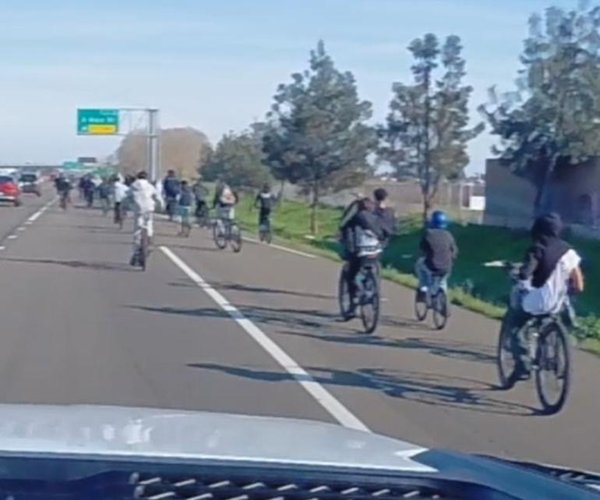
Manteca has made considerable investments in making bicycling safer.
They range from standard bike lanes between two parallel white lines and high profile green pavement markings to the separate bridge crossing of the 120 Bypass for pedestrians and bicyclists alike.
Yet a number of bicyclists — and motorists for that matter — ignore such markings and improvements as well as the rules of the road codified in the California Vehicle Code.
Life is risky.
That said, if you engage in behavior that is beyond reasonable everyday risks — hiking solo in Death Valley in the summer heat, jumping out of perfectly good airplanes from 10,000 feet, or skiing downhill at between 10 and 40 mph for most recreational skiers — to try to assign blame to someone else if something goes wrong is just that. Wrong.
This column is the opinion of editor, Dennis Wyatt, and does not necessarily represent the opinions of The Bulletin or 209 Multimedia. He can be reached at dwyatt@mantecabulletin.com