No, Californians aren’t enthralled with billionaires.
But they do have a healthy skepticism of taxes.
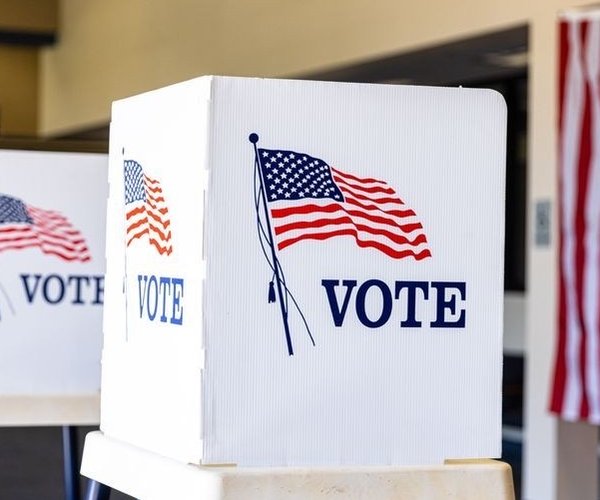
That is the correct way to read the results of Proposition 40, the so-called billionaires tax, and Proposition 42, the board brush protection for wealth, 401(k) and investment accounts, as well as personal property.
The running count on Thursday had Proposition 40 fading faster than an ice cube on the pavement at high noon on July Fourth in Death Valley while Proposition 42 was as solid as a rock.
Bernie Sanders, Zohran Mamdani, et al are likely aghast that California — that everyone seems to believe is deep blue with clear socialism streaks when it comes to health care — didn’t stick it to Mark Zuckerberg and other billionaires.
That’s because they see “the fight” in black and white terms, or more accurately, in blue versus red.
That isn’t the state that Gavin Newsom governs nor is it the state that Xavier Becerra will govern.
California is not pure blue. It’s varying shades of blue. It runs the spectrum from deep navy blue to sky blue to turquoise.
Golden State Republicans clearly aren’t one shade of red either.
But decisions for at least the last 16 years in Sacramento have all come from within the blue spectrum.
Paint Newsom with all the blue you want, but when push came to shove he has been a lighter shade of blue.
It’s because at the end of the day he has to govern and California can’t run up a deficit.
If we did and we mirrored the benchmark the federal government just reached, we’d have a debt equal to 100 percent of the state’s gross annual product which is now $4.297 trillion.
It is why after extending free healthcare to all immigrants regardless of their legal status, Newsom switched directions when the state was staring down a financial black hole.
So why did California voters act as if they were channeling the late Howard Jarvis?
It may have something to do with the fact 55.3 percent of all Californians are homeowners.
All homeowners pay property taxes.
Yes, a one-time tax on billionaires’ wealth that would likely inspire more one-time taxes is not a property tax.
But here’s the rub. Almost all taxes Californians pay don’t register.
Sales tax doesn’t unless you buy a car or a big ticket item like a boat every six years.
Most don’t really notice income tax taken before paychecks are issued.
And we don’t often realize the taxes we pay that are collapsed into the price of retail products that companies along the way pay before we make our purchase or the sales and gas tax collapsed into the price of a gallon of gasoline.
But once a year, homeowners get a clear picture off the impact of taxes on their pocketbooks when property tax bills are mailed.
In Manteca, that runs the gamut from houses valued at $200,000 to $800,000 that results in a basic annual property tax bill of $2,000 to $8,000 before bond repayments and — if there are any — community facilities district fees are tossed in.
As a side note, that $2,000 to $8,000 is split roughly 10 ways between various government entitles with the City of Manteca getting between 15 and 18 percent depending upon the year the property a house sits in was annexed.
While not all homeowners are an automatic no on any form of tax, the fact they pay property taxes and are billed for them once a year definitely gets their attention.
There are a lot of legitimate reasons to view the billionaire’s tax as a bad idea.
The most obvious is if the door is opened to “one-time” taxes there will be more “one-time” taxes.
But who cares? They’re billionaires, right?
Taxing “wealth” — that includes the value of stock at a given time — does not reflect income until it is converted to cash. Stock can crater and become worthless or they can soar and make people millionaires and billionaires on paper that isn’t cold cash until it is sold.
That is particularly true of tech start-up stocks that have been fueling surges in state spending since the 1960s through taxes in capital gains.
The solution to the state’s wild swings in revenue is to replace the capital gains tax with another tax.
It would have to be a tax that is based on stability. That means make taxes on the masses.
It might sound a bit simplistic, but California’s notoriously high housing prices coupled with the paying of property tax pain clearly delineated and in a lump sum, makes many Californians whose wealth is approaching $1 million or so between their home’s inflated value, 401k, and other big ticket items such as vehicles or stock investments leery of new taxes.
As such, homeowners are among those that can be counted on to almost always vote.
They’re not an automatic no on taxes but they require a lot of solid convincing.
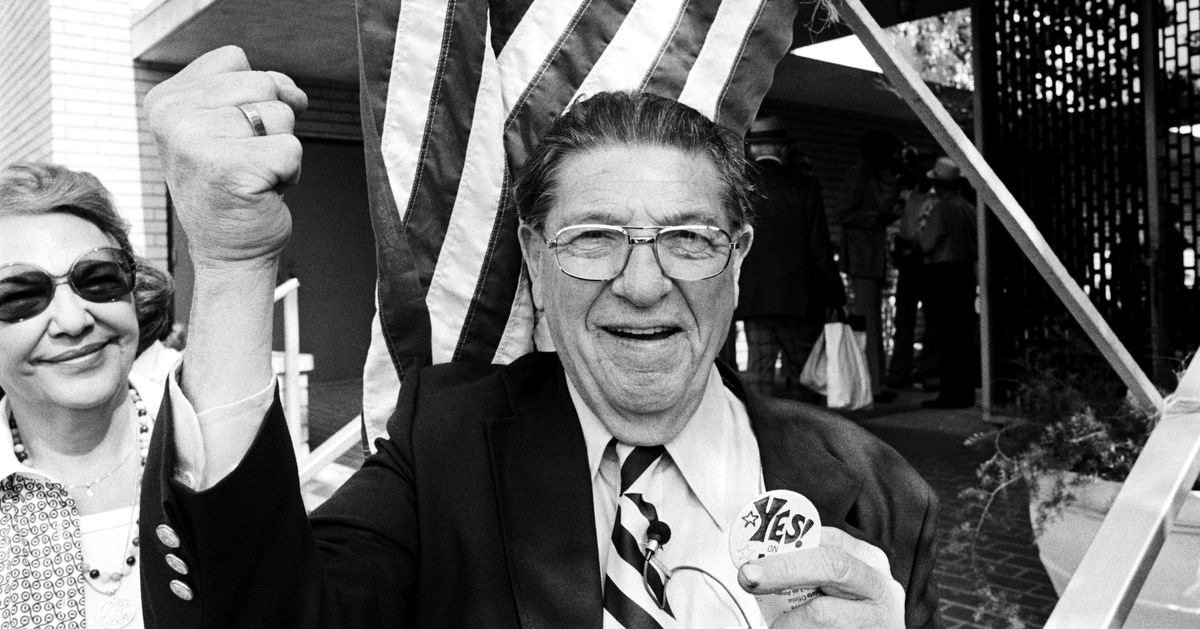
The caricature of a curmudgeonly old man they are more likely to follow is Howard Jarvis and not Bernie Sanders.