There was a time you could look forward to 8:01 p.m. on the first Tuesday of November during even numbered years.
It meant the political bickering that started when the campaign season “officially began” on Labor Day had reached a crescendo hours earlier and was deflating rapidly with the polls closing.
Typically, by sometime after midnight the tabulation of the vote would be far enough along to make it clear who the winner would end up being. If not, the results were clear by dawn’s early light the next day with the occasional race being a cliff hanger for a day or two.
They’d be no more appeals for political contributions for months to come.
The political posturing would give way to the holidays and the sometimes uncivil exchange between supporters of one side engaging seemingly non-stop with the other side was in the rear view mirror just like the summer wind.
Not anymore.
We live in a world where Halloween decorations and costumes go on sale as the last embers of Fourth of July fireworks are spiraling earthward and the Christmas retail push ramps up even before the back-to-school sales are completed.
Is anyone really surprised that campaign and political rhetoric isn’t given a rest?
It may have been a shocker for that to happen in the days when you could only access cash from your bank account Monday through Thursday from 10 a.m. to 3 p.m. and as late as 6 p.m. on Friday, the universal “pay day.”
When we can now shop for groceries, clothes, or what every 24/7, 365 days a week why would anyone be astonished about how the same devices that allow us to do that also have become a vessel for non-stop politicking?
Even during the Revolutionary War, Civil War, and World War II people had to give it a rest to devote energy to other tasks such as making sure their families were fed and clothed.
Has politics become dirtier?
Don’t read history books that are slightly sanitized and seen through the prism of a rearview mirror or brittle pages of aging newspapers from as far back as the 18th century that had been tucked away inside of a family heirloom generations ago.
It might surprise one to discover we’re not special. Animosity, innuendo, outright lies, character assassination, violent threats, over the top rallies channeling a piranha feeding frenzy, and Joe Isuzu-style political pitchmen today known as campaign spokesmen has always been part of the political landscape.
What changed? The answer is simple. What can be used for good things can also usually be used for bad things.
The slippery slope of mass communications starting with the printed word and gained momentum through the ages with newspapers, then radio, TV, the Internet, and social media has expanded reach.
A public murder in Salem, Mass in 1693 took hours to reach Boston, days to reach New York, weeks to reach Savannah, and months to reach London.
Now it can reach all those places and anywhere on the globe with a reliable internet connection in real time.
In doing so, any sense of context, reflection, or even distance disappears.
In a way, that is a good development for its ability to avoid despicable acts from being buried. But, for want of a better term, gossip — another human shortcoming that is lower on the scale than despicable but can easily mimic it — has gone along for the ride.
So, here we are, Tuesday, Nov. 3, 2026.
Thank goodness the campaigning and political infighting is over, but don’t be fooled.
Within hours of the polls closing, it will be back and as nasty as ever.
In a way, our demand to bank, shop, and vote with ease is a contributing factor.
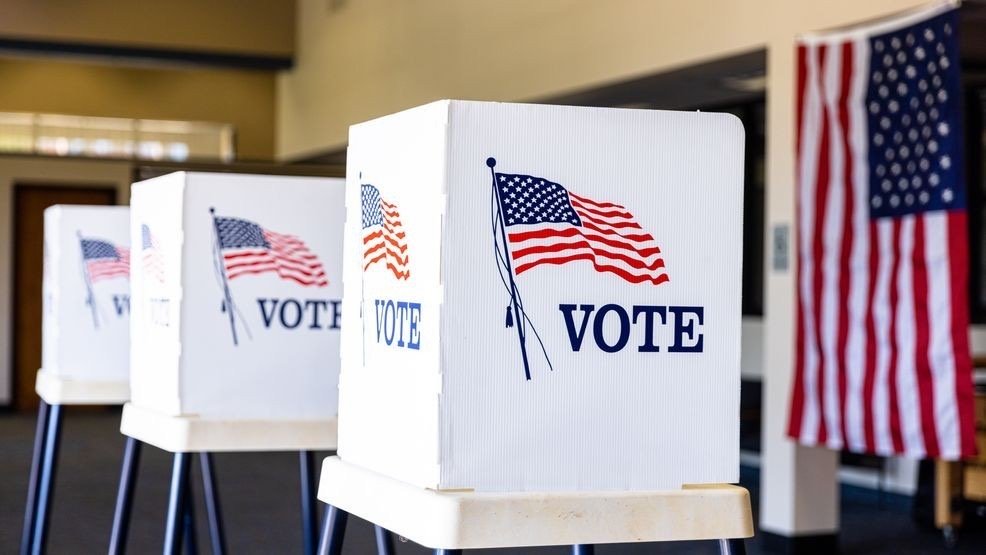
Prior to universal voting by mail, in excess of 90 pendent of the votes cast in California, as an example, where done in person.
It was less than 12 percent in the June primary in San Joaquin County.
The count takes longer because all of those mail-in ballots need to be verified against signatures of registered voters, a process that happens on the spot when someone votes in person.
This is not meant to be an argument against mail-in voting. Far from it.
It is simply to point out the labor intensive process of trying to match signatures of voters against the 415,611 registered in San Joaquin County against ballots received in the mail as opposed to doing so when those same voters cast their ballots in person at assigned precincts throughout the county.
But because the “winner” isn’t officially declared by FOX, CNN, ABC, CBS, NBC, AP, or whatever abbreviations of a media outlet within five hours of the polls closing, people start yelling fraud.
In reality, if almost complete results are announced within five hours after the balloting ends when 92 percent of the population votes by mail, then fraud is likely an extremely strong possibility.
A little bit of patience and perspective from how processes unfold under rules put in place to foster law and order among 341 million Americans can work miracles in solving the perceived shortcomings of the world.