We need to jettison the assumption the Manteca Dream is to build neighborhoods where an RV can be parked at every home.
Also needing to be given the old heave-ho is that the equivalent of a family owning the inventory of a small used car lot eing able to park in a driveway as well as in front of a house.
It requires wide residential streets and bigger lots.
And that’s not sustainable for a number of reasons.
It doesn’t make a neighborhood more livable.
It encourages higher speeds.
It makes streets less safe to cross on foot.
It consumes more land and as such adds to the cost of housing.
It increases maintenance costs as more pavement equates to more asphalt to maintain.
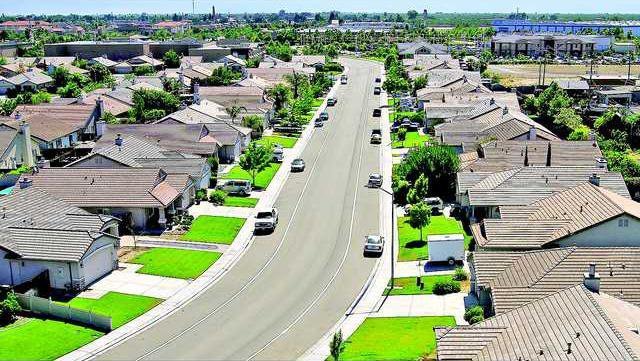
Take a look at a typical tract neighborhood with 6,000 square foot or larger lots.
What is the dominant feature?
It’s the streets.
Look at older neighborhoods.
Cars don’t dominate.
Yes, there are often as many parked on the streets and in driveways as newer tract developments but their importance is more to scale.
The older neighborhoods have the vibe they exist primarily for people and not primarily to accommodate their cars.
Abandoning the wide Missouri approach in post 1970s development patterns when it comes to street width and how much consideration is given to nuances tied to parking vehicles and getting them in and out of neighborhoods comes at a high price.
It creates heat islands.
It is counterintuitive to what neighborhoods are named for — neighbors.
Giving wide berth to cars has placed wider wedges between neighbors not just in distance but by the de facto abandoning of sidewalks as an integral part of moving people.
The old-fashioned front porch people actually used as an extension of their living spaces that encouraged intermingling with neighbors and those passing by has been driven to the brink of extinction due to the homage paid to 4,000 pounds on four wheels.
No one is saying get rid of cars or that they should be treated as poison.
It’s just that their use needs to be scaled to a neighborhood and not the other way around.
The musings at this week’s planning commission meeting inferring reducing parking space for an apartment complex consisting of one and two bedroom units for a project designed to capitalize as much as one possibly can in Manteca not to use a car in order to do everything was telling.
It was so because it made some wild assumptions that do not necessarily apply to today’s realties.
The inferred concern was where would someone renting an apartment that had an RV and more than two vehicles park them?
Apartment dwellers — or those who may rent or buy lower end “at-market” newer housing — usually can’t afford to own an RV.
And if they did, there are these modern-day inventions called RV storage facilities they could pay to park them at instead of adding to the ambiance of a neighborhood.
Yes, RV parking is allowed on residential property that meets certain conditions in Manteca.
But the bottom line is not everyone is going to own an RV, and therefore cookie cutter lot developments that universally provide lots for them adds unnecessary cost and helps hasten the conversion of farmland and open space.
And if you have an RV and you don’t want the expense of storing it, then simply don’t buy or rent a home that can’t legally accommodate them onsite.
Rest assured, someone who is going to sink a cool million dollars plus in developing a small scale apartment complex not only is going to abide by city rules but can’t afford not to.
Although you can find exceptions in significantly older and equally small apartment complexes that are “junked” up with cars, it is not the norm.
The reptilian response that cars essentially must guide planning and development and not the other way around has a ripple effect.
Back in 2005, new at-market housing in Manteca got to the point almost 100 percent of it was being bought by those supported with more robust Bay Area paychecks as opposed to what could be earned in this side of the Altamont Pass.
Elected leaders pushed for new housing those who worked here could afford.
Developers were struggling to do so based on Manteca’s development standards at the time.
Florsheim Homes, working with city staff, came up with a neighborhood where the prices could be lower without suffering quality.
It required changing established development patterns, much like new rules Manteca is now implementing that will allow four and five story multiple family projects.
When it got to the council, then councilman Jack Snyder did not like what he saw.
Smaller lots were only two cars could park on the street in front of the home.
”Stacked” parking in two-car garages with parking bumper-to-bumper and not side-by-side.
The inability to park RVs in the side yard.
Shallower front yards.
Ironically, it was almost a mirror of the basic concept of the house he cherished and raised a family in the 200 block of Poplar Avenue.
Although Snyder was skeptical, he dropped his biting criticism and joined his fellow council members in approving the neighborhood when it was explained that overall design of the subdivision would bring down the selling price due to increases density.
And you know what?
It worked.
Florsheim was able to build homes that — at least through the initial 40 units that were tracked — almost a third were able to be bought by households 100 percent dependent on income earned in the valley.
The bottom line is higher density works to keep housing more affordable and neighborhoods are made more livable by relaxing our death grip on steering wheels.
Yes, it doesn’t look like Manteca circa 1970 or even circa 2020.
But if we want what we say we want — reasonable housing prices, households not jamming the streets every time a member of it wants to go somewhere, and a better quality of life— the same-old, same-old won’t work for much longer as we close in on 100,000 of us.
Therefore, should Manteca be a community of people or a community of cars?
It is not a rhetorical question.
This column is the opinion of editor, Dennis Wyatt, and does not necessarily represent the opinions of The Bulletin or 209 Multimedia. He can be reached at dwyatt@mantecabulletin.com
We need to jettison the assumption the Manteca Dream is to build neighborhoods where an RV can be parked at every home.
Also needing to be given the old heave-ho is that the equivalent of a family owning the inventory of a small used car lot eing able to park in a driveway as well as in front of a house.
It requires wide residential streets and bigger lots.
And that’s not sustainable for a number of reasons.
It doesn’t make a neighborhood more livable.
It encourages higher speeds.
It makes streets less safe to cross on foot.
It consumes more land and as such adds to the cost of housing.
It increases maintenance costs as more pavement equates to more asphalt to maintain.
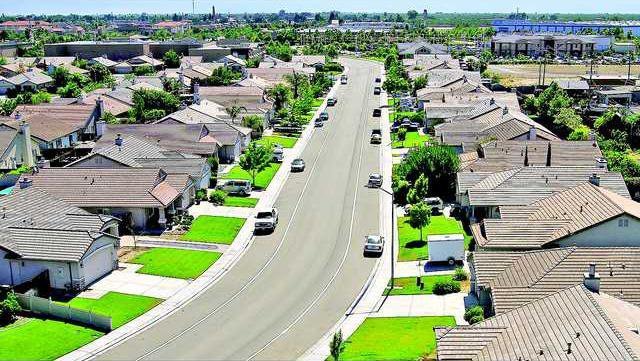
Take a look at a typical tract neighborhood with 6,000 square foot or larger lots.
What is the dominant feature?
It’s the streets.
Look at older neighborhoods.
Cars don’t dominate.
Yes, there are often as many parked on the streets and in driveways as newer tract developments but their importance is more to scale.
The older neighborhoods have the vibe they exist primarily for people and not primarily to accommodate their cars.
Abandoning the wide Missouri approach in post 1970s development patterns when it comes to street width and how much consideration is given to nuances tied to parking vehicles and getting them in and out of neighborhoods comes at a high price.
It creates heat islands.
It is counterintuitive to what neighborhoods are named for — neighbors.
Giving wide berth to cars has placed wider wedges between neighbors not just in distance but by the de facto abandoning of sidewalks as an integral part of moving people.
The old-fashioned front porch people actually used as an extension of their living spaces that encouraged intermingling with neighbors and those passing by has been driven to the brink of extinction due to the homage paid to 4,000 pounds on four wheels.
No one is saying get rid of cars or that they should be treated as poison.
It’s just that their use needs to be scaled to a neighborhood and not the other way around.
The musings at this week’s planning commission meeting inferring reducing parking space for an apartment complex consisting of one and two bedroom units for a project designed to capitalize as much as one possibly can in Manteca not to use a car in order to do everything was telling.
It was so because it made some wild assumptions that do not necessarily apply to today’s realties.
The inferred concern was where would someone renting an apartment that had an RV and more than two vehicles park them?
Apartment dwellers — or those who may rent or buy lower end “at-market” newer housing — usually can’t afford to own an RV.
And if they did, there are these modern-day inventions called RV storage facilities they could pay to park them at instead of adding to the ambiance of a neighborhood.
Yes, RV parking is allowed on residential property that meets certain conditions in Manteca.
But the bottom line is not everyone is going to own an RV, and therefore cookie cutter lot developments that universally provide lots for them adds unnecessary cost and helps hasten the conversion of farmland and open space.
And if you have an RV and you don’t want the expense of storing it, then simply don’t buy or rent a home that can’t legally accommodate them onsite.
Rest assured, someone who is going to sink a cool million dollars plus in developing a small scale apartment complex not only is going to abide by city rules but can’t afford not to.
Although you can find exceptions in significantly older and equally small apartment complexes that are “junked” up with cars, it is not the norm.
The reptilian response that cars essentially must guide planning and development and not the other way around has a ripple effect.
Back in 2005, new at-market housing in Manteca got to the point almost 100 percent of it was being bought by those supported with more robust Bay Area paychecks as opposed to what could be earned in this side of the Altamont Pass.
Elected leaders pushed for new housing those who worked here could afford.
Developers were struggling to do so based on Manteca’s development standards at the time.
Florsheim Homes, working with city staff, came up with a neighborhood where the prices could be lower without suffering quality.
It required changing established development patterns, much like new rules Manteca is now implementing that will allow four and five story multiple family projects.
When it got to the council, then councilman Jack Snyder did not like what he saw.
Smaller lots were only two cars could park on the street in front of the home.
”Stacked” parking in two-car garages with parking bumper-to-bumper and not side-by-side.
The inability to park RVs in the side yard.
Shallower front yards.
Ironically, it was almost a mirror of the basic concept of the house he cherished and raised a family in the 200 block of Poplar Avenue.
Although Snyder was skeptical, he dropped his biting criticism and joined his fellow council members in approving the neighborhood when it was explained that overall design of the subdivision would bring down the selling price due to increases density.
And you know what?
It worked.
Florsheim was able to build homes that — at least through the initial 40 units that were tracked — almost a third were able to be bought by households 100 percent dependent on income earned in the valley.
The bottom line is higher density works to keep housing more affordable and neighborhoods are made more livable by relaxing our death grip on steering wheels.
Yes, it doesn’t look like Manteca circa 1970 or even circa 2020.
But if we want what we say we want — reasonable housing prices, households not jamming the streets every time a member of it wants to go somewhere, and a better quality of life— the same-old, same-old won’t work for much longer as we close in on 100,000 of us.
Therefore, should Manteca be a community of people or a community of cars?
It is not a rhetorical question.
This column is the opinion of editor, Dennis Wyatt, and does not necessarily represent the opinions of The Bulletin or 209 Multimedia. He can be reached at dwyatt@mantecabulletin.com