
It is not fiscal mismanagement that has gotten Manteca services and amenities behind the proverbial “eight ball” as some see it.
And before we go in, let’s agree on one point. There are likely a lot of people in Manteca who are OK with the level of police staffing and city services even though they yak about deficiencies.
It might be an assumption but a city that can’t meet the needs of its residents certainly wouldn’t be growing at a clip of 2,000 or 2,500 residents a year. Nor do you see a lot of people picketing city hall carrying signs reading “Hell yes, tax us more.”
The worst part about Manteca being short between 7 and 15 police officers depending upon who you talk to, having more potholes and cracks than street repair dollars, sporting a library and municipal swimming pool right sized for Mayberry in the 1960s and not a city closing in on 100,000 residents in the 2020s is a large chunk of perceived needs and wants could be in place today.
The reason they aren’t has everything to do with the idea of “taxes” in general being evil and somehow not necessary and the failure of elected leaders to embrace a concept that might best be described as “two Mantecas.”
By that, elected leaders have repeatedly rejected the idea of imposing “taxes” on buyers of new homes despite the advice of city managers that knew what they were doing.
And by “taxes” we are not talking fees charged to growth for the increased physical demand they create for basic infrastructure.
The California Legislature after Proposition 13 passed in 1978 came up with a solution for cities and other jurisdictions that found themselves cash strapped when they could no longer determine their expenses for a year, count up incoming revenue, and then jack up the tax rate to cover funding shortfalls.
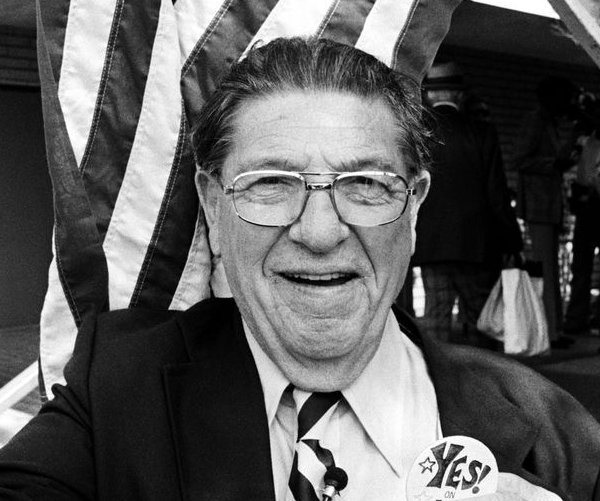
The solution was a funding mechanism crafted by legislators State Sen. Henry Mello and Assemblyman Mike Roos to allow cities the opportunity to create community facilities districts known as Mello-Roos districts.
It is essentially a parcel tax put in place by a majority vote of the impacted property owners with a twist. There was the ability to put the tax in place before development occurred.
Developers could create say 160 residential lots. Each of those lots had one vote regardless of the size. The tax was the same on each parcel.
What cities would do is require a developer as a condition for building in a jurisdiction to vote to impose a tax on all of the parcels they were creating to cover basic needs.
The law allows for things such as school facilities, infrastructure, street lights, landscaping and park upkeep, storm systems, street maintenance, as well as public safety.
The most common applications of Mello-Roos in this part of California are school facilities, common landscaping and park upkeep, street light costs, and more recently covering the tab for subdivision infrastructure such as putting in streets as well as sewer and water lines for developers that don’t want to upfront the cost.
The latter requires the concurrence of the city. Manteca has only allowed a few developers to do that route while Lathrop has had a ton of them do that.
There is an upper limit to how much Mello-Roos taxes can be tagged onto a parcel. The River Islands model is maxed out. But that isn’t what makes it a rarity. The use of the CFD spread over 15,000 planned housing units has assured the amenities as well as their upkeep that people want will be funded.
And by it all being addressed before a shovel of dirt was turned, politics won’t derail the plan.
Yes, it does create a category of property owners that will be taxed higher than others elsewhere. But as the authors of the CFD law noted, people have the choice as to whether to buy homes that have Mello-Roos taxes attached. At the same time, it assures existing residents won’t have to see their service levels obliterated ever so slowly by a city’s inability to keep pace with growth.
The City of Manteca’s earliest encounter with such taxing was in the form of landscape maintenance district (LMDs).
It was advanced by the City Manager Bob Adams after then council at the time expressed dismay with how several homeowners associations formed in Manteca during the 1970s failed to maintain common landscaping as promised.
When the initial development of Spreckels Park was proposed in 1999 for the 166-home Curran Grove neighborhood, elaborated landscaping was planned along Yosemite Avenue and Powers Avenue mirroring, to a degree, what was popping up in Pleasanton at the time.
The developer was willing to pay for the improvements but ongoing upkeep was a concern.
When the LMD was proposed to have property owners buying homes in the neighborhood pick up the tab, it was batted down by the City Council led by Carlon Perry who at the time lamented the city was imposing taxes on people who had no say in the matter.
The result was the city is now stuck with the tree, sidewalk, and sound wall upkeep of less than stellar looking landscaping along a major arterial.
Adams was able to eventually persuade leaders LMDs made sense.
Fast-forward a dozen years and Adams’ “student” — Karen McLaughlin — was serving as the city manager.
To avoid new neighborhoods park maintenance costs from eating up limited general fund revenue or parks falling in disrepair, she convinced elected leaderships to allow CFDs to cover such costs as well as common landscaping. The Mclaughlin era also saw street light upkeep and replacement in newer neighborhoods added to the CFD umbrella.
When it was clear the Measure M half cent sales tax wouldn’t be enough to shore up frontline public safety, McLaughlin proposed new subdivision be placed in a CFD that included paying additional money to pay for the salaries of additional police officers and firefighters.
The proposal was DOA as the council at the time dismissed it as decreasing the affordability of housing.
Now, a decade later with 10,000 plus housing units in the development pipeline, the city is again contemplating having CFDs cover police and fire costs along with street maintenance in specific neighborhoods the tax is imposed upon.
Much of the low-hanging fruit in the development pipeline — subdivisions needing entitlements that the city could attach such a requirement to without going back and asking homeowners after a neighborhood is developed to tax themselves — is no longer harvestable.
There are projects that can still be encumbered at the pre-development level that are in the approval process as well as those that will surface as the years unfold.
The question is whether this council has the fortitude to put in place a needed solution that helps reduce the potential for the reduction in police and fire service levels plus street upkeep as the years unfold for current and future residents alike.
Keep in mind the longer they wait, the bigger the hole gets.
This column is the opinion of editor, Dennis Wyatt, and does not necessarily represent the opinions of The Bulletin or 209 Multimedia. He can be reached at dwyatt@mantecabulletin.com