There’s a morality play underway in Menlo Park.
It’s about housing. Not enough housing or way too much housing. It all depends on your perspective.
But it’s in Menlo Park. And we’re in Manteca, Ripon, or a Lathrop so what does it matter to you?
The answer is simple.
Unless you want to see housing growth accelerate even faster, you have a stake in the outcome of the Big Bad Wolf versus Big Brother brawl in Menlo Park.
There is actually a third group and they’re not spectators. It’s a tad over simplifying, but let’s call them NIMBYS — not in my own backyard folks.
First the Big Bad Wolf.
It’s Sacramento.
More precisely, it’s State Attorney General Ron Bonta.
His ammo is the so-called “Builder’s Remedy.”
It’s a provision in a state mandate to make sure needed housing gets built in California by cutting down local building rules — emboldened, of course, by state laws and court rulings that have made the California Environmental Quality Act a supersized weapon NIMBYs can use to discourage or stop housing developments in or near their neighborhoods.
The Builder’s Remedy is a provision in the state housing plan mandate that allows developers to bypass local zoning in cities that lack a long-plan housing plan that is satisfactory to Sacramento.
In short, failure of cities to approve housing projects in a timely manner as required by state statutes allows developers to have the state intercede and force the issue.
The project?
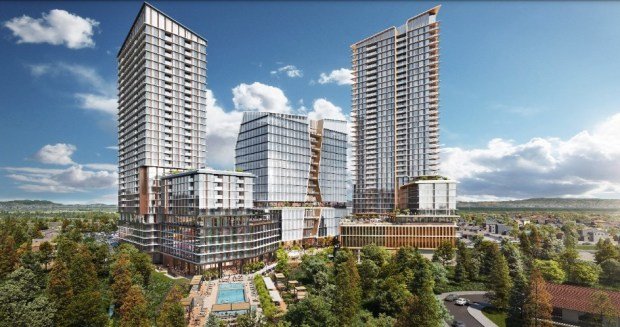
It’s a series of high rises known as Willow Park with the tallest at 485 feet or 39 stories that would be the highest building between Los Angeles and San Francisco. It includes 665 housing units plus offices and retail.
It is proposed on a seven acre parcel in a mid-20th century neighborhood with manicured lawns and tree-lined streets.
For a bit of international intrigue, the parcel is owned by a company controlled by a former Russian energy minister’s son.
Menlo Park leaders — channeling the objections of neighbors — kept saying no, no, no, whenever Willow Park managed clear a hurdle just as another was thrown up.
Among those roadblocks is a requirement that Willow Creek developers study how the project will impact the threatened red-legged frog and steelhead in a nearby creek.
As such, it makes it the perfect California storm — a catfight over housing, the poster creatures for the Endangered Species Act, and Big Brother channeling Sybil when it comes to conflicting state laws that contradict each other such as protecting the environment at all costs and allowing housing at all costs.
That said, Menlo Park’s self-imposed woes can be tied directly to the city of 32,472 folks with an average household income of $210,000 not cobbling together a state-required housing plan that required making accommodations for affordable housing to be developed to meet a mandated deadline.
A deadline Manteca, with an average household income of $100,000 less, managed to meet.
Menlo Park says it tried to adopt a housing plan by the Jan. 31, 2023 deadline.
Keep in mind, that was three years ago.
To add to the fun, neighboring jurisdictions are rooting for Menlo Park in prevail in its lawsuit against the state so cities such as Palo Alto can continue to snub their noses at the affordable housing requirement.
According to Palo Alto Councilman Pat Burt as quoted by the Wall Street Journal, “an adverse ruling against Menlo Park’s arguments would likely force cities to roll over on Builder’s Remedy projects.”
Perhaps true, but a city wouldn’t be facing dealing with the Builder’s Remedy if they bothered to process a housing plan in a reasonable and timely manner as outlined in state statutes.
Willow Park is setting aside 15 percent of its 665 housing units as affordable housing, which is the state’s longstanding objective even before the state was forced to add the “Builder’s Remedy” to finally make cities follow the rules.
An affordable two-bedroom unit in Willow Park would go for $2,556 a month.
That’s what a new two-bedroom apartment goes for in Manteca.
It’s not just a coincidence.
Bay Area cities like Menlo Park for decades has been skirting the state law and profiting off the big fat tech Golden Goose while dumping the obligation of housing all of the lower paid support workers —read that janitors, secretaries, construction workers, delivery drivers and more — needed for the likes of Facebook et al to profit and prosper.
If Facebook proposers, Menlo Park prospers.
Menlo Park does so without having its neighborhoods of $210,000 plus households soiled by having to live next door to the little people.
It’s as simple as that.
Menlo Park does the slow walk and feigns it is working toward compliance in order to wear down developers aiming to do what state mandates which is building more affordable housing.
Manteca complies with the state and can’t slow down the housing growth generated by the tech-laden high-brow Bay Area communities.
If Menlo Park prevails, it opens the spigot even wider into an unstoppable torrent as it will embolden the Palo Altos of California to flip off Sacramento without fear of being forced to toe the line when it comes to the state’s housing mandate.