Artificial intelligence is not the problem.
The real problem is human intelligence. Or, more precisely the lack of applying human intelligence.
The decision by the California Department of Motor Vehicles to ban Waymo driverless vehicles from freeways in the Golden State until such time as the Mountain View based tech company gets its act together, is prompting the predictable cry and hue from Luddites.
Or should we say semi-Luddites given they’ve forsaken paper, pen, and envelope to communicate their concerns with an 82 cent investment with the Postal Service to sound the alarm in favor of social media.
In case you missed it between the aging communication system that grounded flights in the United States, ATMs going on the fritz, and casting a wary eye at your refrigerator after hackers cooked frozen foods in supermarkets remotely in Europe — Waymo vehicles have been driving under the influence of inadequate technology.
The first Waymo freeway incident occurred Nov. 5 when three of the driverless vehicles drove into a construction zone. In other words, they ignored the orange cones.
The second occurred the next day when a Waymo vehicle tried to pass CHP vehicles performing a rolling traffic break.
Such behavior, of course, is unacceptable for a driverless vehicle.
But then again, the technology was designed by humans.
They likely just have to be programmed properly which means ultimately there might indeed be safer freeways if it wasn’t for the fact humans are still involved in the equation.
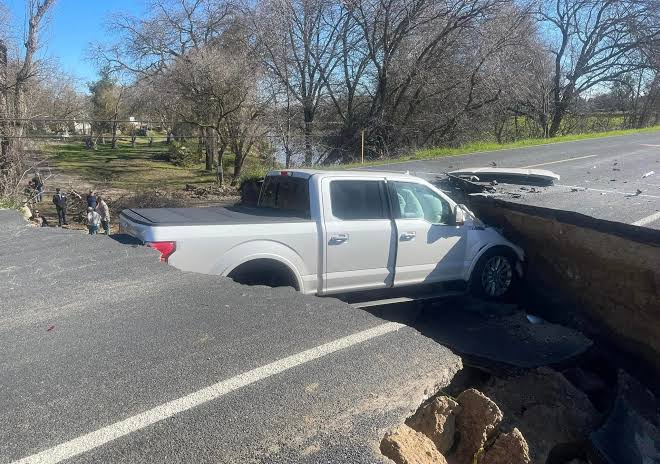
To underscore human intelligence is not necessarily better than artificial intelligence, take a trip down memory lane to January 2023 on Kasson Road near where it intersects with Airport Way across the San Joaquin River southwest of Manteca.
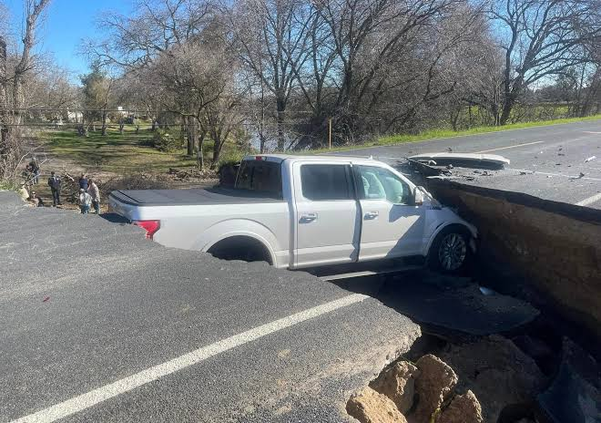
It was there that a sinkhole a good 15 feet deep and just over a pickup length materialized.
After the county set up barriers — including K-rail across the roadway — and posted signs warning the road was closed, a motorist in a sedan went around signs and K-rail via the shoulder and drove into the sinkhole.
Then five days later, a driver of a pickup truck did the same thing.
For several weeks, other motorists seeking a shortcut from commuter traffic routinely got directed by apps down Kasson Road that was closed due to the sinkhole.
And in order to get all the way to the barrier, those drivers had to pass numerous signs warning that the road was closed ahead.
The idea behind driverless vehicles is you theoretically can program them for almost every possible situation they can encounter on the road.
But in the race for rolling out the first workable technology — read that to score the big payday via stock offerings — they clearly aren’t tested for a lot of normal driving issues such as those driverless vehicles in Texas that drove into flooded streets.
The real issue isn’t artificial intelligence taking over the world on its own, but what people can do with such technology and the tendency of people to be lazy and cheap.
Clearly, tech can be used to hack into commercial systems and send temperature settings up to 150 degrees to destroy millions of dollars in frozen food as it did in Europe.
Disconnecting the refrigeration system from being controlled via the Internet as opposed to a closed system is an obvious solution.
That said, why do household refrigerators have to be connected to the Internet so people can have a computer screen on their fridge door or have the “refrigerator” order a food delivery when it detects you are getting low on certain items so as not to inconvenience someone when they go to chow down and realize they are out of mayo and will need to go to the store — or type an order into an app for delivery — if they want that sandwich now.
The problem is laziness and/or the need for instant gratification.
Is it worth making your refrigerator vulnerable to some two-bit bored hacker?
Those that view the recent collapse of the FAA’s communication system that led to the grounding of flights nationwide as a sign of being too reliant on technology are way off the mark.
It was the failure to invest in the timely updating of technology that is closer to the days of feeding punch cards into massive computer banks that the technology that we carry around in our pockets when it’s not glued to our eyes.
Human intelligence with a healthy dose of can kicking is the reason why the nation’s flight communication system is in such a mess.
Outside of driverless vehicles having the potential to be hacked unless properly secured, the biggest safety concern are owners/operators that don’t keep the technology used maintained and updated.
It requires human intelligence to make that happen.
If artificial intelligence was in charge of staying on top of such technology rest assured it wouldn’t be programmed to spend money first on the latest iPhone or put off needed work until it masters Grand Auto Theft 6.
Unless, of course, a human programs it to do so.