A sustainable Delta requires a sustainable levee system.
And that levee system protects 28,000 jobs and a $5.5 billion annual chunk of the California economy as well as the majority of the in-state natural gas production.
That’s the bottom line of a Delta Protection Commission study released this past week evaluating how various water solutions addressing environmental, farming and urban needs will impact the nearly 1,000 miles of meandering waterways that compose the San Joaquin-Sacramento Delta.
To do that, the study notes there needs to be:
•even more robust levees built.
•improvements in the regular maintenance and monitoring of levees as well as upgrades in flood fighting and emergency responses following earthquakes.
•improvements in preparedness for dealing with failures when they occur.
The report zeros in on the proposed $12 billion investment in an isolated conveyance - an updated version of the Peripheral Canal overwhelmingly rejected by state voters in 1978. It noted while it may allow for somewhat larger water exports to Southern California, the Bay Area, and large corporate farms in the southern San Joaquin Valley it doesn’t protect critical infrastructure. Billions more would need to be invested to protect highways, energy, and other water and transportation infrastructure.
“Just as a species by species approach is an inefficient and ineffective way to protected ecosystems, a system by system approach is an inefficient and ineffective way to protect the state’s infrastructure,” the report states.
The study supports an alternative that would require spending upward of $2 billion on levees protecting lands below sea-level to bring them up to standard. Once vegetation and habitat enhancement is factored in - two critical components to protect wildlife as well as insure the integrity of the levees - the cost would push $4 billion. That is about what the so-called “Fortress Delta” alternative would cost.
The improvements would allow for planting vegetation on the water side of the levees. It is considered an essential component of the Delta ecosystem repair. Upgraded levees would be widened to allow two-way traffic on the crowns as the width is a much securer way of protecting against failure. The levee improvements also would serve as a cushion against a rise in the sea level.
The study zeroed in on the financial impacts of Delta proposals underscoring how each would impact the vitality of the economies of the five counties involved. A large swatch of the Delta’s primary zone is in San Joaquin County plus a large chunk of the secondary zone that includes almost all of Stockton, Weston Ranch, parts of Lathrop and the entire Tracy area.
The study found:
•Nearly 80 percent of the Delta is classified as prime farmland, In contract, less than 20 percent of all farmland in California is considered prime.
•Delta farms generate $1.4 billion in crops with $683 million in value added through processing and other ag operations to support 9,700 jobs.
•When related industries elsewhere in the five counties are factored into the equation including wineries, canneries and dairy-related operations, the Delta supports 13,200 jobs .
•Once all economic impacts of Delta farm production are tracked statewide, it supports 25,000 jobs and contributes $5.372 billion to the California economy.
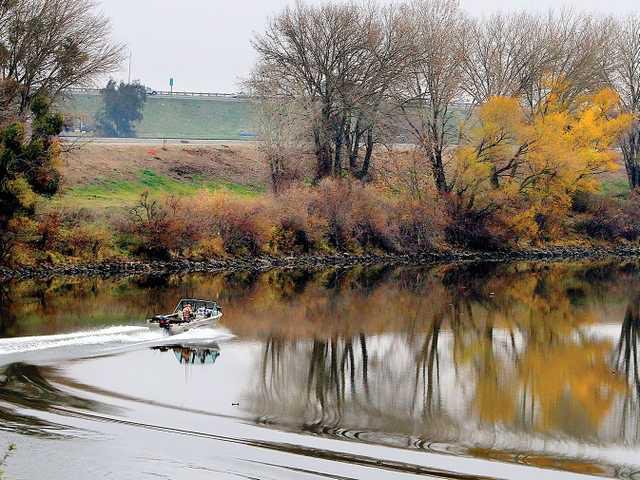
•Boating and fishing generate 80 percent of the recreation and tourism spending in the Delta. Those activities support 3,000 jobs that generate $100 million in pay and $175 million in direct economic muscle.
•The bulk of the Delta’s 738,000 acres are in the rural and agricultural primary zones where the population has remained steady at 20,000 people since the passage of the Delta Protection Act 20 years ago.
•The “legal” Delta that includes secondary zones that encompasses Pittsburg, Antioch, Tracy, Oakley, Brentwood, Discovery Bay, West Sacramento, Stockton, and parts of Lathrop has increased by 200,000 residents in the past two decades to 571,000 people.
•The Delta contains the largest natural gas production field in California as well as it largest natural gas storage facility below McDonald Island. Natural gas fuels the majority of California’s electricity supply. Power plants within the Delta account for 20 percent of the state’s electricity generated from natural gas.
The report notes the levees - that were put in place by the turn of the 20th century - is the foundation on which the entire Delta economy is based.
More than $698 million has been invested in levee improvements since 1973.
The report also assesses how the other alternatives being tossed around to move water through the Delta would significantly hurt agriculture and create large job losses in almost every case plus in some would also hurt the recreational industry.
Delta: $5.5B economic engine
Study IDs justifications for strengthening levees