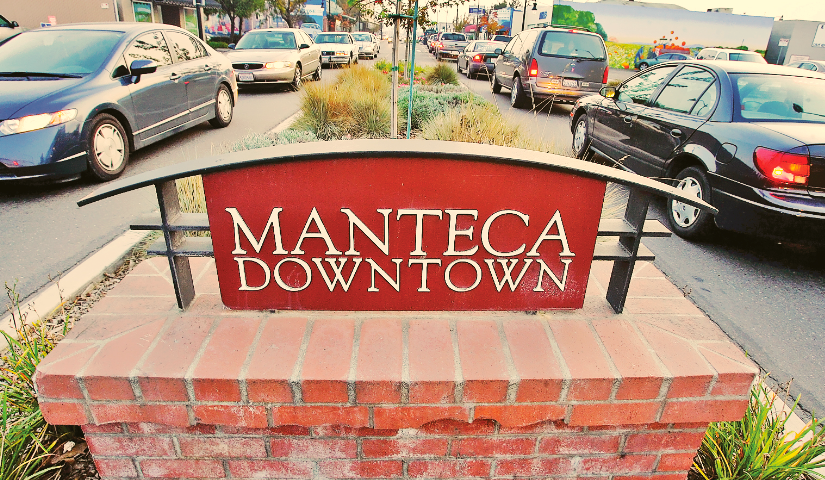
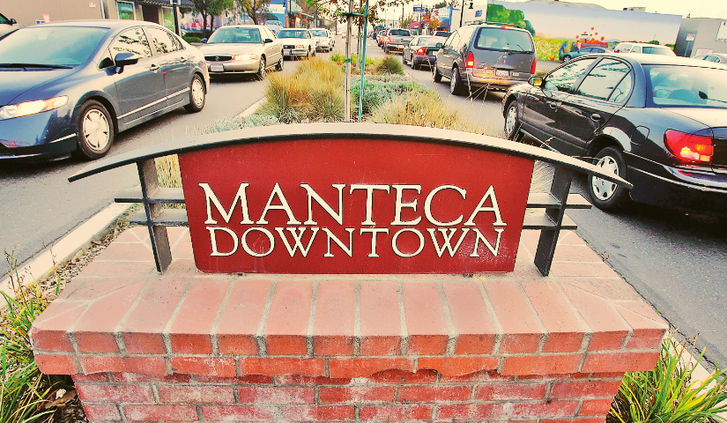
The traffic tourniquet that is Main Street between Yosemite Avenue and Alameda Street is still on the radar of Manteca Mayor Gary Singh.
Singh — who has been pushing to reconfigure the Main Street segment since 2016 but was unable to get council support to do so — said Monday it is still an objective he is pursuing.
The effort to do so will take place as the city forms a new overall plan for downtown including traffic with a $960,000 contract they inked with Ascend.
Singh wants a holistic solution that also will address decades old traffic flow issues through downtown by extending Moffat to Yosemite near Library Park so east-west traffic can be addressed along with north-south traffic.
In the meantime, the city has been making changes to improve traffic flow on Main through downtown:
*The synchronization of traffic signals from Moffat to Alameda.
*Removing the last bulb outs.
*”Thinning” the median in the 100 block to allow for more vehicles in left turn queues.
*Adding a dedicated right turn from southbound Main to westbound Yosemite.
*Adding left turns on flashing yellow signals for traffic turning from Main onto Center.
The issue of the North Main corridor bottleneck resurfaced over the weekend after several residents read the city was taking steps to avoid creating a similar torniquet on South Main south of Woodward Avenue as Main Street is being widened to four lanes within the next year.
The council in 2021 opted not to go with the Main Street reconfiguration despite efforts of then Mayor Ben Cantu and Singh.
Instead, the bulk of the council wanted to see whether a $67,000 traffic light synchronization study — that has since been successfully implemented — would delay the need for reconfiguring the segment until after a downtown specific plan that was expected to be completed in 2023.
Work on that plan starts in earnest this fall and will take upwards of 18 months to complete and adopt.
There were also objections over the elimination of on-street parking a four-lane reconfiguration would require to avoid cutting into sidewalks.
The $2 million that Singh helped get set aside in the city budget at the time for the North Main corridor improvements went instead to help make the Airport Way pavement upgrades happen.
The plan on the table in 2021 was a holistic plan that would have installed pavers near the curb packed in sand to allow storm runoff that sometimes overwhelms the corridor’s storm system during heavy downpours to permeate into the ground.
City engineers indicated it would cost less using pavers as it would avoid the need to tear out the concrete poured for the original Highway 99 in the 1920s that is now buried under multiple layers of asphalt in order to upgrade the driving surface.
Given pavers need such a concrete base the cost to use pavers which are typically more expensive than asphalt penciled out less than digging up the road and putting in a new base.
When wedded with the longer life of the pavers and the ability to simply remove them and replace them when doing utility work instead of cutting into pavement and then covering it with patches of asphalt, the short- and long-term costs were determined by staff to be more cost effective.
Because having pavers eliminated the need for gutters additional traffic lanes could be placed in the 100, 200 and 300 blocks of North Main without cutting into sidewalks as well as relocating street lights and traffic signals.
The council also saw the pavers not just as a way to improve the aesthetics of the corridor but to delineate when motorists were in the central district.
To contact Dennis Wyatt@mantecabulletin.com