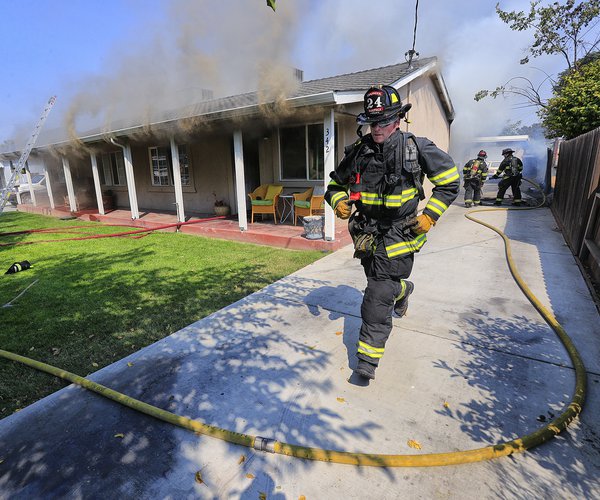
Residents of the Lathrop Manteca Fire District will get to live another combined 160 years thanks to the medical intervention of first responders over the course of the last year.
That was the takeaway from the meeting of the agency’s board of directors last week when Interim Fire Chief Josh Capper delivered the department’s 2021 annual report – the first time that the agency has ever compiled and released such a record.
According to that document, firefighters responded to 42 cardiac arrest calls in 2021 – meaning that the patient’s heart wasn’t beating at the time that first responders arrived – and were able to successfully bring 13 of those patients back to life before they were transported to an area hospital for more intensive care.
Using the ages of the patients compared to the CDC-advertised average lifespan of 77, those 13 lives saved could account for up to 160 years of additional life lived by members of the community.
“We know that life doesn’t have any guarantees,” Lathrop Manteca Division Chief Larry Madoski said. “We’re trying to highlight that we can make a direct connection to a life saved, and the value that multiple lives can give back to the community.
“That’s the takeaway – that we are putting significant years of life back into the community.”
The report itself makes good on the district’s promise to provide better transparency to the communities it serves – essentially spelling out 12 months of operations in a report that breaks down where the district allocated its resources, and how much that cost the taxpayers.
While agency personnel played a role in achieving the outcome that was advertised in the annual report, Madoski was quick to point out that there are additional agencies that also deserve credit.
“That’s truly a coordinated team effort,” Madoski said. “It takes trained firefighters, paramedics, ambulance personnel, equipment, and most importantly – bystander CPR.
“If you look at those 13 saves, 9 of them had bystander CPR in the report as well.”
And having the public play a vital role in the process is a testament to the agency’s push to familiarize as many people as possible with how to start CPR to improve the outcomes for those clinging to life.
According to the agency, engines have been equipped with the Lucas mechanical CPR machines since 2015 – which gives steady, continuous chest compressions – and there has been a push by first responders to teach Manteca Unified students hands-only CPR.
While the pandemic put a damper on that program, the district says that it’s “keeping a close eye” on the data and monitoring how many CPR-aided saves are recorded with the hope of restarting the program for students as soon as it is feasible to do so.
To contact reporter Jason Campbell email jcampbell@mantecabulletin.com or call 209.249.3544.