Want in on a little secret?
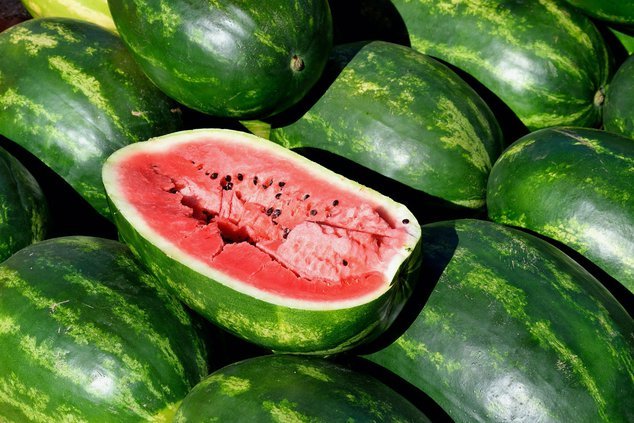
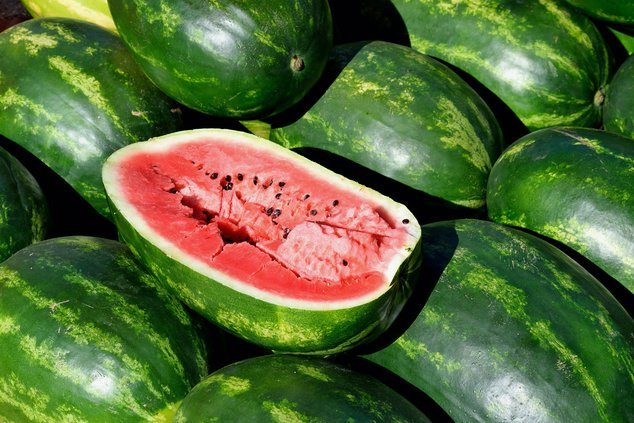
The best watermelons in California come from the fields around Manteca, Ripon, and Tracy.
It’s the same reason why San Joaquin County is the largest wine grape producing county in California — and by extension the United States.
Reason No. 1: The sandy loam soil.
Watermelons, like grapes, are fruits. Well-drained soil allows them to reach sweet levels.
Reason No. 2: The heat.
The heat — when combined with water — spurs the robust growth of fruit.
Reason No. 3: The cooling Delta breezes.
Fruit doesn’t get juicy by soil, heat, and water alone. The cooling overnight breezes — virtually a nightly occurrence — helps increase the sugar.
The numbers clearly underscore why the fields around Manteca and Ripon are so sweet for watermelons that 1,880 acres in 2024 yielded 43,800 pounds of watermelons or 36.7 of California’s overall production.
That makes San Joaquin County the largest watermelon producing county by far in California, a fact the Manteca Chamber of Commerce is celebrating today and Sunday at the 30th annual Watermelon Street Festival in downtown.
Manteca-Ripon is home to the two most well-known purveyors of watermelons — Perry & Sons as well as Van Groningen & Sons that broker under the moniker Yosemite Fresh.
To be honest, not every watermelon grown here is going to be the juiciest and sweetest.
But that said you are going to hit the sweet spot a high percentage of the time.
For the better part of the 35 years I’ve lived in Manteca, I’ve developed a fondness for watermelons.
Credit that to the late George Perry and his son Art.
Before I could take or leave watermelons. And almost always because they seemed always to be on the dry side, I had to use salt.
It was a habit I picked up from my parents. But by the end of summer, I never consumed more than an equivalent of one watermelon.
That changed after a few years in Manteca and buying watermelons locally produced.
I found myself going through eight or so large watermelons a summer sans salt.
But once in a while — after being ruined by the best Manteca could grow — I’d buy a watermelon that was not just a bit less stellar but was borderline yuck.
It was explained to me that watermelons grown in Mexico, Arizona, or even other areas farther south in California tend to miss the high mark more often than not because they come up short on one critical component.
That component — the predictable cooling Delta breezes that takes the sting out of 90 to 100 degrees plus highs — was missing.
It’s not that temperatures don’t cool down at night elsewhere, it’s just that they aren’t anywhere as near as persistent as the Delta breezes that funnel into the valley from the San Francisco Bay.
I realize I may sound like a bit if a watermelon snob — I guess if there are wine snobs then being a watermelon snob isn’t much of a stretch — but I avoid watermelons that roll into California from Mexico and Arizona.
That means I wait until around mid-May to partake. And while California grown definitely is a buy sign for me, I look for one of two labels — Perry & Sons or Van Groningen & Sons.
In a good year, I now go through eight watermelons a year.
That brings us to the age-old question: Knock or slap?
It’s a question Art Perry — arguably one of the most knowledgeable men around when it comes to watermelons — answered for me more than a few years back.
It’s a slap or pat to the side of a watermelon that will give you the best clue to its sweetness and moisture content. If it’s a nice resounding thud, it’s a sign of good things to come when you slice through the rind.
Art is one of the two sons in George Perry & Sons. The other is George Jr.
Watermelons contain a lot of vitamin A and vitamin C plus beta-carotene.
But probably the one thing that matters the most is the fact watermelons are loaded with lycopene — one of nature’s most critical antioxidants. Research has indicated lycopene neutralizes “three radicals” or substances in the human body that can cause severe damage such as making cholesterol stick to blood vessel walls and worsen asthma attacks and rheumatoid arthritis.
There is little doubt that it is considered a healthy fruit.
As a historical note, Manteca grown watermelons were all the rage on the East Coast back in the first decade of the 20th century.
They were viewed as some of the sweetest around.
Ed Powers — for whom Powers Avenue and Powers Tract between Spreckels Park and Manteca High is named after — introduced watermelons to the Manteca area.
How’s that for a juicy bit of Manteca history?
To contact Dennis Wyaytt, email dwyatt@mantecabulletin.com