The implication race or the level of affluence of neighborhood residents somehow has been driving City Hall decisions on where to spend limited funds each year to improve streets is about as close to being on target as a lunar rover launched toward the earth’s moon landing on Pluto instead.
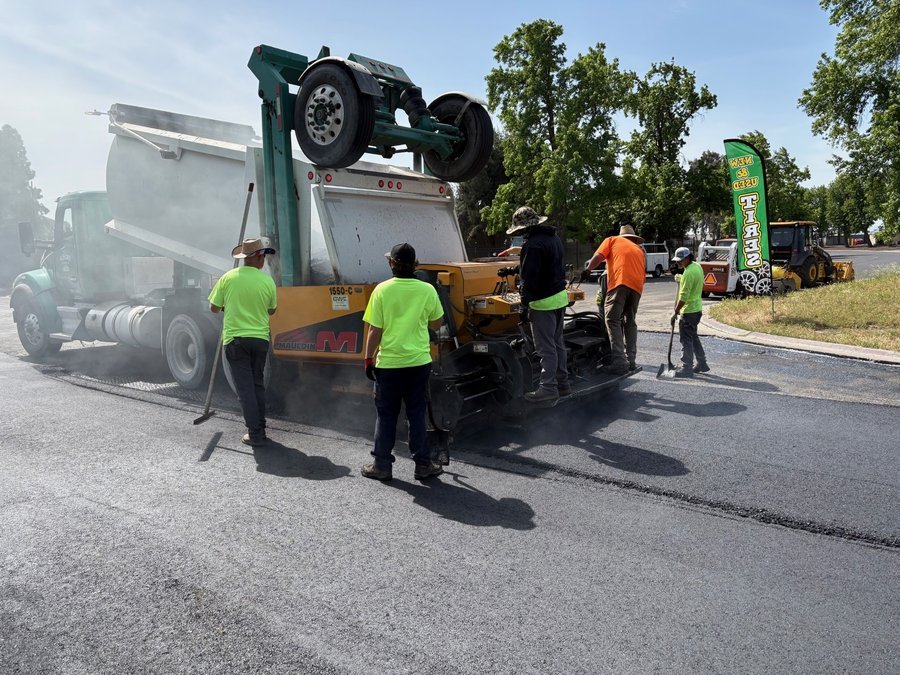
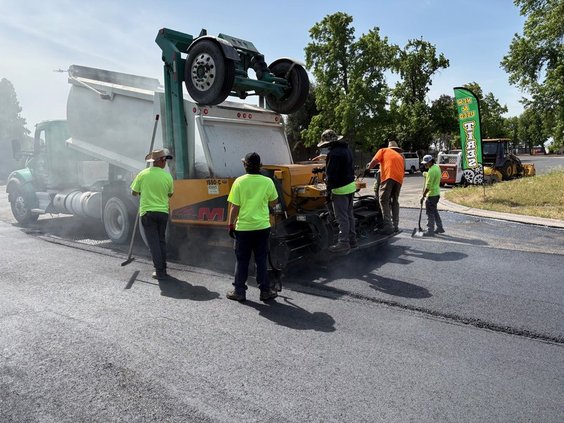
Such decisions are weighted in pavement science as well as a need to avoid adding to the streets heading toward an expensive rebuild by doing cost effective maintenance in a timely manner on streets they aren’t as bad as others.
Manteca is tackling street pavement upgrades on three levels.
uPavement rebuilding projects requiring outside contractors due to the size and scope.
uLarge sealant and/or chip and seal endeavors that cluster neighborhoods in general areas together to maintain pavement integrity and extend the life of asphalt.
uIn house efforts that effectively take a major street such as Spreckels Avenue and addresses segments with the most egregious issues over multiple years making it doable to accomplish with city crews, equipment, and limited municipal funds.
The accusation floated this past week was the city favored doing work beyond emergency repairs elsewhere instead of in a particular neighborhood because it has Hispanics and is less affluent.
Not only is the area in question — City Council District 4 basically north of Louise Avenue — not the least affluent council district but every district in the city has a significant Hispanic population given it is the largest ethnic grouping in the city at 40.59 percent followed by Caucasians at 34.61 percent.
And, up until four years ago, both former Mayor Ben Cantu and former Councilman Jose Nuno — one of whom resides in District 4 and both happen to be Hispanic — put in motion road projects within the District 4 boundaries that put in excess of $11 million in street work in motion.
That is, by the way, the largest chunk of city street dollars spent in any district over the last eight years if you take city-led interchange projects out of the equation.
The district that is the least affluent and most Hispanic hasn’t done too shabby when it comes to the expenditure of city street dollars.
District 3 — basically “Old Manteca” (pre-1970) bounded on the west roughly by Union Road, the north by Louise Avenue, the east by Highway 99, and the south by the 120 Bypass — will have seen almost $9 million of road work over 10 years when 2027 ends.
That doesn’t include overlaps with District 4 on Louise Avenue. It does include the current Yosemite Avenue work as well as large neighborhood projects such as Shasta Park and Powers Tract.
District 3 is no only 47 percent Hispanic, it has the highest number of households making less than $26,000 a year, it has the highest percent of high school only graduates at 60 percent, and 26 percent of its households speak Spanish — the highest in Manteca.
District 1 — easily the most affluent thanks to an influx of buyers snapping up new homes between $600,000 and $950,000 — has next to the least amount of city street work in recent years.
It comes under $7 million and includes large neighborhood projects in Mayors Park and the recently completed Wawona Street area. It also included segments of Airport Way with all of the work north of the 120 Bypass.
District 1 was the most affluent in 2020 when districts were created, which is ironic given the narrative yarn contends wealthier neighborhoods get all of the city’s attention when it comes to road work.
If you include work planned this summer in neighborhoods east of Highway 99 along with sealcoat as well as chip and seal done in neighborhoods around Woodward Park, the running total of city financed work in District 1 will almost reach $5 million.
Having said all that, in the past six years there has easily been in excess of $7 million of work on major arterials not counting the construction of miles of streets in new neighborhoods.
The work is being done by developers or San Joaquin Council of Government for surface street improvements connected with the 120 Bypass/99 project, and not the city.
And most of those costs ultimately will be paid by buyers of new homes.
If there is somehow a connection between road work being done overall and race, then all that work south of the Bypass is falling on the shoulders of a group smaller than Hispanics and Caucasians given those with roots in Asia — including the Indian subcontinent — constitute the lion’s share of new home buyers in Manteca.
Making the race-nonsense about how the city allegedly determines where — and the order in which — street pavement projects occur even more ridiculous are who is running the city day-to-day.
City Manager Toni Lundgren is Hispanic as is Jose Jasso, one of the city’s two assistant city managers.