Is the price of Manteca municipal water too rich for your blood?
It went up to $3.22 per 100 cubic feet (HCF) of water used on July 1, up from $2.47.
That’s a whopping 74 cents.
Given an average Manteca household goes through 1,600 cubic feet of water monthly, that’s $51.32 or an increase of $11.84.
There is a simple way to reduce the monthly cost of water on your monthly bill without changing length of showers, how many times you flush the toilet or clean dishes, wash clothes or reducing how much you water your lawn although the vast majority of waste is by over watering grass.
The solution?
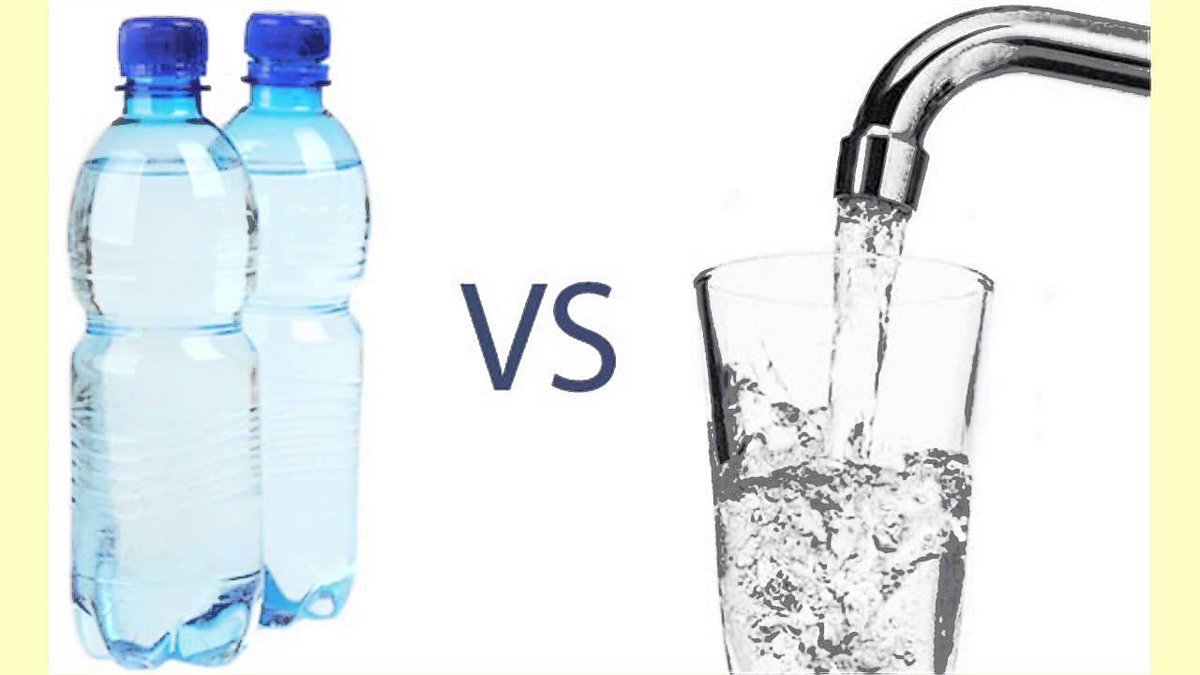
Cutback on your bottled water consumption and substitute it with Manteca tap water.
It’s as safe, if not safer, than bottled water.
As for taste, almost all that can be attributed to the redundant treatment of water with chlorine after it goes it through an elaborate cutting edge treatment using microscopic fibers and ultraviolet light.
The chlorine gas dissipates if it is allowed to sit such as in a glass container in the fridge where it can chill or — as retired city water engineer Diane Martin would do if she was at home and in a hurry for water — agitated by pouring it into a blender and flipping the switch.
How does that help to reduce your water bill?
It’s because you may not be seeing the forest for the trees.
The real driver in all the angst is how much people are spending on water.
They see the city utility bill once a month that also includes garbage, sewer, and base water rates — that cover water maintenance and operations as opposed to water consumed per se — and get irked.
But that is only part of the picture. Almost everyone also buys bottled water of some type.
The easiest way to not just hold the line on water costs, but to reduce the monthly cost of water that households consume, is cutting back on bottled water use.
A 100 cubic feet of water is 748 gallons or 95,750.6 ounces.
The typical water bottle sold at convenience stores or in 40 packs are 16.9 ounces.
That means for $3.22 for 100 cubic feet of treated city water you can fill 5,665 bottles that hold 16.9 ounces.
A case of Kirkland brand water at Costco with the California redemption value charge comes in at around $7 for 40 bottles.
The per ounce cost from the tap is 0.0000336929 cents compared to the per ounce cost of 0.01 cents of bottled water from Costco. That’s a price difference of 3,000 percent per ounce.
That $11.84 increase for 1,600 cubic feet of water would be negated by a household using 60 or so less bottles a month of Kirkland water that comes to roughly 17.5 cents a bottle when charges are factored in.
It’s even easier to cover the increased cost of your monthly water use if you refrain from store purchases where individual water bottle costs often exceed $1.50 and are pushing $2.
Eliminating 8 such purchases covers the cost.
Relying more on reusable bottles and tap water will reduce your monthly household costs significantly and/or at least enough to offset the increased cost of city water.
Go back to the Dark Ages, say the 1980s.
Do you ever remember people carrying bottles of water with them where ever they went?
Today people take bottled water everywhere — when they’re driving, into stores, into meetings, into class, and even when they are walking down the street.
People are spending a small fortune on bottled water.
What is different about 1982 and 2026 that makes us think like camels? Granted, the extra water we carry around is external but the point is we weren’t pack mules 44 years ago.
There has been a drop-off in public water fountains, which is a partial clue. There is a perception drinking from a public water fountain is akin to mainlining viruses.
If that’s the case, why — given the explosion in bottled water consumption — aren’t there corresponding declines in a wide array of maladies from the common cold to strep throat?
Could it be we’ve bought into the subtle campaigns of the bottled water cartel that what comes out of the tap is not healthy or safe?
Granted, there are aberrations such as Flint, Michigan, that is a specific problem tied to specific aging pipes and specific mismanagement of the system. People around the globe die every day because they don’t enjoy the high water quality that Americans do when it comes to water flowing from our taps.
There are no breakdowns on bottled water labels so you assume the water is “safer” than tap water.
Guess again.
All water bottlers are required to post statements of water quality for consumers you typically will find on their websites.
The bottom line of those reports are the same — they do not exceed the Federal Drug Administration’s maximum contamination levels.
That’s also true of Manteca’s municipal water.