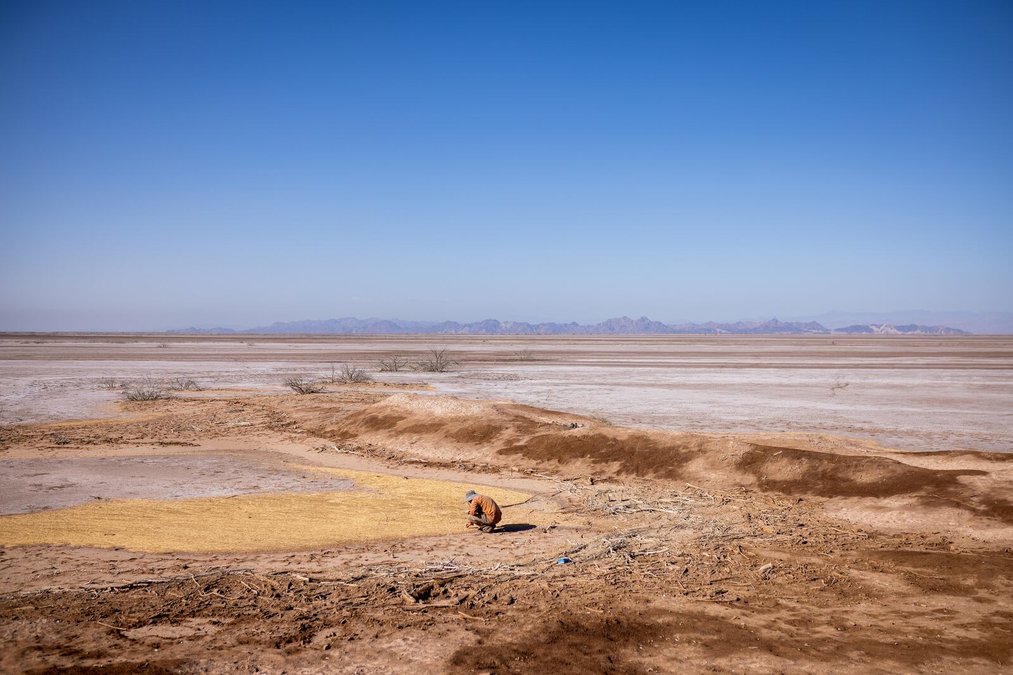
Imagine the Delta turned into a mini-desert covering 3,015 square miles.
It is so depleted from the lack of water flow that fish and mammals die on a massive scale while riparian vegetation is almost decimated.
Farming is destroyed.
Fishing is about extinct.
No, it is not a climate change scenario for the Sacramento-San Joaquin Delta.
It is the handiwork, to a large degree, of Southern California that laid waste to the Colorado River Delta to satisfy LA’s insatiable thirst for water to power growth, keep golf courses green, and Beverly Hills estate lawns lush.
The Colorado River rarely reaches the ocean via the Gulf of California anymore, save eight-week long “pulse flows” such as back in 2014. The last hundred miles of the Colorado is now a dry river bed most of the year.
The reality that is now the Colorado River Delta could be the fate that awaits the Sacramento-San Joaquin River.
A prolonged major drought on the Colorado River Basin is forcing Southern California to look at doubling down on squeezing more water out of Northern California.
News this week that the 900-pound gorilla of urban water use in California — the Metropolitan Water District that serves the greater Los Angeles Basin — along with other concerns in the south state will be giving up 440,000 acre feet of water from the Colorado River is cause for alarm. It means LA will be pushing for more water.
The south state has “rights” to 4.4 million acre feet of the 15 million acre feet of runoff in an average water year in the Colorado River Basin.
There are two major water projects LA needs that feed off the Sacramento and San Joaquin River watershed
One is the 1.5 million acre foot Sites Reservoir project in Colusa County that will hold enough to meet the water needs for 7.5 million Californians in an average year.
Like San Luis Reservoir, it is an off-stream storage facility. That means excess storm flows — and even higher than normal spring runoff — can be diverted for storage at Sites.
When that water is released to flow to the south via pumps northwest of Tracy at the start of the California Aqueduct, it will flow through the Delta to sustain its ecological system and its recreational uses.
It is “new water” in terms of deliberate storage and release for urban users, farmers, and sustainable environmental flows.
And it would do so with minimal environmental damage.
The other major water project is the myopic Delta Tunnel.
It creates no new water storage while starving the Delta proper of life giving water before that water is diverted to Southern California and large corporate agricultural concerns farming what is at best marginal farmland in the southwest San Joaquin Valley.
Such farmland due to salinity issues requires significantly more irrigation water to prevent the soil from becoming toxic to orchards and row crops.
Independent engineers in 2024 examined the Delta Conveyance Project against other tunnel projects for water and roads. They came up with a conservative $33 billion price tag as opposed to the $20 billion cost Gov. Gavin Newsom assigns the endeavor.
The tunnel is about one thing and one thing only: Making sure LA and corporate farmers can squeeze the maximum amount of water out of Northern California at the expense of local needs whether the state is in a drought or awash in water.
The first reason given to justify LA putting a 30-mile and 40-foot wide straw some 150 feet underground into the Sacramento River before it reaches the Delta was the vulnerability of levees to earthquakes.
Aside from the more holistic project being levee upgrades that protect everyone — LA water users, riparian Delta farmers, the environment, and recreational fishing — the tunnel improves the water supply for LA.
It nicely takes it out of the equation when cutbacks are needed to sustain the Delta in time of severe droughts. It also reduces the need to treat water as it reduces salinity levels in the exported water when drought gives San Francisco Bay water the upper hand over river basin watershed runoff in the western portions of the Delta.
Studies conducted by agencies favoring the Tunnel concede it will cause significant environmental issues and regional economic losses with the biggest loser being San Joaquin County given 42 percent of the Delta in its boundaries.
It makes more sense to raise the height of San Luis Reservoir and look for more off-stream storage to capture more water given most climate models show perception is shifting more toward rain in the lower elevations than snow in the Sierra.
LA’s ruthless search for water has put Owens Lake on life support, almost killed off Mono Lake, and helped destroy the Colorado River Delta.
The Tunnel will add the Delta to LA’s growing list of road kill in its journey to keep water flowing to sustain their growth at the expense of others.