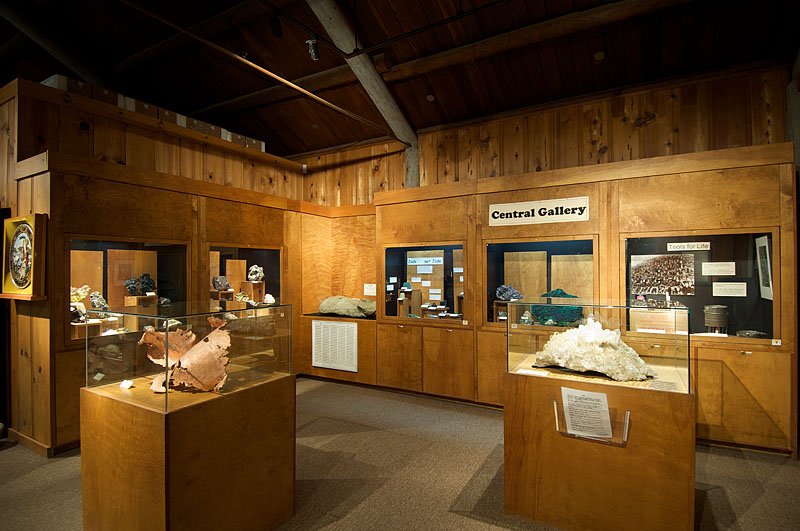
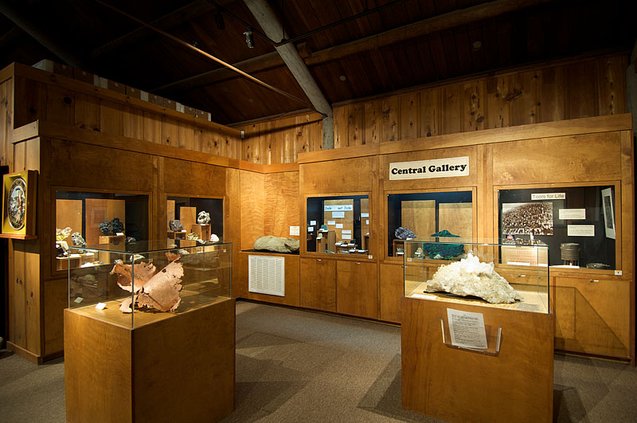
MARIPOSA — The California State Mining and Mineral Museum, situated along Highway 49 in the historic gold-rush town of Mariposa, houses, displays, and interprets the official California State Mineral Collection.
The museum, located at the Mariposa County fairgrounds, is dedicated to teaching the visiting public about the importance of mining and minerals to California’s history, environment, economy, and future.
The Mariposa County Fairgrounds, 1.8 miles south of Mariposa on historic Highway 49.
The museum is open Thursday through Sunday from 10 a.m. to 5 p.m. It is closed Monday through Wednesday.
Admission is $4 while those 12 and under are free.
It is an hour and 40 minute drive from taking Highway 99 south to Merced and then Highway 140 east to Mariposa.
Mariposa is also home to the Yosemite Climbing Museum. Mariposa has roughly two dozen dining and brewery options (including cider) with not one a chain affair.
The collection began in 1880; since then, visitors and researchers have been dazzled by the many exceptional specimens of California’s gemstones and minerals — such as gold, silver, copper, and platinum — in the museum.
The items on display include original mining artifacts and historical documents, precious mineral and gem specimens from all over the world, minerals that glow in the dark, and even several “outer space” rocks (meteorites).
California mining history
Only small mining operations preceded California’s 1848 gold discovery in Coloma.
Gems (precious or semiprecious stones) such as turquoise, garnets, and even diamonds had been found in Amador, Butte, El Dorado, Nevada, and Trinity counties.
Silver, copper, mercury, and other minerals had previously been mined in California.
News of the 1848 gold discovery brought about 100,000 would-be millionaires from all over the world.
Thinking that gold lay around underfoot, some had planned to fill their pockets and return home wealthy.
Many gave up after realizing that not even a lot of hard work could make them rich overnight.
California State Mining Bureau In 1880 State legislators established the California State Mining Bureau. A vital service offered by the new agency was classifying and identifying minerals found anywhere in California.
Before long, the new bureau was inundated with specimens submitted for identification from all over the world.
Henry G. Hanks, the first California State Mineralogist, was hired to examine and classify specimens submitted to the Mining Bureau. Hanks was directed to make his findings available for scientific and educational purposes.
Home for collection of mining for minerals
The State’s initial collection — 1,327 specimens donated by the California State Geological Society — was first displayed in the State Mining Bureau’s San Francisco offices.
Ore specimens and donations were constantly added. Between 1880 and 1983, the collection moved five times.
The Ferry Building on the Embarcadero housed the collection until 1983 when building renovations forced yet another move.
The Mariposa County Board of Supervisors requested that the specimens be moved to the town of Mariposa; in July 1983, the entire collection was packed and moved to a temporary location in the old Mariposa County Jail. The more valuable specimens were stored in a bank vault in Mariposa.
The collection was finally moved to its new home at the Mariposa County Fairgrounds in 1986, and the former Mining Council Building became the main exhibit area.
The museum was transferred to California State Parks in 1999. At present, California State Mining and Mineral Museum is the only state park without any associated land.
The collection today
Today The museum collection has grown tenfold since its beginning and holds over 13,000 specimens, with about 350 rotating on display at any one time.
Original historical documents include a map of John C. Frémont’s Mexican Adjoining the building, a re-created “old mining tunnel,” complete with support timbers and “workers,” interprets the experience of hard-rock miners.
In the mining gallery, displays include a full-size windlass (a hand-cranked device that lowered a bucket on a rope to remove mining debris), an ore cart, and a working scale model of a stamp mill, which pounds and crushes ore to extract minerals within it.
The Fricot Nugget The legendary Fricot (free-co) Nugget — weighing 13.8 pounds — is the largest remaining intact mass of crystalline gold dating back to the California gold rush. The specimen of gold crystallized when hot gold- bearing quartz veinlets cooled in softer slate and schist rock.
This rare specimen was discovered in a mud pocket deep in the Grit Mine, near the American River’s middle fork, by William Russell Davis in August of 1864.
In 1865, Grass Valley resident Jules Fricot purchased it from Davis and displayed it at the 1878 Paris Exposition. The nugget then spent more than 65 years stored in Fricot’s safe deposit box. In 1930, Fricot’s daughter donated the unique specimen to the Museum’s collection
Minerals and gemstones on display range from exhibit quality to research samples.
Specimens on loan from other collections are also shown throughout the building.
Benitoite, the Official State Gemstone In 1906, benitoite (ben-ee-toe-ite) — an extremely rare stone whose crystals are typically blue — was discovered at the Benitoite Gem Mine in San Benito County. The mine, which is now closed, was the world’s only source of gem-quality stones.
When displayed under short-wave ultraviolet light, the stone glows vivid, fluorescent blue.
The museum shop sells jewelry, mineral art and specimens, and books on rocks, minerals, mining, gold prospecting, and California history.