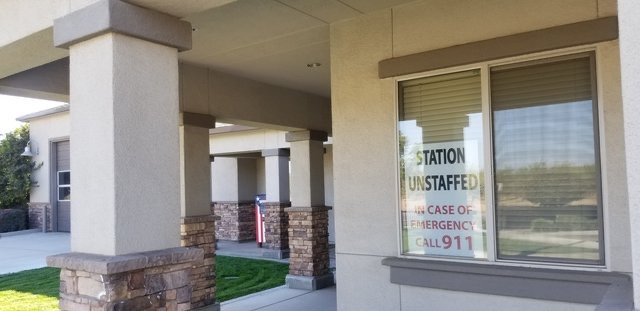
It’s a rare, but all too-common, comment made by some that voice opposition to the Ripon Consolidated Fire District parcel tax.
No one has died yet.
It is not a heartless comment regarding the need for the tax that parcel owners will decide the fate of on Aug. 13.
In fairness to those that are taken aback by such talk, it is shorthand for a variety of sentiments from it won’t happen here thanks to mutual/automatic aid to they can find the money somewhere else.
The “there-are-plenty-of-dollars” to squeeze sentiments as opposed to pennies is done by looking at all levels of government through the prism of the tax and spend world of Sacramento and Washington, D.C.
It doesn’t, in most cases including Ripon Fire, translate into local levels of government.
The other sentiment about “it has not happened here” is just a matter of time
Two people died before Manteca residents and the leaders they elected started listening to the people they paid to protect the community in the event of fires, accidents, and medical emergencies.
The year was 1983. Manteca had 28,000 residents.
Two-man engine companies were considered sufficient by taxpayers and elected officials alike.
The city had built a third fire station on Louise Avenue that was browned out on a regular basis to save money as it was considered a luxury, if you will, to staff a third city engine company 24/7 with two-man crews.
The tragedy that changed the course of Manteca’s emphasis on public safety to a degree was a fire in the old two-story Waukeen Hotel that had been converted into efficiency apartments on the northwest corner of Sycamore and West Yosemite avenues in downtown.
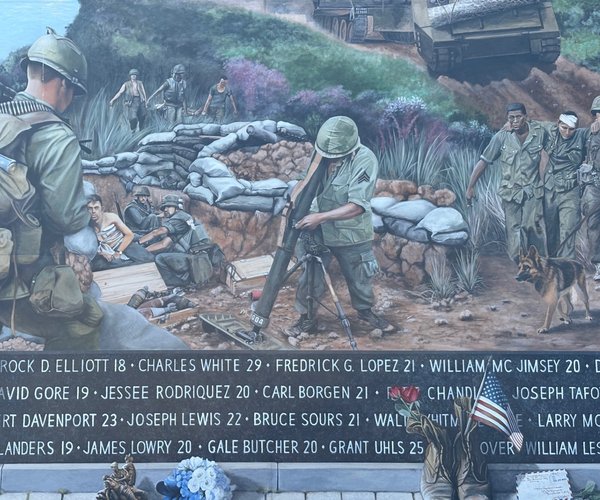
It was where the city today is creating a parklet next to a mural painted last month and upgrading an adjoining parking lot. The parcels where the hotel and other burned businesses stood have been vacant for 33 years and were bought a few years back by the city for $80,000.
It is a fire that directly — and indirectly — impacted the lives of two current Manteca City Council members: Dave Breitenbucher and Charlie Halford.
Halford was a patrol officer that — prior to being hired by the Manteca Police Department — had been working as a firefighter for the then Manteca Lathrop Rural Fire District.
Breitenbucher was hoping to get on as a Manteca reserve firefighter.
Halford was the first on the scene.
A woman and her young child were trapped on the second floor as smoke and flames billowed out of the windows.
Halford secured a ladder and was able to save them from a second floor window.
But because of that tragic fire that killed two as there was only a pair of two-man fire engine companies for the initial response in a city of 28,000, it prompted city leaders to staff the third station full-time and to start working toward three-man engine companies.
Breitenbucher, because of that, ended up becoming a reserve firefighter and a full-time firefighter in short order.
Today, both are in their second terms as Manteca City Council members.
Halford served 32 years with the Manteca Police Department before retiring after a stint as police chief.
Breitenbucher spent 30 plus years as a Manteca firefighter before retiring after serving as a captain.
No one can accuse either of being fast and loose with tax dollars.
Both understand budget limitations and that there are more needs a city has beside police and fire.
And they know Manteca needs to do better, not just with public safety, but everything it does.
It is why they supported Measure Q, the three-quarter cent sales tax.
The first order of business was providing police and firefighters with reliable vehicles that could be relied on to start at the beginning of a patrol shift or not stop running in route to a fire.
The was a $5 million expenditure.
Basic fire engines with needed equipment and fully equipped patrol vehicles aren’t cheap coming in at $1.3 million and around $100,000 respectively.
The new police station — first identified as a pressing need and security issue 25 years ago — is a $92 million expense and the city’s sixth fire station will cost in excess of $12 million.
They also understand they are more needs to keep public safety moving forward in Manteca with the biggest being frontline personnel of which Manteca has added nine firefighters for a new engine company 24/7 staffing and eight police officers in the past four years.
Ripon clearly doesn’t want to emulate Manteca’s growth.
But at the same time, they should not want to repeat Manteca’s mistake in 1983 and play Russian roulette with lives by having an understaffed fire service.