By allowing ads to appear on this site, you support the local businesses who, in turn, support great journalism.
Impose draconian tax on second homes? Why not penalize people for owning twice the home as well?
Perspective
san diego homes
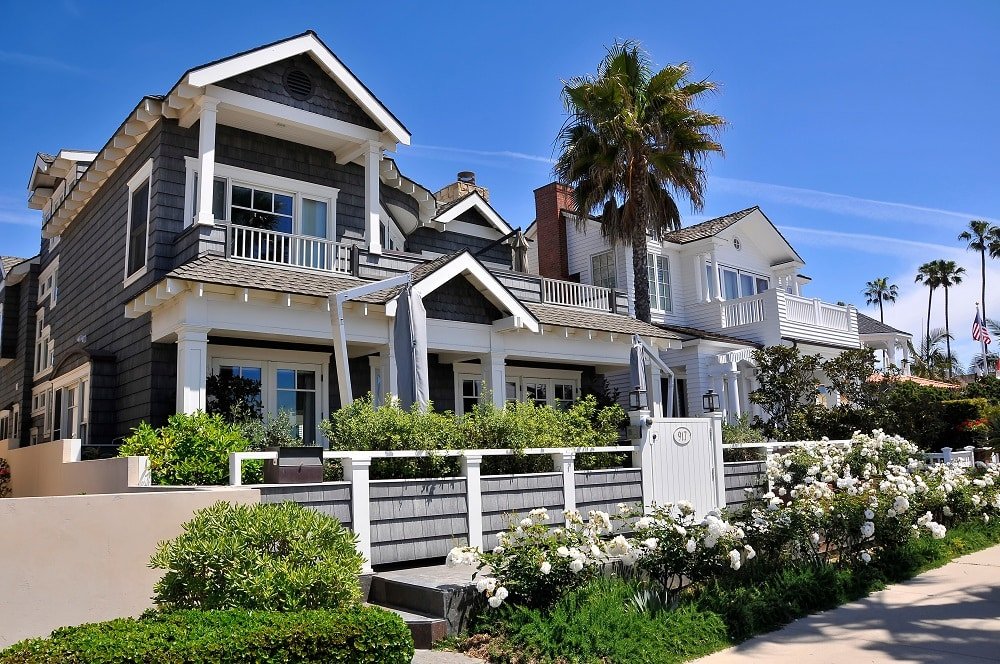
Housing in San Diego.

Own a cabin that qualifies as a second home?

If you do, is it modest or even semi-primitive?

The day may be coming when the California county it is located in could join the latest trend of trying to tax second homes if they are vacant for more than half a year in a bid to increase homes available to rent or to buy.

San Diego will be joining the list if voters approve Measure A on the June 2 ballot.

Leave a second home vacant for 182 days or more and San Diego will slap an $8,000 tax on it in 2027 if Measure A passes.

It then increases to $10,000 in 2028 with annual adjustments for inflation in subsequent years.

Those homes owned by corporations that sit vacant a half a year will be charged an additional $4,000 a year. Of course, the corporate surcharge would jump to $5,000 a year in 2028.

Measure A was put on the ballot as a way to increase local homes for rent or to own.

If that is the goal why not add a similar tax on Airbnb and other short term rentals of 30 days or less?

Clearly, those homes have been taken off the local rental market to cater to non-residents who don’t work in San Diego and are struggling to secure a rental or buy a home.

Airbnb rentals are cut from the same cloth as secondary homes but are even more anti-local housing given they convert residential units in neighborhoods into businesses.

The reality is Measure A is not about housing at all.

It’s another creative way to raise taxes by culling the herd, so to speak, to target those that are outnumbered at the ballot box.

Who cares, right? They are not San Diego residents.

But here’s the rub. The second homes are still residences. They are not businesses.

An Airbnb is a business. It is true a landlord renting a home with a six-month or a 12-month lease is a business.

But an Airbnb by its very definition is taking housing meant for local residents to live in and using them as hotels. Why not treat such short term rentals with the same disdain as a second home and slap a penalty tax on them as well for shrinking the local rental market?

The reason is simple. Too many voters would be against such a tax. But going after owners of second homes that are unlikely registered voters in San Diego; the prey couldn’t get easier.

But that is not the real problem with the measure that was originally floated to address the city’s housing shortage.

It is now being sold as a way to plug San Diego’s budget deficit by generating between $9.2 million and $24 million in the first year alone.

The city estimates it will be able to slap the $8,000 tax on top of the property tax bills of 5,140 homeowners. All of the money — surprise, surprise — will go to the general fund, and not to any housing initiative.

But wait, there’s more.

Just exactly how will be the city determine if an owner doesn’t occupy a privately owned home for at least 182 days?

It’s the government, need one say more?

Measure A in San Diego is all about raising taxes.

Hold on, opponents, say, it is still about housing.

After all, the draconian tax might prompt/force some homeowners to rent out their homes.

Why, if you don’t own a second home that could be just a primitive cabin, should you care about what is basically an “un-occupancy” tax?

The reason is simple. It opens the door to more creative taxes.

Say what you want about general sales tax proposals, but everybody that is age 18 and over in a jurisdiction that is likely to pay the tax, can have a say in whether it will be imposed at the ballot box.

The more you spend on taxable items, the more you pay.

San Diego’s Measure A makes no distinction between a modest home left by parents to their children that is used as a second home in central San Diego and an $8 million beachfront second or third home bought by a tech billionaire.

Worse yet, the proponents are being dishonest selling it as a housing solution.

It is nothing of the sort.

It is a money grab, nothing more and nothing less.

Why not impose an annual $8,000 housing tax on homes worth more than 100 percent above the median housing in any given city?

If people can be penalized for owning second homes, then they can be penalized for owning “twice” the home as well.