Today, the San Joaquin County Board of Supervisors will ponder the wisdom of a temporary moratorium on large scale data centers in unincorporated areas.
Supervisor Robert Rickman is advancing the idea of a temporary moratorium for six months until the county gets its proverbial ducks in a row to determine if they even want large scale data centers after weighing various issues and — if they do — what the zoning and operating rules should be for such a facility.
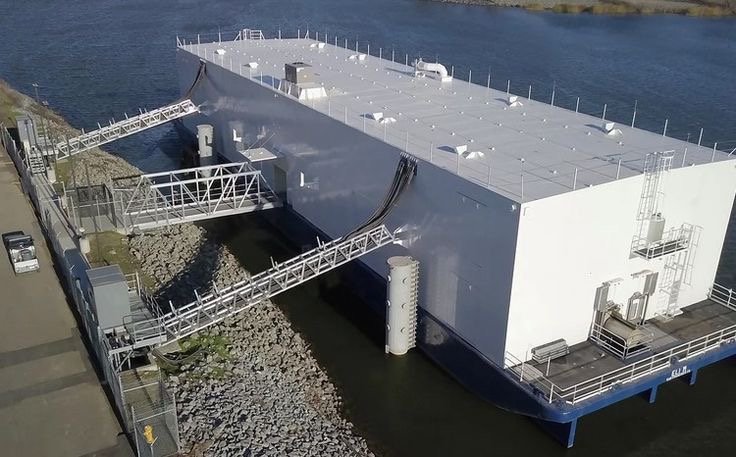
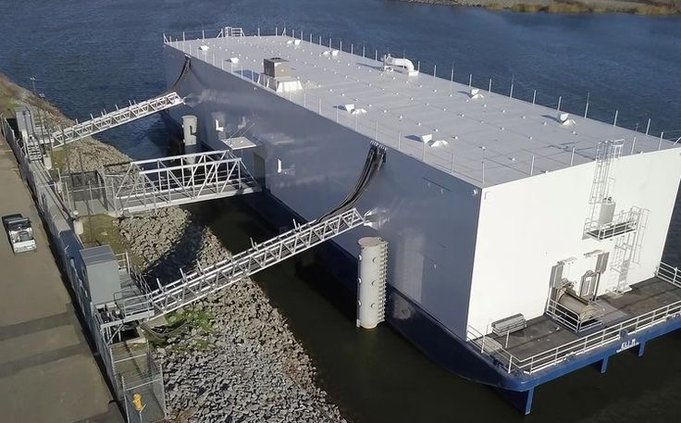
To be clear, there is already a data center in Stockton. There are also two in Modesto and one even in Jackson.
They are smaller operations as opposed to the million square-foot version — the size of the Wayfair distribution center in Lathrop visible from the 120 Bypass — being proposed in Imperial County. That data center near the Salton Sea qualifies as a so-called “mega” data center that is generating all the political turbulence today.
There are no active plans for a mega data center in San Joaquin County today.
That said, Rickman is absolutely right to shine the light on the issue.
The big reason, in the case of San Joaquin County, is the impacts of water given California’s perennial water wars and the fact this is ground zero thanks to the Delta and massive transfers of water.
Local leaders need to be proactive.
And that also means local cities especially Manteca, Tracy, Lathrop, and Stockton that are currently in the race for mega-distribution centers with footprints of a million square feet plus that reflect what mega data centers need as well.
There are 296 of data centers in California now using water for cooling.
Santa Clara has the most at 69 followed by Los Angeles at 59, and San Jose at 47.
Rest assured, those could easily “equate” to several mega data centers. All three cities rely heavily on out-of-basin water supplies.
As for power consumption, rest assured such enterprises are not going to put themselves at the mercy of PG&E that is typically is the highest cost electric power provided in the continental United States.
That, coupled with California’s ever growing solar production with every new home built and retrofitted adding to the generation of electricity, should mean the impacts of mega data centers in the Golden State on energy is not a near as great as elsewhere such as more rural area with less intense water and energy infrastructure.
California — as well as San Joaquin County — can ill afford to take a wholesale anti-data center stance given artificial intelligence is what is now one of the major driving engines of the Golden State economy.
And nowhere else is it as big a deal as in the Bay Area — and by extension San Joaquin County — given AI is now the largest job creator when it comes to primary and ripple effect jobs as well as overall economic impacts.
Before you dismiss data centers as something you don’t need there are few businesses that don’t rely on the “cloud” in one form or another. The vast majority of people use data centers even if it is only uploading backup photos of what they posted to Instagram or Facebook.
Data centers have benefits.
They create construction jobs.
They provide direct ongoing jobs.
And they are playing a growing role in powering the future.
When it comes to data centers, Virginia leads Texas, California, Georgia, and Ohio.
Mega data centers can be in locations far away thanks to the Internet, but is it wise that California concede such a key linchpin of driving tech development to other states?
There are a lot of policy questions that need to be answered including how business friendly San Joaquin County wants to be while guided by a goal of keeping agricultural production robust, protecting water supply as well as quality and making sure the quality of life is not just protected but enhanced.
Given how the words “data centers” can fan the flames, it makes sense zoning and other local government regulatory guidelines are hammered out in advance of any proposal being made for a mega-center in San Joaquin County or its cities.
Some may say Rickman is pursuing a solution for a problem that doesn’t exist.
That’s because the tech firms look for land deals and such.
But just like tech itself, data centers have been evolving and will continue to evolve.
The Bay Area tech sector having a mega data center in its own backyard could eventually become a significant ace for the economy and it may not.
Regardless, San Joaquin County is best served when local leaders steer decisions including whether large data centers should be part of the region’s future and, if so, where should they be allowed and how should they be regulated.