Those that are absolutely against any new taxes under any circumstances should send a thank you card to the consultant Manteca Unified School District hired to advise them on the $260 million Measure R bond.
The measure that needed a 55 percent approval rate to pass was going down Thursday 47.49 percent in favor and 52.51 percent against as the vote by mail ballots continued to be verified and counted.
The reason why the consultant did less than a stellar job to earn their money had nothing to do with polling data last summer that showed roughly 80 percent of the respondents agreeing there was a definite need to spend money to improve school facilities with more than two thirds saying they’d vote for a bond.
The consultant whiffed it in terms of timing when he advised the presidential primary would bring more Democrats out who typically are make supportive of school bonds. The 10th Congressional District of which Manteca where most of the school district voters reside is famous for being an area where Republicans are predictable and the Democrats are not when it comes to generally following California political axioms.
That was underscored once again on Tuesday when San Joaquin County voters were rejecting the $15 billion state school bond measure, Proposition 13, by a 2 to 1 margin.
An off-year election such as when Gov. Gavin Newsom is up for re-election in 2022 has less red meat being gnawed on through social media and the 24/7 non-stop cable TV commentary shows that pass these days as newscasts. It is a safe bet Newsom’s drive to impose new taxes with a massive state budget surplus won’t help the situation in two years but it is doubtful the feeding frenzy will be as intense as those inspired by President Trump or Bernie Sanders.
Assuming the consultant also advised the independent citizens committee formed to campaign for Measure R, someone should ask for their money back.
San Joaquin County unlike Los Angeles County sends its vote by mail ballots out 30 days in advance. Surveys should most of those voters cast their votes within days of receiving their ballot.
There is plenty of evidence that was not only true in San Joaquin County but that the trend was accelerated here given less than 20 percent of the ballots cast are actually done at a traditional polling place.
Pro Measure R signs did not start popping up until a month before Election Day. That’s like a grocery store not stocking turkeys for Thanksgiving until three days in advance of the holiday. There are some folks that wait for the last minute to buy their bird but the overwhelmingly majority have already crossed it off their list by then.
Of course if they started a push in January, it would have been when credit card bills for holiday spending were coming due making people think more about their financial situation. And if it was started in December it would have been lost in Christmas distractions.
Consultants worth their salt in defending their witchcraft will note voters aren’t predictable.
That’s not exactly true. A set percentage will automatically vote no on bonds or taxes regardless the case that is being made. Another percentage when it comes to schools can be counted on to always vote yes.
That leaves the true target— those that will analyze what is presented to them in terms of a pitch for a bond and weigh it against other key factors such as their financial situation. their level of comfort with more taxes, how important the need is to them and their family, and whether those making the pitch are good stewards of tax dollars.
During the last month whenever the opportunity arose and someone was willing to go beyond and emphatic “yes” or “no” when asked about how they were planning to vote on Measure R, it was clear there were a lot of factors being juggled in people’s minds.
First, and the most obvious, was did they see the need? Almost all of those willing to engage beyond “yes” and “no” agreed they were. There was a huge disagreement on whether it was due to school district mismanagement for letting things “deteriorate” or if it was due to lack of funding.
This is where explaining school financing does the district limited good given how convoluted the process is that the state controls almost 100 percent. A strong case can be made the district has done as much as possible without cannibalizing money needed for what goes inside the classroom. That’s why it is a fairly safe bet other issues cited in conversations were at play.
*One person noted that when the $159 million Measure G bond passed in 2014 their property tax bill had been dropping for multiple years due to assessed value readjustments triggered by the Great Recession and housing market collapse.
*Several new home buyers pointed to their existing tax burden and how another tax would further squeeze their families. One man noted be bought a home for $600,000 making his basic tax burden $6,000 a year. But when existing bond measures were tossed in and then the substantial Mello-Roos tax he was assessed for schools and the city’s community facilities district fee for neighborhood park upkeep and common landscape maintenance as well as for ongoing neighborhood street light costs were added his tax bill was pushing $7,500 a year.
*Some were still irked by the 2014 campaign tactics vividly recalling the “scare” flyer that more than inferred fire alarms at East Union High were inoperable creating a dire student safety issue and then after the measure passed it wasn’t addressed in the first tier of projects. The district is just getting around to doing the work. It doesn’t matter that the mailing was by a committee independent of the district as it still left a bad taste.
*A few had little appetite for the third bond measure in 16 years — Measure M for $66 million passed in 2004 and just six years ago Measure G for $159 million passed. Given there is still a chunk of Measure G bond proceeds to spend, some felt the district should finish spending what they have on hand in bond proceeds before asking voters for more.
*Many were dealing with living costs going up whether it was PG&E, home and health insurance, or basic items.
There is clearly a need to invest in the district’s 32 campuses to extend their useful life and upgrade facilities to assure safety and more robust utilization of existing buildings.
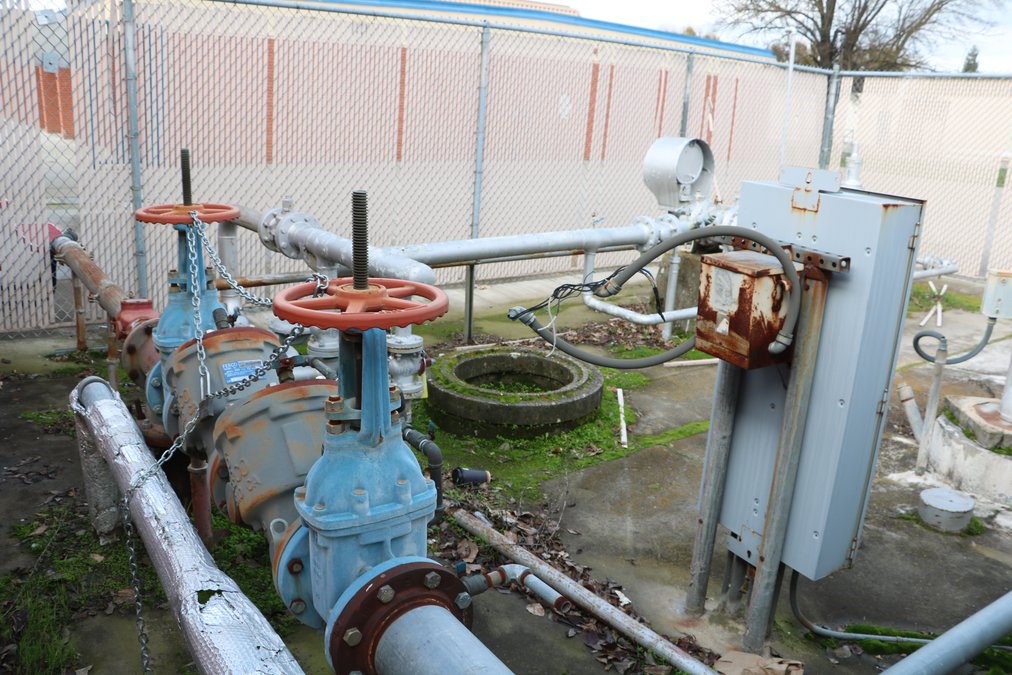
The list of needs the district notes is devoid of purely “want” items comes to $427 million. A lot of that is infrastructure issues that are underground, behind walls, or on roof tops.
Perhaps what needs to be done is a more aggressive community outreach starting with community-school and parent-school groups to explain how schools are financed and to provide nuts and bolts tours of campuses that showcase successes and challenges.
The reason to do so is simple. Given the wide array of concerns of those who are not either automatic “yes” and “no” answers to additional financial support of schools, more knowledge of what schools are up against needs to be shared on a “retail level” of person to person instead of a wholesale basis through social media, mass mailings, and yard sign blitzes.
Without such an endeavor as cost of living challenges and such mount for residents of two of the state’s fastest growing communities — Manteca and Lathrop, it will be more of a challenge for the district to make a case to get people to depart with more funds for schools.