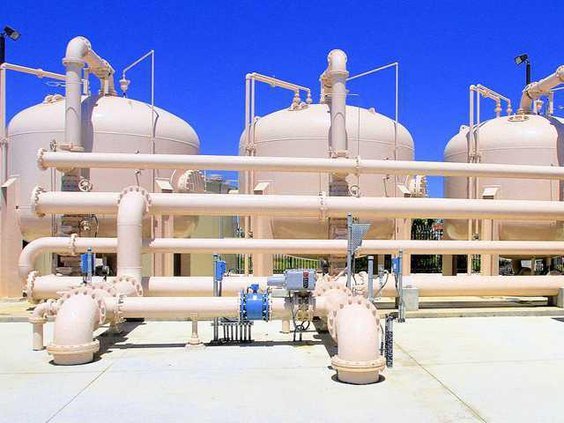
A $3 million project to add a treatment facility targeting synthetic chemicals at the Walnut Place Park water well just to the west of the skate park is before the Manteca City Council when they meet tonight at 6 p.m.
Perfluoroalkyl and Polyfluoroalkyl Substances (PFAS) – a group of synthetic chemicals widely used in various industrial and consumer products for their resistance to water, grease, and stains. Common applications include firefighting foam, non-stick cookware, water-repellent fabrics, and food packaging – have been detected in the well.
The chemicals have been detected at levels exceeding the State Water Board’s Division of Drinking Water (DDW) Notification Levels.
The presence of the chemicals is currently being diluted to levels below the state’s threshold location level by blending it with treated surface water from the South San Joaquin Irrigation District.
The treatment facility that will be built at the well site will treat the groundwater to remove the chemicals.
Forever chemicals have also been detected in municipal wells in Ripon, Lodi, and Stockton.
The City of Manteca joined a class action lawsuit against PFAS manufacturers 3M, DuPont, Tyco, and BASF. To date, the City has been able to recover $2,638,315.26 to be used towards known PFAS treatment.
On Oct. 21, 2025, the City Council was notified by the Water Division that Perfluorooctanoic Acid (PFOA) and Perfluorohexane Sulfonic Acid (PFHxS), chemicals commonly used in a wide range of products and industrial processes, were detected in raw water source samples from Well 22 at levels exceeding the state notifications levels.
Two days later, City Staff released a Request for Proposals (RFP) for professional design services to prepare the Plans and Specifications for Well 22 PFAS Treatment Facility.
Notification levels in California are non-regulatory, health-based advisory levels set by the Division of Drinking Water for specific chemicals in drinking water that do not yet have legally enforceable Maximum Contaminant Levels
How notification levels work:
*Advisory Status: They are early-warning, precautionary thresholds rather than strict legal standards.
*Exceedance Requirements: If a chemical exceeds its notification level, the water system must notify the local governing body. The state also recommends informing customers directly.
*Response Levels: If a contaminant rises past a higher threshold called a "response level" (often 10 to 100 times the notification level), DDW recommends taking the water source out of service or treating it.
There is no general fund impact from the water well project.
To contact Dennis Wyatt, email dwyatt@mantecabulletin.com