Manteca’s municipal financial stewardship keeps paying dividends for taxpayers.
On Tuesday, investors looking for solid and stable places for money placed $300 million in orders for the city’s $54 million bond offering during a window of opportunity spanning an hour and 45 minutes. The full bond offering to help fund a new police station and a sixth fire station was covered with orders in 20 minutes.
The rate was at 4.13 percent compared to the 4.98 percent the bond underwriters a week ago projected would likely be the best rate Manteca would be able to lock in. They pinned the upper range at possibly 5.41 percent.
The difference between the hoped for 4.98 percent rate and the even lower 4.13 percent Manteca was able to secure effectively lowered overall borrowing costs — principal combined with interest — from $93.8 million down to $84.3 million.
That translates into $4.6 million in annual debt payment over 18 years compared to $4.9 million.
It frees up $300,000 a year for 18 years in Measure Q sales tax receipts to go toward other promised initiatives such as street work, public safety initiatives, and amenities. That comes to $5.4 million over 18 years.
“We’re in a real good place,” said City of Manteca Finance Director Matthew Boring.
Boring noted investors are looking for a jurisdiction’s ability to not just repay bonds, but also how transparent and accurate their financials are, potential growth, and stable leadership.
Being in the same county as Stockton — which is experiencing issues in all of those areas — prevented Manteca from scoring an even higher bond rating than the AA it secured.
Even with an AA rating due to Manteca’s proximity to Stockton, it represents the city having a very low default risk and a strong capacity to meet financial commitments, sitting one step below the top AAA rating.
Boring said in other cities he has worked such as Elk Grove, it wasn’t unusual for the actual rates bonds sell at to come in lower than the best case scenario underwriters project, but “not by this much.”
“Manteca is not just making decisions out of the blue,” Mayor Gary Singh said of the city’s deliberate efforts in the past four years to strengthen its financial position.
The city currently has $40 million in general fund reserves.
That compares sharply with some other California cities including Hollister that recently reported having only $178 left in general fund reserves that were at $7.8 million in June of 2025.
City Manager Toni Lundgren said the city will have bond proceeds in hand in a matter of weeks.
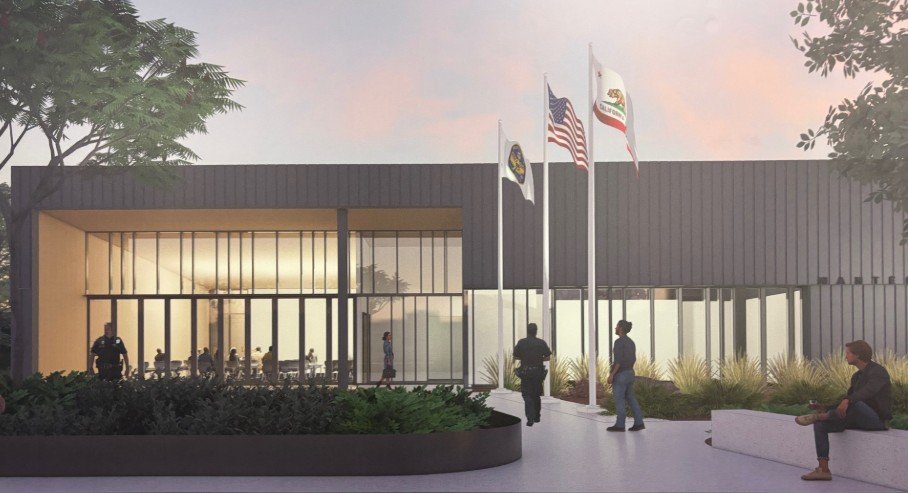
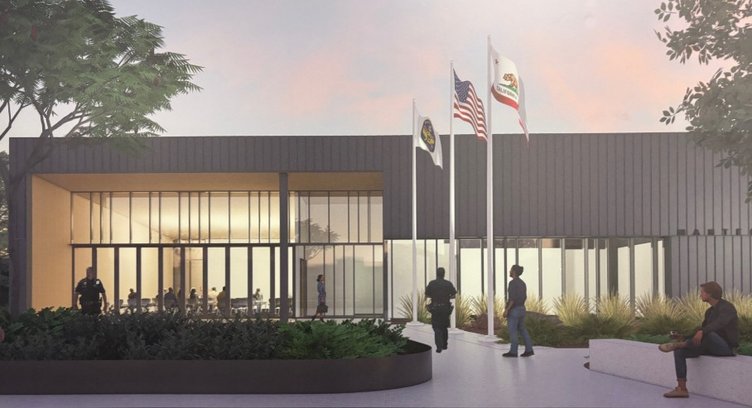
Manteca is borrowing $57 million to help pay for the combined $94.8 million needed to build a new police station and the city’s sixth fire station.
The final projected overall cost of the police station — furnishings included — is $75 million. That is down from the projected $92 million when the city started exploring police department needs and options 14 months ago.
The final projected overall cost of the sixth fire station — interior equipment included — is $24.8 million. That is up from the rough estimate of $12 million when planning started in earnest more than two years ago.
The city has $35.8 million in growth fees on hand that can be used toward the projects — $30 million in government building facility fees for the police station and $5.8 million in fire impact fees for the fire station.
There is a $64 million funding gap once the impact fees are applied.
The city is also using $6.3 million it set aside in Measure Q funds to in the first year the sales tax was in place to repay bonds that is being used to lower the upfront cost of the two projects to $57.7 million.
Going forward, the repayment of the revenue bonds that coincide with the end of the 20-year Measure Q sales tax that will be $4.3 million annually.
Those annual repayments could theoretically be covered all, or in part, by growth fees collected for fire impact and government facilities on new homes as they are built.
In a worst case scenario if there was zero growth going forward roughly a third of Measure Q’s annual generation of $15 million to $17 million in terms of 2026 dollars would be needed to retire the debt.
The city still has a significant amount of government facilities fees in place to help fund an additional project such as a community center.
To contact Dennis Wyatt, email dwyatt@mantecabulletin.com