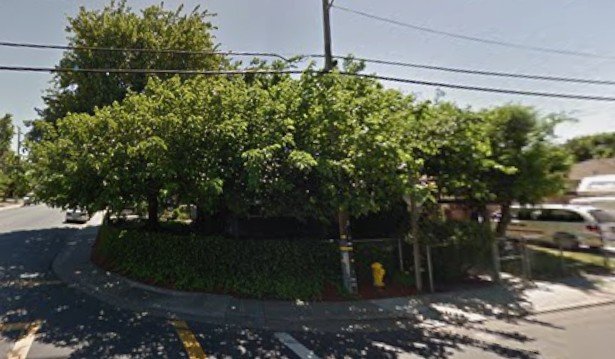
The 106 degree temperatures last week were clearly a challenge.
Yet, at the peak of the heat in mid-afternoon, it didn’t prevent a neighbor in her 80s from going for a walk with a straw hat to protect her from the heat.
Keep in mind if you walk down streets in Manteca — or any valley community — where there are tract neighborhoods from the 1950s on, you’re not going to walk under the expansive canopy of shade trees.
It’s because we started living in another world.
Neighborhoods were no longer built with people first in mind.
Cars started to completely dominate how streets were approached.
They became wider.
Trees, if they were planted, were not just pushed back farther from sidewalks but looks as well as easy maintenance drove the species selected.
Grass was no longer caressed in shade inviting kids to lazily stretch out on a summer afternoon day dreaming after burning off some energy and then cooling down by drinking from a garden hose.
Today, the preferred front yard lawn is the manicured water-guzzling golf course fairway look that is not a welcoming place to relax on a 100-degree day.
Back 75 or so years ago, people in the valley probably would have looked at “experts” as nuts if they mentioned the words “urban heat island effect” and the need to minimize it.
Perhaps it’s because the concept hadn’t been “invented” at the time because common sense prevailed.
Air conditioning per se was a rarity.
Houses weren’t built like sealed boxes requiring a massive income transfer to PG&E to simply keep the inside temperatures below 80 degrees.
They made extensive use of windows meant to be open.
Those building homes in Manteca did everything they could in orientating them to take advantage of something very few in the Central Valley can — the cooling Delta breezes that only on a handful of summer days fail to kick in.
They planted trees that would grow tall with expansive canopies in a manner that would take the direct hit from the sun’s rays instead of roofs and yards where possible.
No one had to advise them tree shade can reduce ground and air temperatures up to 10 degrees. It didn’t require someone with a degree from MIT to tell them the obvious.
And because they didn’t have a lot of disposable income, they didn’t pour yards upon yards of concrete to park RVs and multiple vehicles.
Shade trees can decrease temperature up to 10 degrees but concrete slabs can increase them by 10 degrees.
As an added bonus, concrete stores heat keeping things warmer when the sun goes down.
If you don’t believe that, take an evening stroll along a west facing masonry sound wall along Union Road featuring the 1970s standard of arterial landscaping with trees planted in cutouts in a wide sidewalk that runs from curb to wall.
Of course, such trees are selected to not shade the street or sidewalks due to concerns about roots fighting back against the concrete.
Why would anybody create an asphalt/concrete bridging five street lanes and a pair of sidewalks six feet deep snuggled against masonry sound walls extremely efficient at absorbing heat and then radiating it back?
The answer is simple. They were urban design experts.
The same ilk that is telling us today that cities were essentially foolish to follow their sage advice.
Of course, larger trees can be dirty, messy, and almost all universally lack pretty short-lived blooms.
But when it comes to cooling, they do a Herculean job.
The best example is the cooling “forest” including sycamore trees on the northeast corner of Woodward Park. It is by far the largest and tallest collection of trees in Manteca with nary a blade of grass beneath them being touched by a direct ray of sunlight.
Ask those that loop the 52-acre park by walking or jogging how much more it is comfortable to do so in the shady stretch as opposed to areas exposed to the sun.
Rest assured 75 years ago — when the temperature in this area was perhaps almost a degree high based on global assumptions and people lacked air conditioning — summer living was much more tolerable.
It’s because they acted like they lived in the Central Valley and created neighborhoods and yards that actually made sense for Manteca as opposed to the Midwest.
Climate change, natural and otherwise, has always been an issue.
The biggest problem in the past 75 years instead of living in concert with the climate in a number of little ways that add up, we ignore the realities of where we live.
The “street trees” the city authorizes that allow for the wide exposed streets and concrete jungle aren’t sycamores and such.
They are picked to minimize maintenance issues.
And we are all paying for it with Manteca literally turning up the heat through urban design.