“Bank juggling” sounds like a snappy name for an app to manage financial services.
It’s actually shorthand for a crime that led to a Manteca businessperson having $26,000 snatched from his vehicle.
The suspected culprit, though, did not evade capture for long.
And it was thanks to 82 eyewitnesses that helped Manteca Police to quickly collect evidence.
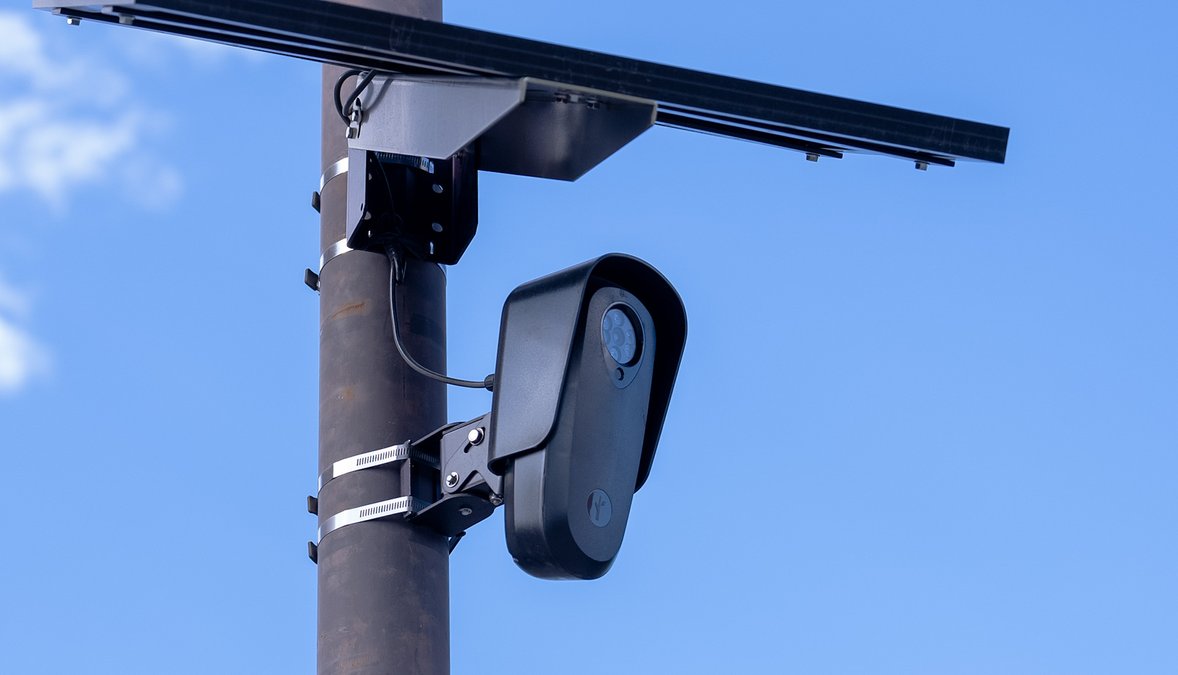
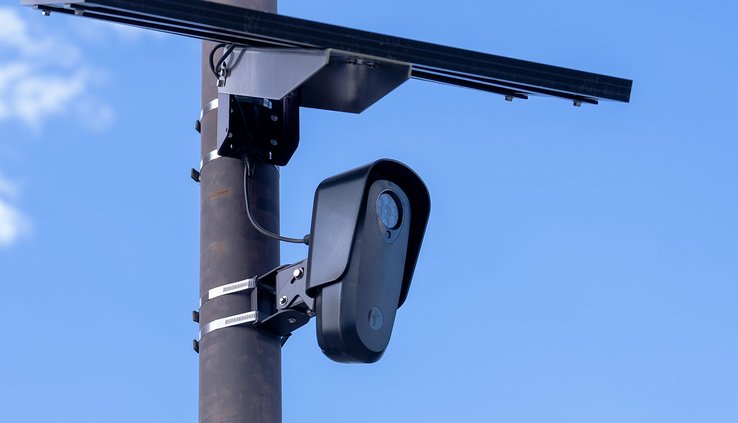
Those eyewitnesses are 82 license plate readers (LPR) dispersed across Manteca.
They enable police to read license plates as well as search for specific models, colors, and identifying features of vehicles involved in the commission of crimes.
Community Service Officer Misty Coleman shared with the Manteca Rotary Thursday how effective the 82 cameras have been so far.
The quick arrest in bank juggling incident — and a second one just like it by another party — was the direct result of the cameras being in place.
Bank juggling involves criminals watching outside banks for people exiting carrying money bags or envelopes that can be visibly seen.
They end up following the target as they drive away, waiting for an opportunity for the vehicle to be left unattended in a parking lot or elsewhere.
While the victim is gone, they break into the vehicle and search for the money bag.
Police were able to use LPR footage from various locales to look for the victim’s vehicle leaving Wells Fargo Bank and then moving throughout Manteca to the location where the vehicle was broken into.
During the check of various camera footage, they spotted a vehicle following the victim’s car. The last camera even showed the suspected criminal emerge from their vehicle and break into the vehicle’s car and remove the envelope.
The police used the license plate information to find and arrest the suspect.
There was a second incident involving a different suspect targeting a Valley Strong Credit Union customer that also led to an arrest.
In that case, the suspect car was spotted early in the day in the parking lot of a number of other Manteca banks looking for victims that were exiting with money bags or big envelopes, but to no avail.
“They are a lot of crimes we are able to solve that would highly unlikely not be solved if we didn’t have the cameras,” said Manteca Police Lt. Ian Osborn.
The department is experiencing a surge in crimes being solved and arrests made thanks to the LPR technology helping police secure evidence and react quicker in investigations.
Among other recent examples of the impact of LPR technology:
*A teen using their parent’s car to flee with a stolen reptile from the Carter’s Pet Store was apprehended.
*Incidents of stolen vehicles entering the city have triggered alerts against a stolen vehicle data base using LPR cameras that not only detected them, but tracked their movements as they passed other points with cameras allowing police to make an arrest.
*Footage from various residential cameras caught images of a vehicle involved in home burglaries that allowed police to review LPR footage at locations near where the crimes took place to pinpoint a suspect vehicle after they were able to read the license plate.
*It allowed a fast resolution to an Amber Alert by Manteca officers. The system automatically alerts the department when a license plate connected with an abduction matches what is in the data base along with stolen vehicles.
*It led to the arrest of an individual wanted on a warrant and whose license plate was entered into the data base. Using a private sector camera that a business requested police have access to as well as LPR cameras, police support staff tracked the suspect’s movements to Home Depot where officers waited for him to return to his vehicle to make an arrest.
Of the 82 cameras, 69 of them are contracted with Flock and the remaining 13 are tied to the red light cameras.
The Flock cameras were initially secured with leftover federal pandemic relief funds with Councilman Charlie Halford committing all of his proportionate share of $2.5 million that individual council members were able to earmark to acquiring the LPRs.
That funding covers the first three years of annual $223,750 payments.
City funding for the last two years, and subsequent years, has not been identified. The likely source could be Measure Q sales tax receipts.
Coleman stressed the cameras do not replace police officers or reduce the need for more officers.
“It doesn’t prevent crime,” Coleman said. “It helps solve them.”
What they do is provide evidence in cases the police have little or no leads for, establishes timelines, shortens the time needed to solve cases in general, assists with stolen vehicle recovery, aids in investigating hit and run accidents, improves response time, and bolsters investigations.
Other points that Coleman made regarding the LPRs are as follows:
*They read license plates and provide footage allowing the determination of the make, model, and any distinguishing features in a vehicle.
*LPR cameras do not have facial recognition technology.
*They are not constantly “spying” on people. Instead, footage, that the department stores for only 30 days, is reviewed looking for a specific vehicle involved in a specific incident.
*Footage that is connected with an investigation is retained and held for the case file.
*A log is kept of all footage searched with information on why it was being reviewed and the identity of the person reviewing it.
*Only authorized personnel can view the stored footage.
*The footage is not shared with the Border Patrol.
*The department governs the appropriate use of footage such as if and how it is shared with other agencies such as a multi-jurisdiction investigating occurs of retail store theft rings.
*The LPRs generate investigative leads when there is little other evidence.
Coleman noted protocol calls for a thorough vetting of images to tie vehicles to crime incidents before the information is broadcast to officers.
To contact Dennis Wyatt, email dwyatt@mantecabulletin.com