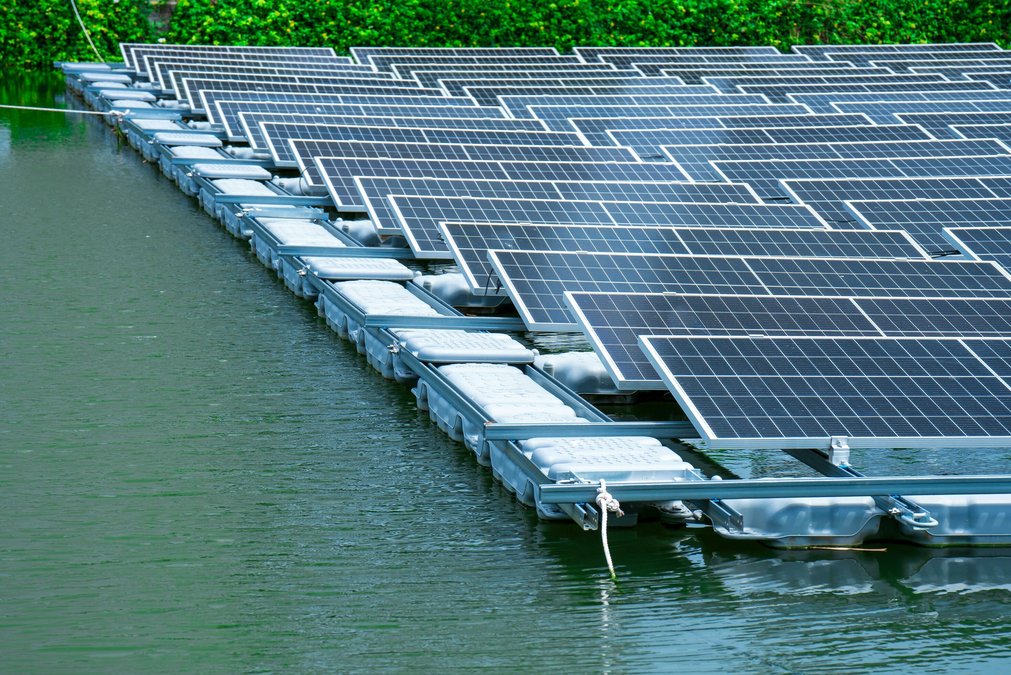
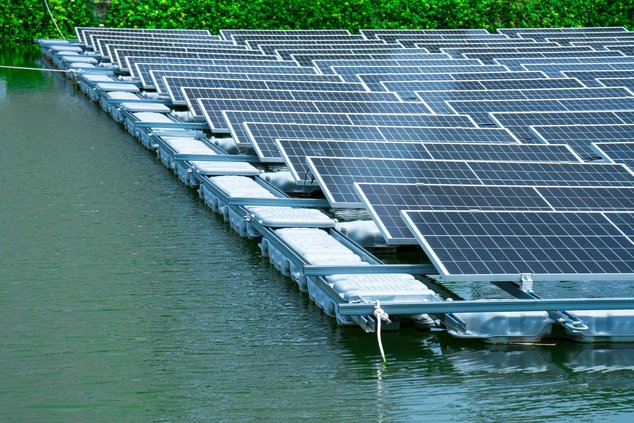
Manteca sewer ratepayers — depending upon how Manteca pays for it — will save between $17 million and $27 million in avoided PG&E costs over the next 20 years due to the City Council Tuesday approving a solar power project at the wastewater treatment plant.
The lower savings is based on financing the project at 5.25 percent. The $27 million savings would require paying for it upfront and avoiding interest charges.
PG&E costs to power the treatment plant currently comes to about $2.5 million a year.
That translates into roughly $83 a year built into the annual city utility bills for each of Manteca’s 30,000 plus households and businesses that have sewer service.
The cost savings that include installation of floating solar panels on treatment ponds as well as adjacent battery storage also factor in projected maintenance and equipment replacement costs over the next 20 years.
The city’s up front investment of $2 million plus no longer paying PG&E for 2.3 megawatts of the annual 3.5 megawatts needed to operate the treatment facility on an annual basis will be recovered after eight years.
That would be made possible in part for up to $6 million in federal incentives of the solar if operational before the end of 2027.
The costs of the project is between $15 million and $18 million.
The projected savings assume there is no change in city power usage and no PG&E rate increases. The city’s savings, or cost avoidance, would escalate as PG&E rates do.
Historically, PG&E rates have increased 10 percent in the last 5 years, 7.5 percent in the past 10 years, and 6 percent in the last 15 years.
One citizen speaking against the project did so out of fear the city would have to raise rates to put the solar project in place.
Another wanted to know if the city would be reducing rates or sending ratepayers refund checks.
What will happen is the current part of monthly rates that covers the cost of 2.3 megawatts will be used to pay off the solar and battery installation over eight years. Then for the next 12 years of the rated 20-year life of the solar project, the $2.5 million annually would go toward covering over costs include what power the city would still need to buy from PG&E.
Councilman Mike Morowit stressed the project — which is being financed with $2.5 million already factored into rates to cover most of the PG&E bill — will not require a rate increase.
What it will do is reduce the size of future rate increases as well as allow the city to avoid having to deal with ever raising PG&E charges for much of the treatment plant’s energy load.
Morowit compared it to residential solar that essentially stabilize energy costs going forward.
Councilwoman Regina Lackey lauded the staff for finding a way to help reduce future costs for ratepayers.
Mayor Gary Singh also liked the idea as it won’t tie up land for solar arrays and the placement of the floting panels on the treatment ponds will help disguise them from the city’s adjoining family entertainment zone.
To contact Dennis Wyatt, email dwyatt@mantecabulletin.com