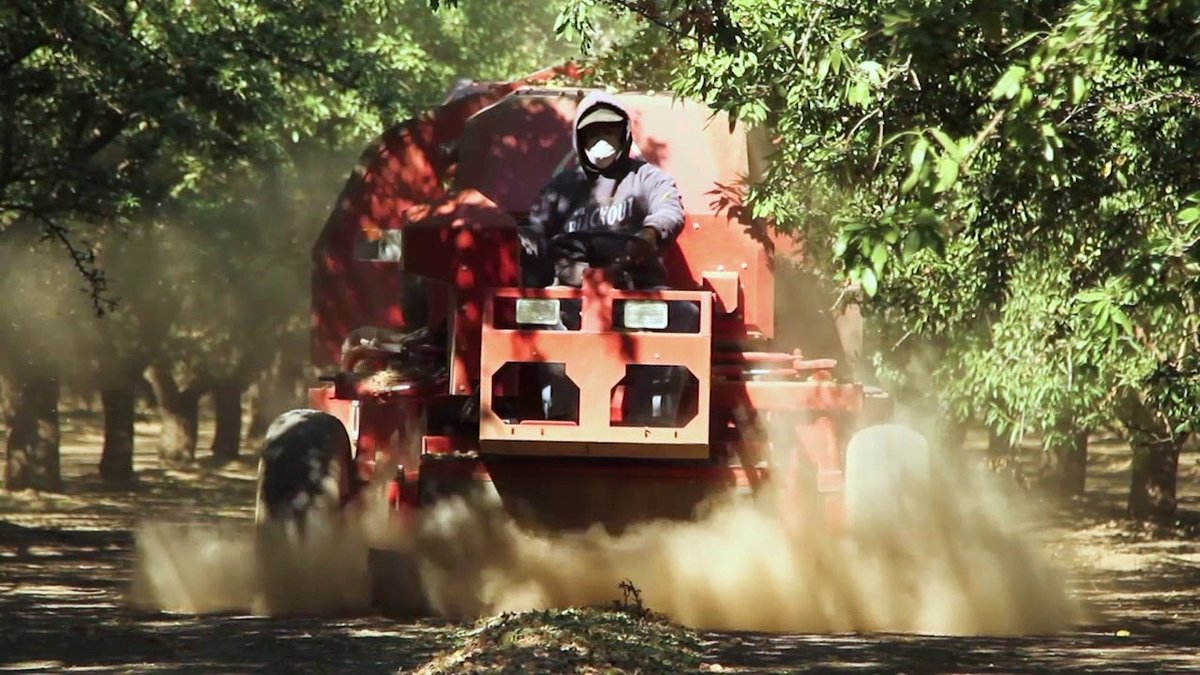
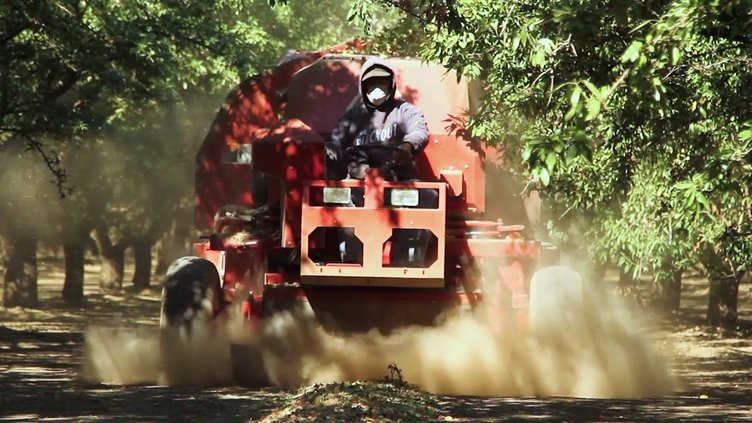
Notice the dust? Isn’t it great?
It’s everywhere. It’s on your car, on your windows and on tree leaves.
No, I do not own an interest in a car wash in Manteca that now has at least 15 car washes with another four or so proposed.
But I do eat.
The dust many of us view as a curse this time of year is primarily the result of farming.
Don’t misunderstand. Nature contributes generously to the mix as winds blow across the Delta and down the San Joaquin Valley toward Bakersfield. And the big part of the “dust” we are cursing as we enter the fall season consists of weed pollen.
Today at 5:05 p.m. our time is the September equinox. The sun is halfway to the day it basks Earth in the least amount of light.
It’s also the last cycle of many crops in the Northern Hemisphere that help feed the world’s 8.3 billion people.
As such, it’s a good time to reflect on how lucky we are to have all of that dust.
No, I’m not losing it.
Even with today’s farming practices that emphasis water and soil conservation as basically rule No. 1 given depleting them means food in any form can’t be grown and farmers would end up bankrupt.
A large chunk of the dust is from the shaking of almond trees and then sweeping orchards to bring the end result of the sweet elixir of trillions of dainty pink and white blossoms carried on gentle February breezes to tables around the globe.
But the act of tossing pumpkins, cutting alfalfa, picking tomatoes and such creates dust as well.
Add to it pollen. While trees, grass, and flowers are the dominate source in the spring and summer pollen from weeds dominate autumn.
Take a look around. The valley floor as well as the Altamont Hills and Sierra foothills are ablaze in dry weeds.
Now think of what it would be like if the world was “dust” free.
They’d be no dirt. It would be nothing but rock and water.
It would mean the San Joaquin Valley would not be producing over 300 different crops for more than half of California’s agricultural output that is the equivalent of 8 percent of the Unified States’ annual farm production.
And as much as many of us like to view San Joaquin County as an extension of the Bay Area or at least its affordable housing solution, by and large we live in an agricultural county in the heart of what is by far the nation’s largest farm state with $68.6 billion in farm production in 2025.
After that, it drops off to $45.1 billion with Iowa in the No. 2 spot followed by Texas at $40.3 at No. 3.
San Joaquin County, if it were a state, would fall between Maryland (36th at $3.9 billion) and Utah ($3 billion) in annual fat, production.
And if it were a nation, San Joaquin County would rank 96th out of 195 countries edging out Nicaragua for that spot.
San Joaquin County has 1,425 square miles, Utah 84,899 square miles, and Nicaragua 45,469 square miles.
San Joaquin County has 816,108 residents, Utah 3,574,825, and Nicaragua 7,100,000.
Any way you slice it, San Joaquin County is an agricultural juggernaut.
And to keep it that way, the biggest external threat is not its status as the nation’s fastest growing collection of supercommuters driving 90 minutes in each direction to snag fatter Bay Area paychecks.
It’s drought and changing precipitation patterns that experts anticipate will lead to more rain in the lower elevations and less snow in the higher elevations.
As such, that will put a stress on the state’s largest natural reservoir of water — the Sierra snowpack — as well as manmade reservoirs whether they are on the Colorado River or the river watersheds of Northern and Central California dominated by the Sacramento and San Joaquin rivers as well as their tribulations such as the Stanislaus.
The culprit isn’t climate change as much as the designs that Southern California water interests have in water flowing through the Delta as well as how myopic the state’s response is to rising sea concerns based on their own climate models.
The current 20 year plus mega drought that much of The West — specifically the Colorado River Basin — is in, is prompting Southern California to look north to satisfy its thirst for water to support its current population and future development.
At the same time, the state’s rising sea level models identify the Delta as being by far the most vulnerable with areas underwater including land as far east as near Stockton and Lathrop with coastal cities under significantly lower threat levels.
The end result of either scenario — LA via its myopic Delta Tunnel and/or the Delta doing a disappearing act — poses a serious threat to San Joaquin County agriculture.
Complain about the dust if you will, but you’re likely to miss what it represents when it’s gone.