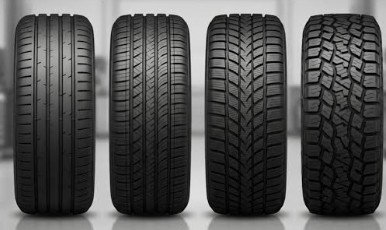
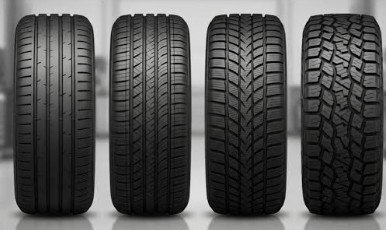
The latest green assault on your ability to keep treading water in Costly-fornia is coming to a tire dealer near you.
The same people in Sacramento that brought you the high speed rail project that burns through money at a world-setting pace are now bringing the same green sensibilities and lack of cost controls to your tires.
And in doing so, Goodyear et al, say the cost for replacement tires will be hundreds more while the California Energy Commission puts the increased cost at an average of $26 per tire.
Drag is literally a drag when it comes to better gas mileage.
It is why the Energy Commission after a six-year examination decided to dictate using existing new tire standards for replacement tire.
It is literally because the new standards for replacement standards are the same that apply to tires on new vehicles that are sold. And all replacement tires sold in California by 2033 for vehicles, light trucks, and SUVs must meet those standards.
Those tire standards allow automobile manufacturers to attain the Environmental Protection Agency rated mileage standards obtained under ideal driving conditions. The tires that do that are to “original equipment manufacturer” standards or OEM for short.
Given tires aren’t an itemized add on to the sticker price of a car, the cost per tire on a typical tire runs $100 more if you replace it with an OEM tire that is designed for a particular vehicle as opposed to a random replacement tire.
In other words, replacement tires that match perfectly with what comes on a new car with tires that factor in every unique issue with that specific model will cost your roughly $100 more per tire for an OEM tire than just one that meets basic specifications.
That $400 “savings” — according to independent testers and not the government and not auto manufacturers — per four tires has hidden costs pushing $1,245 using a 2022 Honda CR-V as an example.
The $1,245 is reflected in the need to replace tires sooner, reduced gas mileage, and the need for more frequent realignment.
Assuming the CEC’s staff analysis took out that into account, the $26 per tire increase that the government brushes off as not be more costly — though what they really should say is almost negligible over the lifetimes a tire — only applies to those that are doing everything “right” when it comes to driving and tire maintenance.
Rest assured the $100 per tire hit when a tire set is replaced is a reality for those that don’t go with OEM rated tires for their particular vehicle.
That’s $400.
And while it is almost all offset by reduced gas consumption and tire maintenance over the course of 40,000 to 60,000 miles — or six years in terms of overall rubber deterioration — it misses a key reality by a mile.
Most people can deal with being hit in nickel and dime increments, but increases the cost of replacement by $400 at one time and it’s an add on to plastic debt or an expensive payday loan that can take months, or years, to get rid of.
The reality is the cost of tires for most people includes the cost of borrowing money.
The CEC in proclaiming costs are basically negligible glosses over that reality.
The main driving for the state in justifying the added expense is gasoline savings.
Switching what would be 70 percent of the vehicles in California to mandated OEM tire replacements is a projected saving of 141 million gallons of fuel annually.
The CEC says the new rule gives California drivers more options.
That is, in semi-tire lingo, a “bald-faced” lie.
Buyers of replacement tires now have two general choices for replacement tries: Ones that meet highly tuned specific OEM standards to squeeze out gas mileage and those that meet general standards for specific vehicles
Sacramento is basically telling drivers they need to front load costs to do the right “green thing” while banning the a less expensive that is still safe but must be replaced more often.
The reality is many Californians live paycheck to paycheck and — if they have a little bit of cushion — can absorb a $500 or so “hit” occasionally.
Doubling one of those “$500 hits” by mandating OEM replacement tires will force more than a few households farther into credit debt costing them more green in interest than the green gains they are making for the environment.
Do not misunderstand.
We benefit from reasonable green initiatives such as reformulated gas.
Over the course of 40 years, reformulated gas has slashed San Joaquin Valley air pollution in half while the population has soared.
The green return in health, air quality and such from the new tire rule won’t be anywhere near in the same league while it turns the economic vice on many Californians ever so tighter.
It may be a green gain but it will do so with inflicting economic gangrene conditions on many.