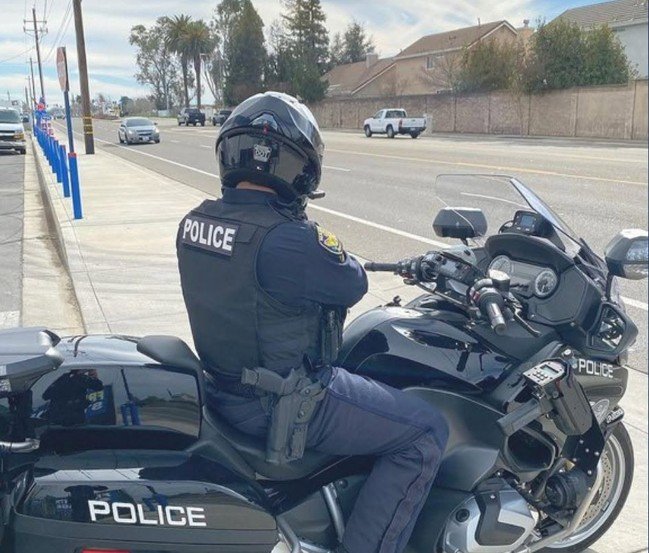
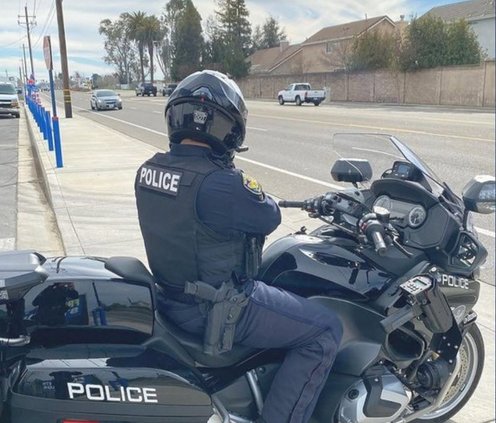
Manteca Police — for the first time in at least 40 years — will have all allotted police officer positions filled as well as also having a full fleet of vehicles that isn’t riddled with problematic cars.
And the reason why is passage of the three-quarter cent, 20-year Measure Q sales tax has provided the revenue to make both a reality.
Manteca Police now have 84 budgeted police officer positions with 83 filled.
The 84th is the fourth community resource officer that will be assigned to elementary schools made possible with an agreement inked last month with Manteca Unified.
That position will be filled from applications in the current ranks and a new officer hired for the patrol force.
The 84 number does not include three out-of-budget officer positions City Manager Toni Lungren recommended the council hire to address nine vacancies created primarily by on-the-job injuries.
While some are able to be assigned light duties such as reviewing red light tickets before they are issued, none are available for patrol/detective duty.
As such, the three out-of-budget positions means Manteca is down just six in terms of on-the-street manpower in addition to the 84th position that is now being filed.
“They (City management) are crunching numbers to see if we can get even more officers,” Schuler said.
Excluding the three out-of-budget positions, Manteca now has eight more police officers than they did four years ago. And even with six of the nine worker’s compensation “vacancies,” the force is up two people for day-to-day patrols — and soon a third when the 84th officer position is filled than they were in 2022.
How the city used to
add new police officers
Manteca’s “old way’ of hiring officers was a slight of hand at best, and misleading to the general public at worst.
Previous councils — in years when conservative revenue and other municipal obligations allowed addition police positions — would build one or maybe two into the annual budget adopted in June for fiscal years starting July 1.
Then police chiefs would be told to wait until after the mid-year budget review to fill the positions.
Usually, that process wasn’t completed until mid-February or early March.
Between posting positions, the screening process, and then extensive background checks it takes three to four months to hire an officer.
That means an officer filling a new position wasn’t hired until a full year later after it was authorized by elected leaders.
Retirements also were problematic.
Even though the department would often know of retirements months in advance, it wasn’t until the last decade police were allowed to start the replacement process four months before the retirement date. That, in turn, placed further pressure on manpower.
Not only are officers replacing retiring officers hired today even before retirement dates, but once the council authorizes additional positions, the recruiting process starts.
That means a position authorized in June is often actually filled four months into the fiscal year instead of roughly a full year later.
The city management use to count on the salary savings by delaying new positions being filled as well as what they’d save by delaying retirement replacement hiring to help build a budget cushion beyond existing reserves.
20 new police
vehicles in a year
With the last delivery of five new and fully equipped Chevy Tahoe patrol units, the department will have added 20 new police vehicles within a year’s time.
And it is also thanks in a large part to passage of the Measure Q voters approved in November 2024.
Altogether, there are 15 new patrol vehicles. Ten are Dodge Durango SUVs and five are Chevy Tahoe SUVs.
The remaining five are unmarked vehicles.
The City Council, in keeping with promises made during the campaign that led to passage of the temporary 20-year Measure Q three-quarter cent sales tax, included $1.6 million in the last fiscal year budget for police vehicles.
That is in addition to $510,000 earmarked in January 2025 to order five of the 10 Durango SUVs.
Those five Durangos were not delivered until late spring of last year due to the lead time to secure and equip vehicles meeting police specifications as well as to outfit them.
The $510,000, along with $1.1 million for a replacement fire engine, was earmarked in January 2025 on the fact voters had passed the tax. The money was taken from reserves and will be backfilled with Measure Q receipts.
The $1.6 million was considered one-time Measure Q funding.
Going forward, city management is establishing a more robust vehicle replacement program so several police vehicles can be replaced annually as they start becoming problematic due to repairs.
The fully equipped Durango police units cost $110,000 each while the Chevy Tahoes are $120,000 apiece.
Now that there are 15 new patrol units are in Manteca, those that have been experiencing problematic maintenance issues with excess of 150,000 miles on them have been removed from service.
Manteca now has around 30 patrol units after taking delivery of all of the vehicles and culling ones that were problematic.
The department two years ago had a situation where it wasn’t uncommon for police shifts to be short one — and on rare occasions two — patrol units.
They either were already in the shop or they wouldn’t turn on when officers got behind the wheel to start their shifts.
That forced officers to double up.
In turn, it reduced the area the police could cover.
While the Ford F-150 pickup patrol units are effective, the department opted not to add to the ones they have given they have a wider turn radius than the SUVs.
To contact Dennis Wyatt, email dwyatt@mantecabulletin.com