Atmospheric rivers bite.
Literally and figuratively.
The 14 atmospheric rivers that stacked the Central Sierra with a snowpack 270 percent of average setting the stage for a long and heavy spring snowmelt, also is unleashing a significantly larger number of insects.
Drive down rural roads at dusk and shortly thereafter to see the amount of gnats smashing against your windshield.
But there is a bigger problem: Mosquitoes.
The 22.8 inches of rain the Manteca, Ripon, and Lathrop area has received since July 1 — 184 percent above normal — delivered a triple whammy.
*It created an abundance of wet areas ideal for mosquito breeding.
*The accompanying cold wetaher suppressed mosquito fish reproduction — a key natural ally in the fight against mosquitoes — in both the wild and domestically.
*The wet winter means dormant eggs of the western tree hole mosquito — instead of hatching gradually — are doing so in large numbers as the temperatures have accelerated rapidly toward the 90s.
All of that means mosquito bites are on the rise in a big way,.
And it’s not just a problem with mosquitoes.
The city had to intervene earlier this month when standing water on a nearby construction site in southwest Manteca generated an overabundance of gnats so thick it was forcing many nearby residents to abandon using their backyards.
That problem was cleared up by the developer getting rid of the standing water.
The mosquito issue is more perplexing.
Already, people are reporting mosquito bites being more frequent and heavier than they have seen for years in April. That is especially true in rural areas.
“Normally, (the western tree hole mosquito) is one of the first to emerge as the weather warms in the spring,” noted John Fritz, District Assistant Manager for the San Joaquin County Mosquito and Vector Control District .
“We have been fortunate in the past few years that this species has been less of a nuisance due to several drought years. As the name implies, this species develops in tree holes, holes in the trunk of trees and even in artificial containers and tires. Because of the wet winter, dormant eggs are hatching in large numbers.”
Due to a cold winter and cool weather extending into spring, mosquitofish development was hindered, making less fish available for the public. The low availability is also evident in known wild sources.
“As the weather warms soon, we expect to see an increase in the mosquitofish production,” said Aaron Devencenzi, District Public Information Officer.
Devencenzi stressed the challenges that are occurring, the district wants the public to know they are temporary.
Until mosquitofish are readily available, the district will be prioritizing their use. They are continuing to encourage the public to request mosquitofish. Upon requesting fish, they will inspect and if necessary, treat the source.
The district is encouraging homeowners with neglected swimming pools to consider cleaning and restoring the water to swimmable conditions.
Other sources of water will be handled on a case-by-case basis after inspection. There is no direct cost to request service. They are funded through public tax dollars.
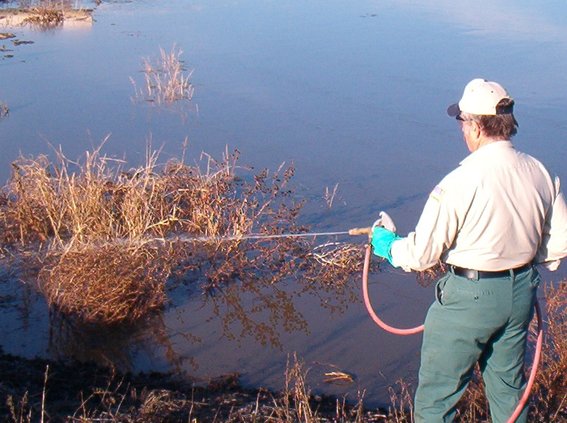
The vector control district utilizes public outreach, biological control such as mosquito fish, physical control involving the clean-up breeding areas, and chemical control in the form of spraying.
Talk to some long-time residents and they will tell you Ripon and Manteca along with the surrounding countryside was a paradise for mosquitoes until the 1950s after the vector control district that was formed in 1942 got well established.
A typical household pays $10.42 a year between property taxes and special assessment for mosquito abetment and vector control.
Miniscule property tax assessments countywide provide the district headquartered on Airport Way just south of Stockton Metro Airport with $19 million annually to combat 17 different mosquitoes that call San Joaquin County home.
If you don’t think the district is relevant in keeping mosquitoes under control in your neighborhood, make the mistake that a few Manteca residents did eight years ago. Put a raft in the Stanislaus River at Ripon and float down to Caswell State Park without benefit of mosquito repellent. This is no man’s land as the district doesn’t spray along the river.
They can tell you it doesn’t take long for exposed skin to develop itchy red marks that look like a severe case of skin rash.
Taxes do bite.
But in many cases such as with vector control life would bite even more without them.
To contact Dennis Wyatt email dwyatt@mantecabulletin.com