Manteca was sputtering two decades ago.
Housing was going strong, commercial development wasn’t.
The city was 20 plus years away from making sure growth truly covered the per capita impact of residential development.
Manteca leaders — since the early 1990s — were looking for ways to stop what is known as “retail bleed.”
In short, it is a term to describe how well the city is capturing taxable sales spent on an average per capita basis.
Manteca, based on a consultant’s report connected with the study of the Mission Ridge Shopping Center that brought Walmart and Mervyn’s to Manteca in 1990, was capturing less than 90 percent of taxable sales its population base should generate.
People were doing a lot of their shopping for taxable basics such as clothing, home goods, and home improvement in Modesto with some doing so as well in Stockton and Tracy.
Why that is a concern was simple.
The city’s one cent share of the basic state sales tax helps fund day-to-day services such as police, fire, and street upkeep. In Manteca’s case, sales tax is the second largest source of general fund revenue after property tax.
That meant taxable consumer dollars spent by Manteca households were not just being spent elsewhere and helping underwrite municipal services for residents of another city, but it was creating shortfalls in funding needed to provide services where those people lived, which is Manteca.
The redevelopment loans to private sector developers that allowed Manteca to snag Home Depot and Target narrowed the retail bleed.
Elected officials in the mid-2000s led by the Mayor Willie Weatherford understood the city had gotten into a long-term financial stability hole over the previous 20 years.
They were looking for bigger and more secure sources of sales tax while repositioning Manteca as a “market and dining hub” — restaurant dining is taxable — in the South County subregion.
The answer came knocking through a land deal put together through local developers Bill Filios and Mike Atherton dealing with shopping center developed Poag & McEwen.
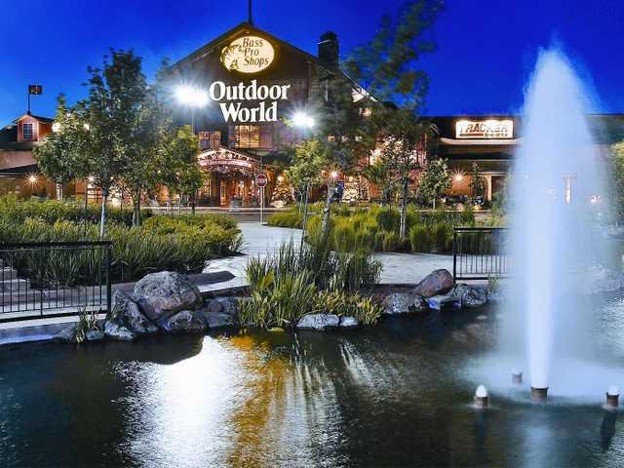
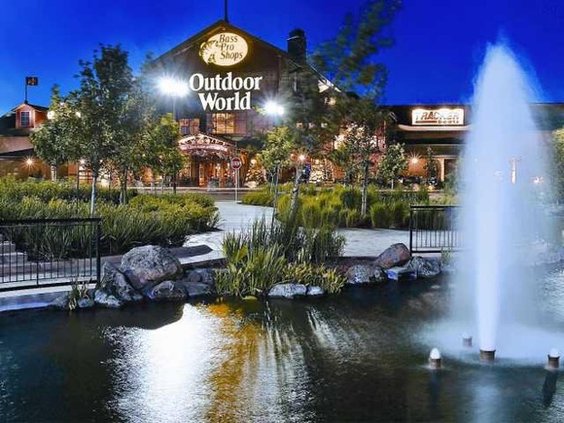
And it was an opportunity to land a whale that lured customers up to 100 miles away in the form of Bass Pro Shops.
But there were two problems.
Bass Pro was thinking about San Jose as its first Northern California location.
And they insisted on financial concessions in order to land them.
How Manteca
landed Bass Pro
Back in an interview in 2013, Weatherford shared that he lives by a tried and true Army flexibility test given to officer candidates that he took years ago.
“Rather than lose the whole pie, they’d take half,” Weatherford said of the ideal characteristics the test was designed to detect.
It’s a philosophy that has guided Weatherford — and Manteca’s leadership as a whole — as they started reversing city’s fortunes at the dawn of the 21st century.
Twenty-six years ago, many Manteca residents were bemoaning the lack of employers locating here as well as the lackluster retail development.
Most of the big fish were being caught by Tracy.
Today the tables have turned.
And it was because of the city’s willingness to offer “bait” to snare high profile concerns such as Bass Pro Shops, Costco, and Great Wolf that have brought with them sales as well as room tax and visitor traffic critical for a healthy government revenue base and vibrant economy.
The highest profile deal of them all was the sales tax revenue sharing deal with Poag & McEwen.
The deal essentially allows the developer to receive 55 percent of all sales tax generated by stores at The Promenade Shops at Orchard Valley through 2043 with three caveats.
*The annual payment to Poag & McEwen would not exceed $1.1 million a year.
*Anything above that threshold would belong 100 percent to the city.
*And, if after 35 years the amount collected doesn’t reach $18.1 million, the city doesn’t have to give up the difference.
Manteca leaders
outmaneuver San Jose
Manteca was competing with San Jose for Bass Pro Shops. The privately held firm — just like formal rival Cabela’s that they acquired several years ago — had a history of demanding direct subsidies of between $15 million and $25 million to build a store in a jurisdiction. They are able to do so because the stores typically secure sought after sales tax cities would not normally have.
In Manteca’s case, it is estimated over 97 percent of the sales tax collected at Bass Pro Shops in Manteca comes from people who do not live here.
Typically such subsidies are in the form of property tax forgiveness or money being funneled into developing sites through public improvements. Manteca opted not to take either route due to risks.
Critics contend Manteca should not have given up anything in sales tax. They also believe the city is in effect helping subsidize a big business against smaller businesses that carry the same type of equipment.
But city leaders viewed it as a strategic move to get much needed sales tax flowing into city coffers by essentially having non-residents pick up a sizeable part of the tab for police and fire services.
That is what has happened.
Since Bass Pro Shops sales figures are proprietary in nature they are not public information.
But based on Bass Pro Shops first year of full operation when there was only the 16-screen theater collecting sales tax besides Bass Pro that was reflected in the first annual payment to Poag & McEwen, Bass Pro had retail sales pushing $160 million.
That means Manteca received $675,000 in sales tax that it never would have been able to collect without Bass Pro Shops.
That is in addition to $800,000 in Measure M public safety tax that is excluded from the sales tax sharing.
In essence, the first year gave Manteca $1.4 million in additional sales tax paid almost exclusively by non-residents.
Manteca getting 55% of what
they never would have had plus
city now has an online challenge
In defending the deal, city leaders noted Manteca was giving up 55 percent of what they didn’t have. If Manteca didn’t have a Bass Pro Shops, they’d get none of the revenue.
The Manteca store was literally drawing the sales tax out of the pockets of residents in Fresno, San Jose, Sacramento, Modesto, Hanford, Walnut Creek, Palo Alto, Oakland, and San Jose to name a few cities.
Bass Pro opened in Manteca in October of 2018.
More than 30,000 passed through the doors during the three-day grand opening celebration.
“Deals have to make sense,” Weatherford said in 2013. “The city has to benefit.”
And how did Weatherford do on that Army test?
“I maxed it,” the mayor said.
Now Manteca leaders are trying to blunt another threat to sales tax — online sales.
And while more and varied brick and mortar stores help, the goal is to seek Internet-proof commercial development such as restaurants, entertainment, recreation, and dining venues.
That is precisely what the city is now aiming for with the 200-acre Family Entertainment Zone (FEZ) bookended by the 500-room Great Wolf indoor water park resort and Big League Dreams.
To contact Dennis Wyatt, email dwyatt@mantecabulletin.com