Michele Reeves — a hired consultant with expertise in rethinking urban places — waxed eloquently about how designing appealing window displays in Marysville jump started economic activity.
She also mentioned other seemingly small touches spurring downtown turnarounds such as a group of women volunteering to paint 16 buildings in Winnemucca in Northern Nevada.
Reeves also told the Manteca City Council other cities “would literally kill to have what you have there” in reference to downtown.
The principal in the Portland, Oregon-bases Civilis Consulting firm went through the usual list of tools used in efforts to transform dying, sluggish, or underperforming downtowns into vibrant economic areas during Tuesday’s council discussion on whether North Main Street should function as one of the city’s three major north-south arterials or forever slow traffic down to make the corridor as it passes through downtown walkable.
The foundation of her pitch was the need to make buildings “awesome” — outside and inside. Reeves pointed to various “appealing” buildings such as the venerable IOOF Building that now houses Manteca Bequarters and how making them look beautiful would be a game changer.
She even provided slides of the interior of a Goodwill Store in Sacramento that looked more like a trendy boutique than a barebones thrift store.
After Reeves shared what she believes are obvious ways to change the direction of Manteca’s downtown, City Councilman Charlie Halford opted to bring up “the (900)-pound gorilla in the room.”
That 900-pound gorilla is the homeless that hang in and around downtown.
Halford said unless the city addresses that first “you are just going to make a more beautiful place for (homeless) to sleep on the sidewalk.”
Homeless related problems are something that business owners have been harping on for the past decade or so. That is in addition to landlords that sit on property and make no effort to rent or upgrade or to make it more appealing for tenants.
It underscored debating about making Main Street more walkable or even hiring what Mayor Ben Cantu said would be the seventh consultant to come up with a downtown master plan in at least 50 years could be much ado about nothing unless the city handles those two vexing problems first.
The city is working on establishing a homeless navigation center with a shelter on 8 acres on South Main Street.
They are also working with Inner City Action to reach out to homeless in a bid to get them onto a path that would allow them to leave the streets.
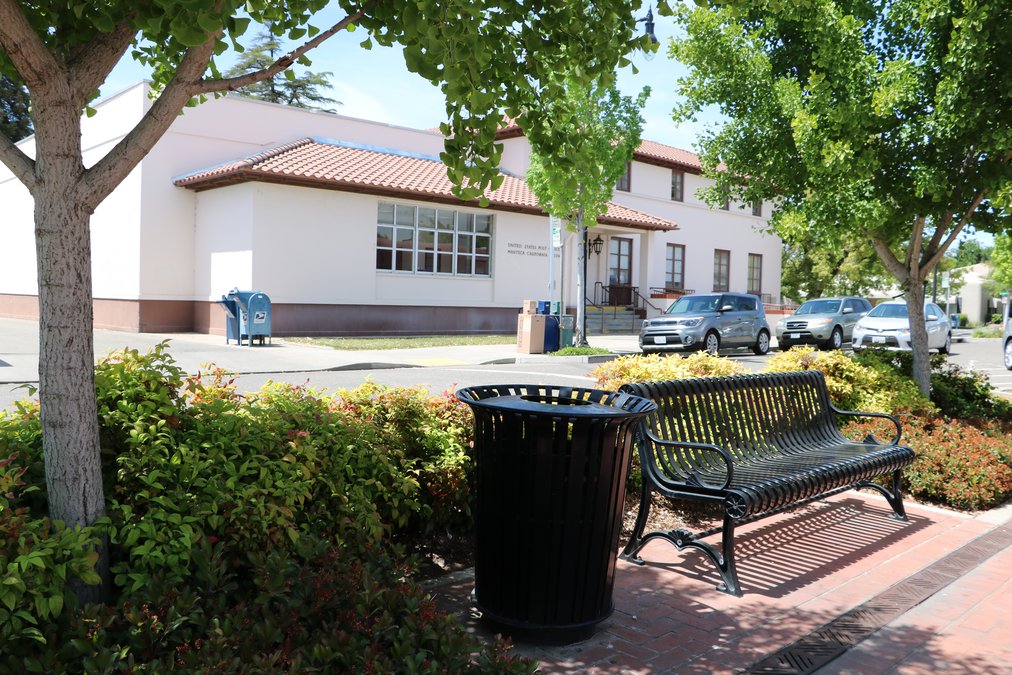
Whether that can resolve the biggest homeless problem the city has downtown — the homeless hanging out during the day at Library Park as well as Wilson Park behind the post office and the homeless sleeping on the sidewalks and elsewhere — is questionable.
The homeless in Library Park was the reason a number of people gave for not accessing the farmers market when it was conducted there.
The courts have made it clear the homeless — just like those who have roofs over their heads — have every right to hang out at parks and such as long as they are not engaging in criminal activity that applies to everyone and doesn’t stem from the state of simply being homeless.
Cities also have to allow the homeless — or anyone else for that matter — to sleep in public places with specific carved out exceptions.
Council adopts tool
to go after unresponsive
property owners
Merchants and the city have long lamented the manner in which some owners manage their property downtown.
The list includes:
*Not maintaining property, especially buildings that are boarded up.
*Failing to secure vacant property that is sometimes occupied by homeless squatters.
*Making no effort to rent, lease, or sell vacant building.
*Seeking exorbitant rents way out of line with market conditions.
*Not making building rentable but instead expecting potential tenants to make even the most basic upgrades.
As part of a council pledge made in February to make fighting blight and combating “ugliness” ranging from graffiti to illegal dumping a top priority, Manteca’s elected leaders have recently adopted an all-encompassing ordinance addressing the upkeep of boarded up, neglected, or vacant buildings including those downtown.
The owner of any building after receiving notice of violation — essentially the 30-day correction period offenders are given — and has chosen to ignore them or make no progress toward remedying them will be subject to fines of:
*$100 for the first violation (the first day after the 30 day period expired).
*$500 for the second violation (the second day after the 30 day period expired).
*$1,000 for the third violation (the third day after the 30 day period expired).
*$1,000 for each violation (per day) thereafter.
*$300 for an enforcement response fee each time a building inspector is called to the building site to cover the city’s costs.
*$350 for a monthly monitoring fee.
Under state law, such fees can’t exceed $100,000 in a calendar year. Based on the fee structure that will go into effect in 30 days or so that threshold could be reached in 30 days.
Reeves’ solutions on how to transform downtown while mentioning the need to get property owners on the same page with merchants and the city made no mention of addressing the homeless issues.
She did express the belief that as downtown becomes more vibrant with people simply no longer making just one stop to access a bank, furniture store, or a hair stylist and then getting back in their vehicles and driving away and instead “walk” to other businesses the homeless would become less of an issue.
Reeves said that is because the homeless, for the most part, stay away from downtown areas with a lot of activity.
In pointing out downtown’s basic strengths she included it being abutted by neighborhoods with a population that can be lured to walk there — or frequent it more than just to bank, have their hair styled, or shopping occasionally for furniture.
She noted the property owners, merchants, and city should share the common goal of driving more sales per square foot.
The council has not formally made a push to commission another downtown masterplan study per se although Mayor Ben Cantu has made it clear that is a high priority for him.
To contact Dennis Wyatt, email dwyatt@mantecabulletin.com