Building two new rental neighborhoods with 2,000 new homes apiece in four or so years in the Northern San Joaquin Valley sounds a bit crazy.
But if you consider the regional dynamics and the targeted market it could stabilize or slow down the rental market in terms of monthly housing costs.
And it would make a reasonable dent in California’s housing shortage that state regulators and housing policy groups contend is somewhere between 840,000 and 3.5 million units.
Cambay Group is weighing building 4,000 rental homes to accelerate the completion of the 15,001-home River Islands at Lathrop community.
River Islands President Susan Dell’Osso on Wednesday confirmed Cambay Group is still “trying to see if it ‘pencils out.”
Obviously, Cambay isn’t going to do something that is a money loser.
But if on such a scale they can make it work, the biggest benefactor would be renters as it would be a substantial expansion of supply.
The bipartisan housing bill that President Trump is declining to sign unless Congress also passes his controversial voter-identification bill once had a provision that would have essentially killed the Cambay Group proposal.
The Senate version — co-authored by Sen. Tim Scott (R-SC) and Sen. Elizabeth Warren (D-Mass) — originally had a provision that would have required large investors that build single family homes for the rental market to sell them to individual homeowners after seven years.
The final bill dropped that requirement after the House of Representatives voiced strong opposition.
Had that not happened and the bill was ultimately signed into law; it clearly would have slowed down housing construction in California.
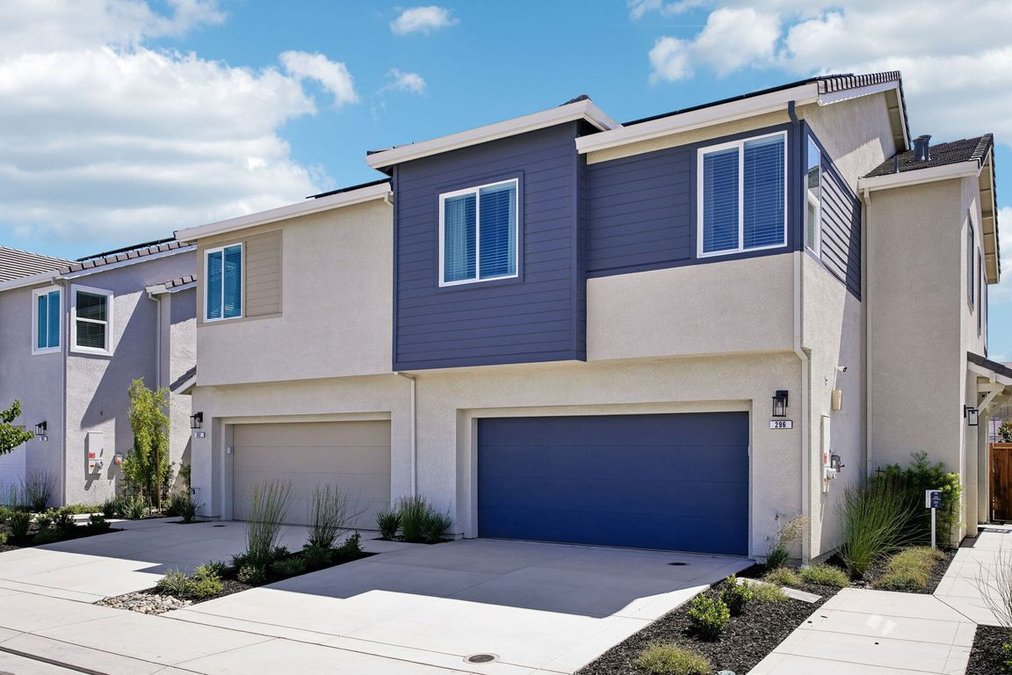
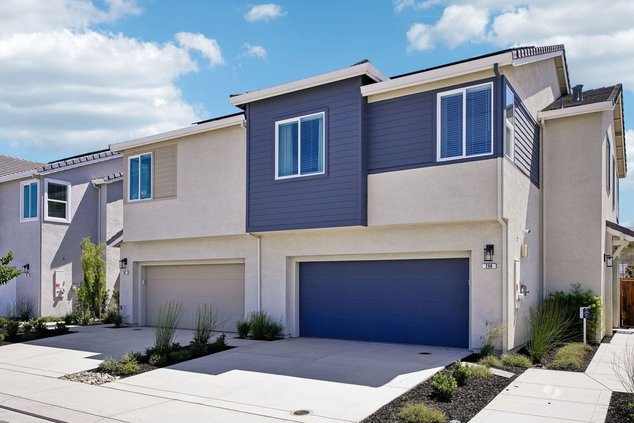
A prime example is the 114 “paired home” neighborhood dubbed Echo Homes that Kiper Homes is currently building on Airport Way at Center Street on the southwest edge of the Manteca golf course.
It originally was envisioned as a project where each side of the duplex would have been sold.
The build to rent model reflects changing market dynamics.
Keeping that is mind, having the builder-developer hold onto all of the homes they build has advantages when it comes to addressing maintenance and such that have long-term positive community impacts.
But the real advantage is it addresses a growing market that is getting squeezed — fairly well-compensated households that don’t want to buy, have jobs that require fairly frequent moves, or lack the downpayment for a home and don’t want to live in apartments.
The highest priced three bedroom, two bathroom apartment in Manteca at The Element near Bass Pro Shops rents for $2,995 a month while the two bedroom, two bathroom units went for $2,605.
The Echo Paired Homes by Kiper Homes rents three bedroom, 2.5 bathroom apartments for $3,395 month and two bedroom, 2.5 bathroom homes for $2,995 a month.
Just like an apartment, the maintenance as well as landscaping upkeep is included in the rent.
The people paying those rents are in growing numbers the same people who are buying new homes for $650,000 to $850,000 in Manteca — households with robust Bay Area paychecks.
South San Joaquin County — Tracy, Mountain House, Lathrop, and Manteca — are the growing affordable housing solution for the high-priced and basically built-out Bay Area. And that includes both buyers and renters.
So how does unleashing 4,000 new rentals homes in River Island over four or five years at price points clearly above what new apartments with the latest amenities or what older homes built since 2000 command in rent impact the market?
River Island is obviously eyeing pent-up demand in the Bay Area of renters that want the lifestyle of owning a home with plenty of amenities in walkable neighborhoods.
As such, it would help address a Bay Area housing problem.
It also would address, to a degree, a local housing problem of mid-range affordability.
People who want to live in a community that they can afford are competing with local renters.
It helps drive up rents across the board beyond inflation.
Older properties can command higher rents beyond inflation because there are too many people chasing rentals.
If River Islands proceeds, it likely won’t cause rents to crater but it should make rents hikes going forward more modest throughout most of the area market.
Adding 4,000 new homes to the rental market in a relativity short period will favor renters.
By the House dropping the Senate version that would have forced the sale of those 4,000 new rental homes seven years after they are built means a solution that could make a relatively effect dent in California’s chronic housing shortage won’t be taken off the table if it pencils out.
It’s challenging enough to navigate California’s sea of regulations, NIMBYism, and changing economic conditions without artificially dictating the market.
Derail the ability for large scale rental home projects to be built using a model a developer can make it work as a long-term investment and all you accomplish is reducing the production of new homes.