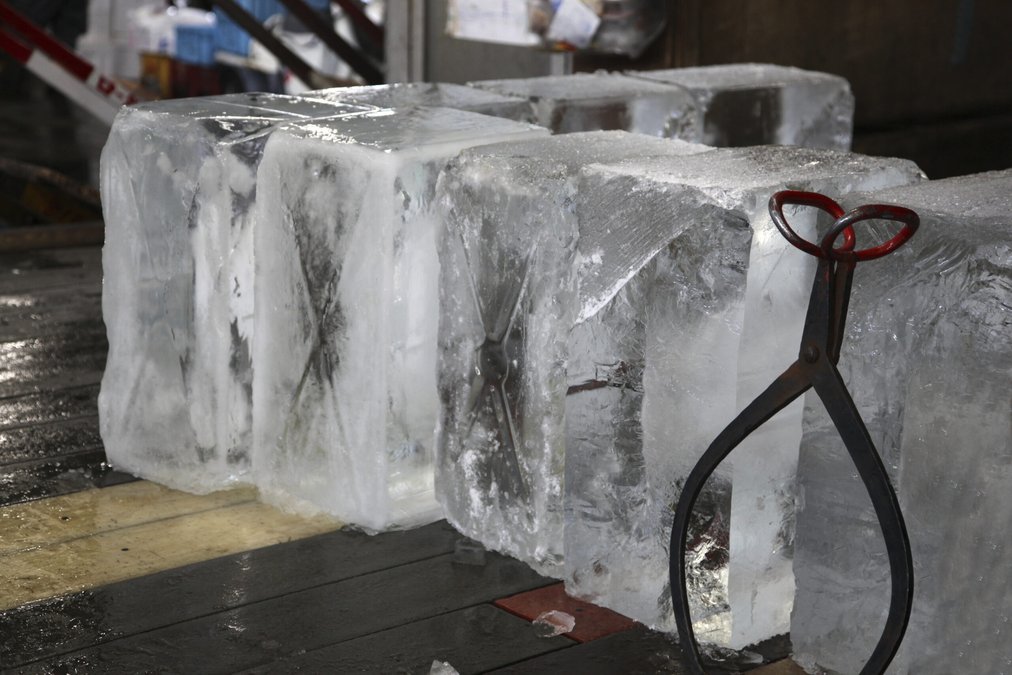
Lincoln Ice & Beverage was a soda and beer distributor that also sold ice in blocks of 25 pounds in Lincoln, Placer County.
That was the typical size for ice boxes that dominated kitchens before refrigerators became common place in the late 1940s and early 1950s.
Working at Lincoln Ice was a coveted summer job for college students.
Part of their shift involved loading a chute-style device that dispensed ice blocks wrapped in twine to customers who fed the appropriate number of quarters.
It beat the other summer jobs back in the 1970s that were either on one of the half dozen turkey ranches that still dotted the Lincoln countryside or employment at Gladding, McBean & Co. literally across the street from Lincoln Ice & Beverage.
The summer jobs at Gladding, McBean involved working around the bee hive kilns that fired clay sewer pipe or the long kilns with carts on rails where roof tile was basically baked.
Having to wear gloves and dress on a 100-degree as if you were in the heart of ski country at 3 a.m. on a late December morning beat the heck of wearing heavy work clothes to do tasks around the kilns that burned up to 2,000 degrees inside.
My mom would buy a 25-pound block of ice from Lincoln Ice every three weeks or so in the summer to make ice cream.
She had two electric ice cream makers.
Your job as a kid was to use an ice pick to chisel chunks of ice off the block and add them to the tub around the stainless steel container that fortunately was turned by an electric motor and not a crank arm.
You added a bit of dry ice to the ice. You had to make sure it wasn’t too much as the ice would “freeze up” and the motor wouldn’t be able to turn the container.
Each stainless steel container would produce four quarts of ice cream.
My mom produced lots of flavors but her two specialties were maple nut and pineapple.
It was my experience with buying blocks of ice for ice cream making that inspired an ice sitting contest for kids.
The year was 1976.
The Lincoln Chamber of Commerce convinced me to run Fourth of July games for kids under 10.
Typically, it involved sack races, water ballon tossing, and three-legged races.
I decided to add a bubble gum blowing contest and an ice sitting contest.
The budget for prizes was a whopping $20.
That bought a lot of penny, nickel, and dime toys from the Wishing Well in Sacramento, a party store that had bins of cheap party favors.
I splurged on the item that would be the prize for the kid that had the longest time on the ice before they could no longer stand it and had to get up.
I know this would be politically incorrect today, but the top price was a water pistol. It was a big plastic see-through lime green “revolver” costing 50 cents.
I learned something that Fourth of July. Eight year-old kids can be incredibly patient if it meant winning a piece of plastic.
The winner ended up spending over 2 hours on a 102-degree day sitting on one of the three blocks of ice that were about 10 inches in height and width.
The rules were simple. Once you sat down on the ice, you were on the ice.
Your turn was over when you could no longer stand it and had to stand up.
Most kids went about three minutes, if that.
Ones that had taken the advice of someone who convinced they could win if they wore three layers of underwear under their pants discovered having more clothing that absorbed water made things worse after an hour and gave up.
The two that ended “sitting it out” for the water pistol were both 8 year-old boys.
The winner — and I’m not making this up — ended up polishing off three snow cones friends gave him over a 140-minute period.
You can still buy blocks of machine produced ice in California. The 25-pound versions will set you back $7.50 or so while the 50 pound versions are twice that amount.
It seems bizarre today, but 50-pound ice blocks were still being used until the late 1950s by firms such as Pacific Fruit Express to cool refrigerator cars on trains to ship fruit and vegetables cross country.
The Southern Pacific yard in Roseville had a huge ice plant that used a conveyor belt suspended above tracks to move the 50-pound blocks to rail cars.
Manteca, which at one time had three packing sheds, relied on the Union Ice Company that once stood where the Manteca Transit Center stands today at Main and Moffat for large blocks of ice for refrigerator rail cars to keep fruit cool while in transit.