The political fireworks are going off.
California — surprise, surprise — is increasing its gas tax 2.2 cents today.
You can hear the bombast reverberating through the land as social media blows up about “Tax-afornia” doing what it does best, which is increasing taxes and chasing businesses to Texas.
Yes, it is horrible, isn’t it?.
The state gas tax went up today 2.2 cents per gallon to 63.4 cents.
California has now more than doubled the gas tax in the past decade.
It was 29.7 cents before Senate Bill 1 went into effect in 2017.
The initial jump was 12 cents in 2018 to make it 41.7 cents a gallon.
After, that Senate Bill 1 imposed an annual rate hike on July 1 based on California’s consumer price index that gauges inflation.
Keep in mind, Californians weighed in on the legislation crafted in Sacramento and signed into law by then Gov. Jerry Brown in a statewide vote to repeal the gas tax hike.
Californians did not repeal the tax hike.
This means the majority of voting age Californians that bothered to vote put their seal of approval on the gas tax hike and going forward with annual adjustments based on inflation.
Gavin Newsom is not the boogeyman on this one.
You can’t blame the maskless wonder of French Laundry fame for the gas tax hike.
But you can legitimately do so for some of the regulatory fees that — when added to the gas tax and the cap-and-trade gambit to address greenhouse gas emissions that needs some serious rethinking regarding its effectiveness — accounts for roughly $1.15 of the amount paid per gallon at the pump.
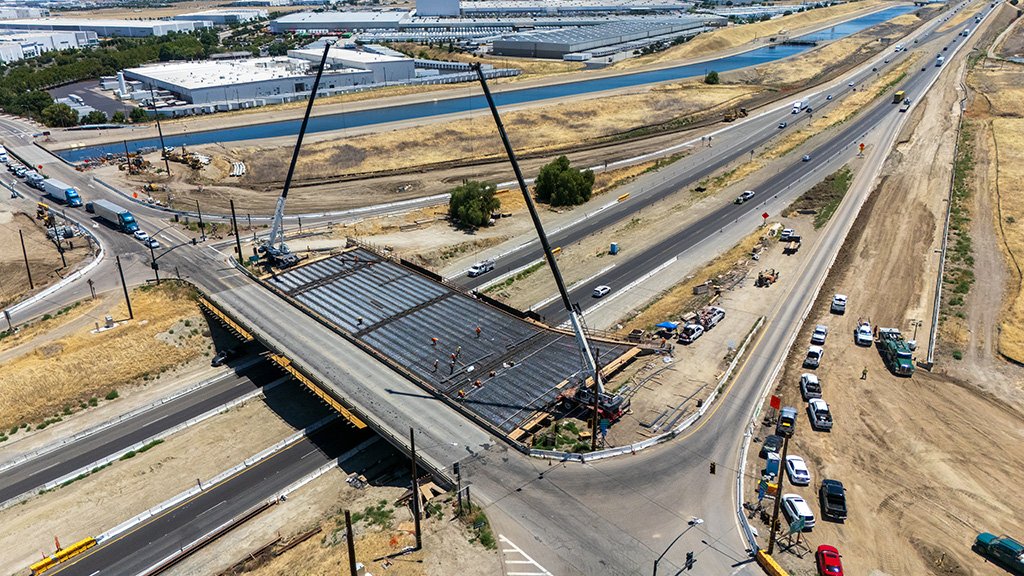
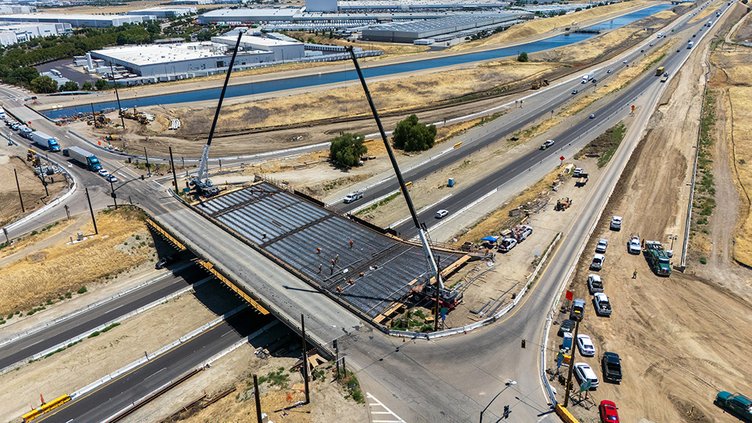
The gas tax, by the way, is what paid for $35 million of the $51.7 million of the first phase of the Highway 99/120 Bypass connector project in Manteca.
It will be a major funding source to advance projects such as the widening of Interstate 205 through Tracy to eight lanes and Interstate 5 from Lathrop to Stockton to eight lanes as well.
Gas tax is what pays for ongoing maintenance costs from work Caltrans crews do to state highway and freeway pavement work that is contracted out as well as bridge structure re-enforcement and upgrades needed for the Interstate 5 crossing of the Deep Sea Channel in Stockton.
Bridges and pavement — just like the homes we live in — can’t escape the forces of wear and tear.
The state gas tax also pays a big chunk of ongoing local street maintenance that, in Manteca’s case in the past year, that has been effectively augmented by the Measure Q sales tax.
The incessant bellowing of shallow politicians conveniently is predicated on ignoring the fact roads and bridges need to be maintained and built.
The same politicians also like to rail against switching from a gas tax to a mileage driven tax to pay for roads.
They ignore the fact that more fuel efficient cars as well as 20 to 25 percent of new vehicles sold each year in California are electric are decreasing gas tax revenue collected for roads.
And —in demonizing the automatic annual inflation indexing — they conveniently ignore the well documented reality that construction inflation tends to significantly outpace the consumer price index.
Yet, they never say what they’d do without the gas tax hike or if it was rolled back to 2017 levels.
They won’t advocate for cutbacks in road repairs and new road construction that would be needed to either drop the gas tax or reduce it.
They don’t even embrace or identify a way to replace the tax.
Making sweeping pronouncements the state can do so by being more efficient or cut programs is more than not being specific. It is disingenuous at best and pandering at worst.
There is no heavy political lifting being done.
Instead, it is all hot air.
It is calculated to cater to the free lunch mentality that feeds on the fairy tale that we can demand more government services without increasing what we are taxed or — even more bizarre — pay less while demanding more.
They are essentially engaging in political posturing, full of sound and fury, signifying nothing.
We need roads. That is what the gas tax or the likely replacement of a miles driven tax will pay for.
Cap and trade as well as low carbon fuels standard fees collapsed into the price of a gallon of gas doesn’t pay for roads.
Going after the questionable effectiveness of such endeavors and scaling back associated fees requires conversations with the general public about tradeoffs and opportunity costs that can’t be conducted with political sound bites or biting and inflammatory rhetoric on social media.
Yes, the gas tax is going up.
It’s what Californians collectively agreed to in 2018 when repeal of Senate Bill 1 was rejected on the clear understanding road work needed to be funded.