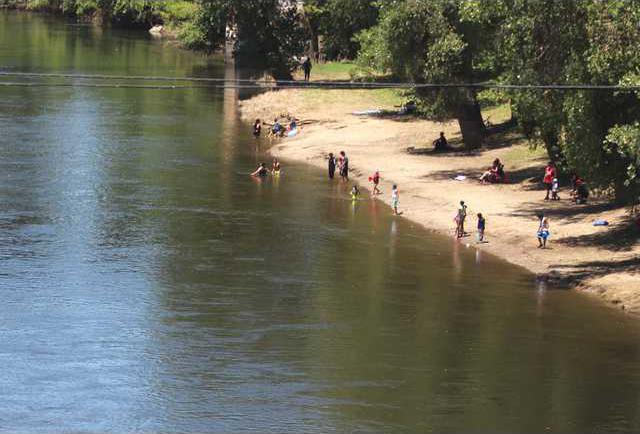

What better way to beat the high temperatures than in the cool water of the Stanislaus and San Joaquin Rivers?
But if you’re planning on taking a dip in a waterway this summer, make sure that you’re taking the precautions necessary to ensure your safety according to local first responders that have seen an uptick in the number of water rescue calls this month as people search for ways to cool off.
According to Ripon Consolidated Fire Chief Dennis Bitters, the number of calls related to the Stanislaus River — which separates San Joaquin and Stanislaus counties — has shot up with the mercury and presented a new set of challenges for firefighters.
“With the heat, a lot more people are out trying to go swimming, but the river is flowing a little better than usual — there’s more water in the river right now than there normally is, it’s moving faster, and there’s a current that people aren’t used to,” Bitters said. “Things that are normally above water are now submerged, so things like snags and trees become an issue and that adds to the risk for people that aren’t taking the right precautions.”
While the stretch of river that Bitters’ agency is responsible for might not be as extreme as the stretch further upstream popular with whitewater rafters, the cold water coming out of the bottom of upstream dams coupled with the hot temperatures outside make it problematic for those who don’t take it seriously.
The river’s currents shift depending on the amount of water flowing between the banks — submerging or exposing trees, snags, and sandbars, and other obstacles that can both alter the flow of the water and pin people under the current — and those who “float” the river routinely overshoot their exit point or misjudge the length of time it will take to get from point to point along the meandering route.
“Most of the calls are for overdue rafters so it isn’t necessarily a water rescue, but it’s difficult because we have to search a much larger portion of the river,” Bitters said. “We’ll get a call telling us that they left McHenry River Park and didn’t get to where they were going to get out, and by then it’s usually in the evening and we’re not really prone to putting people in harm’s way by putting them in the water at night and it’s tough to search from the bank because there is no access there.
“All of these compounds the problems that we encounter.”
Bitters encouraged anyone considering recreating in the river on rafts to make sure that they have personal flotation devices on them when they get into the water — and not to rely on the rafts that they bring that are often unsuited for the type of natural terrain that they will counter along the banks.
He also recommends that people have a fully charged cell phone with them when they leave — which will allow them to call their loved ones and tell them their status and will allow emergency crews to ping their location in the event that they get lost or disoriented.
But just because the temperature is safely above the century mark outside, Bitters, doesn’t mean that the water follows suit.
“That water is cold because it’s dumping right out of the bottom of the dam — it’s one thing to jump in and jump out, but when you’re submerged in that water you can become hypothermic even when it’s hot outside,” Bitters said. “There are currents and undertows and snags and it all compounds into one problem that some people haven’t overcome.
“What starts out as a fun day ends up being a tragedy, and that’s what we’re trying to avoid.”
To contact reporter Jason Campbell email jcampbell@mantecabulletin.com or call 209.249.3544.