Walmart was being blamed back in 1992 for downtown Manteca’s woes, imagined and otherwise.
Four clothing related stores had closed along Yosemite Avenue.
It was essentially parroting the teeth gnashing at the time in small town America where the opening of a Walmart on a city’s fringe led to Main Streets riddled with empty store spaces.
Forget the fact Manteca wasn’t in the rural Midwest.
It was clear Manteca was in the path of growth thanks to the ever expanding Bay Area tech economy.
A lot of Manteca newcomers in the previous 10 years weren’t shopping in downtown.
Some of it had to do with clothing selection. Some of it had to do with pricing.
But the biggest issue was traditional retail in downtown Manteca was out-of-synch with the growing consumer base comprised of Bay Area commuters.
Stores downtown were closed almost universally by 6 p.m. weekdays and had limited weekend hours.
There were concerns that adjusted and new ventures that opened whose perspectives weren’t rooted in old school retail patterns.
And while downtown Manteca wasn’t channeling the downtown heydays of the 1950s, it was far from being on life support.
In 1998, then planning director Ed Kaplan advanced a proposal to enlist 25 residents representing a true cross-section of the community to create a vision for Manteca to pursue over the next 20 years.
Dubbed the Vision 2020 Task Force, the group tackled everything from job creation to housing.
The heaviest focus was on downtown as a precursor to the city engaging a consultant to devise a specific plan for the central district.
The group even included several Lathrop residents as Kaplan astutely noted the key to a successful downtown reboot would also involve attracting consumer dollars from neighboring cities.
They walked downtown streets as a group. They observed traffic, got a feel of downtown’s walkability, made note of the buildings, alleys, and how various spaces has every changing users.
They then brainstormed about what they wanted to see downtown.
The majority of the initial responses were unsettling. They mentioned things such as a Starbucks, Barnes & Noble, TGI Fridays, and Olive Garden.
They were basically enterprises that seek out shopping centers.
Manteca hadn’t even reached 50,000 residents and they were suggesting a number of retail and dining chains that wanted at least twice the population with restaurants requiring a weekday lunch crowd in addition to evenings and weekends.
In other words, their initial vision for downtown would have required leveling eight or so blocks and replacing it with big, medium, and small box retailers and putting in massive parking lots.
How an off center the initial “wish list” was can be summed up in the idea that Starbucks would somehow be a good fit for downtown Manteca.
This was three years before Manteca got its first Starbucks.
And 28 years later with the city’s sixth Starbucks a month or so away from opening and a seventh Starbucks being proposed there is not a Starbucks in downtown Manteca.
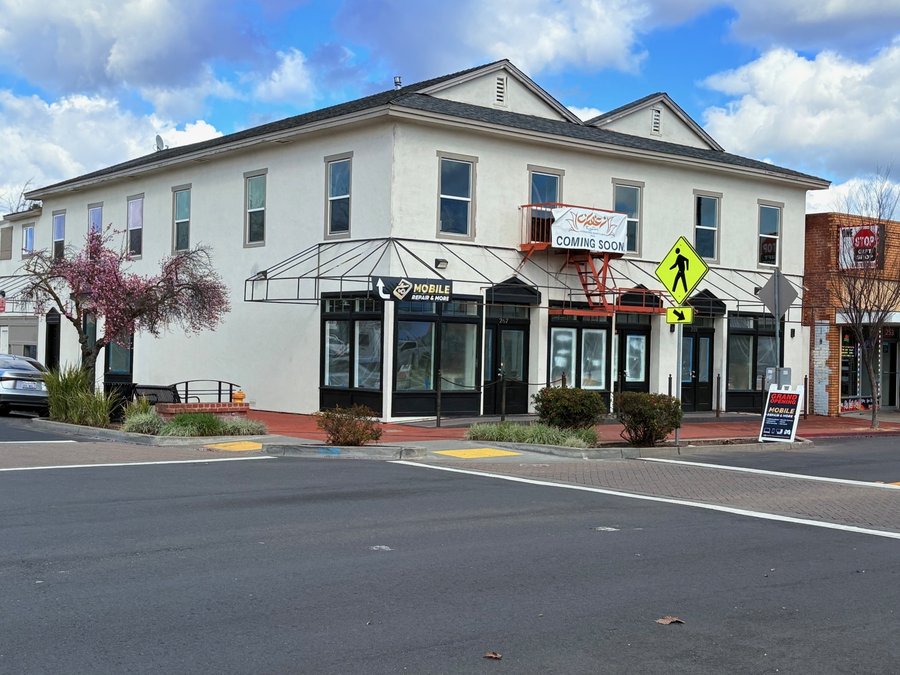
Downtown Manteca’s future isn’t competing with Walmart, shopping centers, or even neighborhood commercial.
It is being a place where people want to go to hang out and explore unique retail and dining options that don’t feel like a Costco run or cattle call style dining.
No one is going to park three blocks a way and walk to an Olive Garden to dine.
But they will in restaurants that have a somewhat leisurely vibe as many do in the downtowns of places like Livermore, Pleasanton, Tracy, Lodi, and Turlock.
And while you might think those downtowns are somewhat cookie cutter, they’re not.
They are tailored to their community realities: Turlock, a university town; Lodi, wine town with an older population; Pleasanton and Livermore, younger professionals and singles; and Tracy, mixture of valley and commuter consumers.
Those are general observations and not specific pigeon holes.
Manteca — at the end of the day — is driven by families in households with two incomes.
Yes, there are retirees, singles, older couples and such, but the 900-pound gorilla are families.
Manteca growing past 100,000 will likely enable it to support some destination dining downtown and such that isn’t primarily catering to families.
But making a downtown that is appealing to families as a place to gather is what will power its future.
That might be a little off target but it doesn’t miss the mark as much as trying to channel downtown Livermore in Manteca or the mindset downtown should somehow compete for Walmart’s business or that of other chain store and chain restaurant concerns.
It’s something to keep in mind as Manteca starts cobbling together a downtown specific plan costing $980,000 in the coming months.