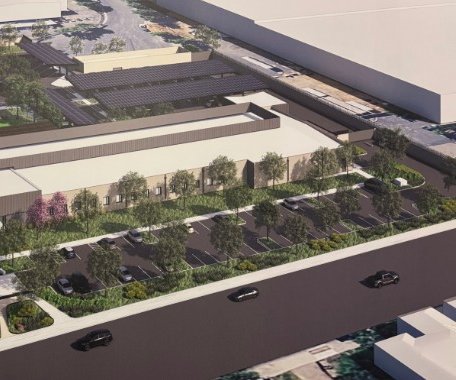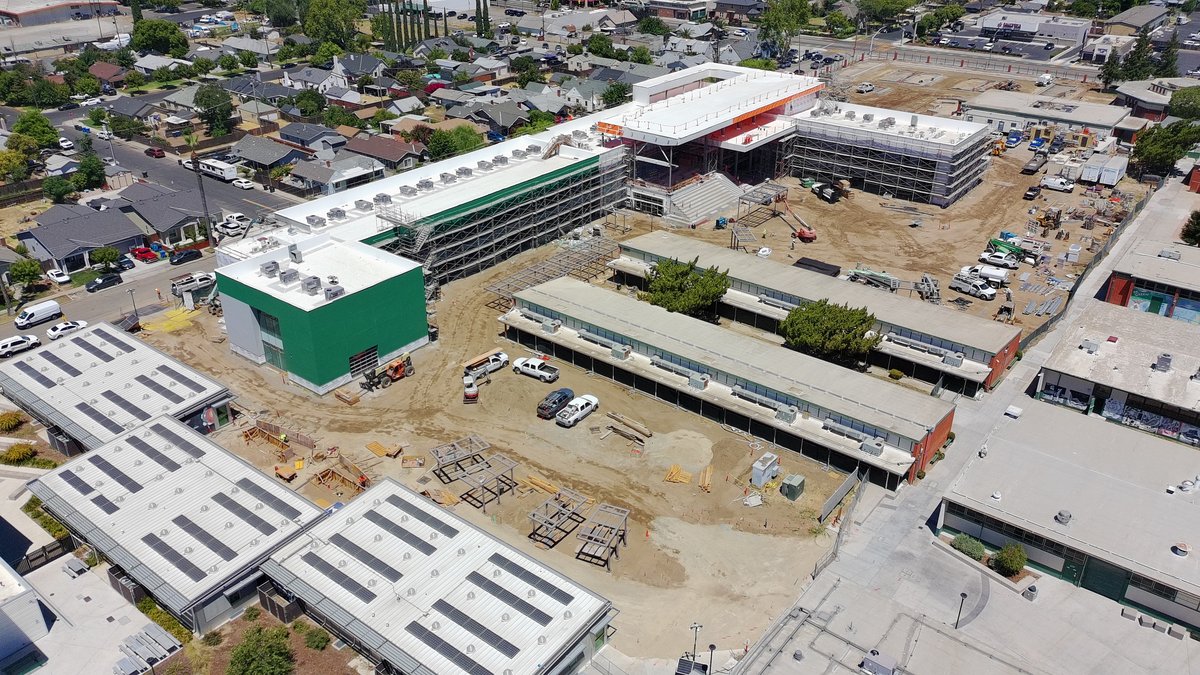
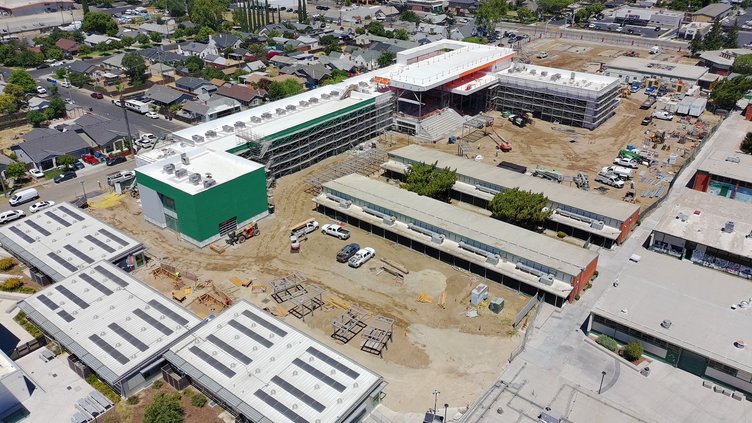
There were times when Steve Winter served as Manteca High principal from 2004 and 2009 that he had trouble sleeping at night.
What kept him awake was the fact the district’s oldest high school had a city street — Garfield Avenue — running through it.
It was cordoned off by chain during the school day and reopened after the final dismissal bell.
“We had at times a thousand students who would have to go across the street during the day to and from classes,” Winter recalled Thursday. “There was a kid hit in the street after a game.
That was on top of people walking through what was almost the middle of the campus when schools was in session and the street was cordoned off to vehicle traffic.
That included the homeless of which there were more than a few times Manteca Police were called when campus monitors noticed a homeless individual walking on the street through the campus displaying long knives strapped to their sides.
Winter made his comments during a Manteca Unified presentation to the Manteca Rotary regarding the heavy emphasis projects funded with the $159 Measure G bond passed in 2014 and the $260 million Measure A bond passed in 2020 had on safety as well as modernization.
There were several MUSD campuses that had access points modified significantly to reduce safety issues connected with traffic before and after school. A prime example was Lincoln School that went from fronting heavily traveled Yosemite Avenue to having its entrance from Powers Avenue.
Other elementary classes were redesigned when new classrooms were added to replace aging permanent and portable classrooms so anyone going on campus had to go through the office.
That was on top of efforts to reconfigure parking lots and bus loading to enhance student safety, replacement of aging fire alarm systems, installing more robust paging systems in classrooms and even replacing door locks with state-of-the-art mechanisms to combat unwanted intruders.
Inadequate facilities and gyms and other support facilities were replaced with more functional buildings. The effort includes modernizing classrooms for 21st century learning with everything from new — and more — to walls and ceilings.
And in cases where it made more sense to replace older buildings, the district did so.
That is on top of addressing infrastructure issues — grading, water/sewer lines drainage, and asphalt — where needed.
In addition, underused space was repurposed.
All of it was driven by a desire to maximize campus facilities — including outside space — to answer the question “can I learn here” in the affirmative.
Altogether 72 projects have been — or are being — tackled ranging from replacing playgrounds and HVAC districtwide to new or completely rebuilt swimming pools.
Most of that work is made possible by voter approved bonds totaling $419 million.
That is in addition to $177 million in state “reimbursement” for the projects completed or being built that will then be used to tackle even more modernization needs.
As a result, Manteca Unified, over what will likely be a 15 year-horizon, will have completed $596 million in modernization projects.
That is in addition to new school classrooms as well as two new elementary campuses that community facilities district bonds covered by growth will make possible.
When approved, voters were told the two combined bonds would likely cost upwards of $135.82 per $100,000 in assessed value. Instead, the overall final bonding cost appearing on October tax bills will come to $76.40 per $100,000 of assessed valuation instead.
To contact Dennis Wyatt, email dwyatt@mantecabulletin.com