It just said Manteca.
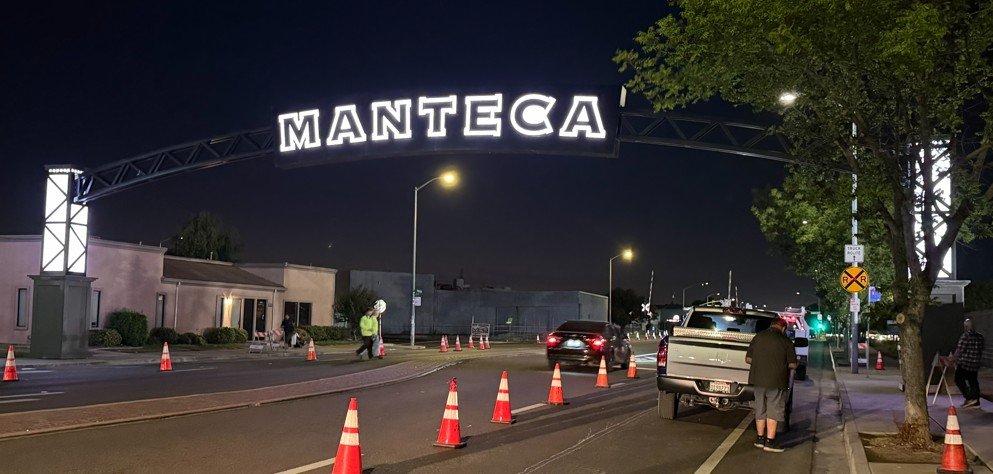
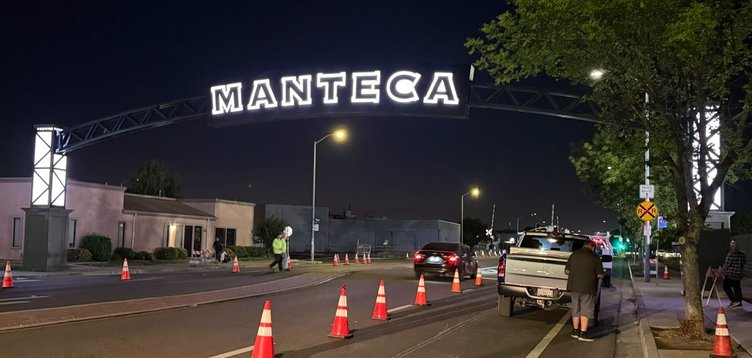
Those were the four most elegant, inspiring, and imaginative words spoken during short presentations made during Thursday’s ribbon cutting for the new 92-foot, 4-inch arch spanning South Main Street.
They were offered by City Manager Toni Lundgren.
Lundgren was describing a photo from 1914 of a small banner sign townspeople opted to hang from rope or wire above the street just two blocks away from where she was standing.
It was all they felt they needed to say to those that were traveling the then dirt road that is today Yosemite Avenue and came upon what just a few years early was literally a wide spot in the road.
Manteca was the hot topic of the day.
The South San Joaquin Irrigation District completed a storage reservoir and series of canals a couple years prior.
It was an endeavor that many said couldn’t be done, even those that were living in the greater Manteca area at the time.
When word spread once the first ever SSJID irrigation water flowed onto farmland on the E.N. Pierce Ranch on the southeast corner of what is now Highway 120 and Austin Road on Aug. 13, 1913, it would trigger a land rush that would dot the countryside with farms and spur a commercial building boom along that wide spot in the road.
It was a concerted effort to boost the place called Manteca that was rising from the sandy plains of South San Joaquin County where dry land farming had limited growth.
The SSJID formed its own “newspaper”, the Irrigation Bulletin, that was sent out to cities throughout Northern California.
It sang the praises of what water could do for the land.
It helped that the area they were promoting had a melodic, unique, and unforgettable name — Manteca that rolled off the tongue as Man-tee-ka.
It’s a periodic pastime in Manteca to either pooh-pooh or make fun of how the name came about by the railroad allegedly butchering a Spanish word for butter, Mantequilla, chosen by townspeople for the train stop.
Manteca happens to be an everyday word for dairy butter in some Spanish countries while Manteca is what lard (fat from a pig) and, more recently, vegetable shortening is called in Mexico, Spain, and other places.
How the city’s name came about has slipped from debate into outright speculation over the years despite periodic efforts to research a definitive answer.
That said, a place called Manteca is still pulling off — and pursuing — lofty prosperity and community goals for what has become a small city in the San Joaquin Valley.
It runs the gamut from luring Spreckels Sugar away from Stockton to 80 years or so later successfully removing all traces of the sugar beet factory and the accompanying five-pack of 15-story sugar silos to allow the 360-acre economic juggernaut known as Spreckels Park to rise from the rubble.
The list of success stories also includes landing big catches such as the 500-room Great Wolf indoor water park resort, the Big League Dreams sports complex, Bass Pro Shops, and Del Webb with the family entertainment zone in the works.
But Manteca means much more than that.
It’s not flashy but as over 1,000 to 2,500 new residents added each year can attest, its livable and a solid place to put down roots and raise your family, whether it is a “traditional” nuclear version or otherwise.
It is why seven years ago when a fly-by city manager wanted to “rebrand” the city by deep-sixing what she inferred was a Plain Jane slogan — The Family City — and old-fashioned City logo, the pushback was massive.
The periodic Wizard of Oz search over recent decades to establish a brand, an edifice, or whatever that people could instantly identify Manteca with have been exercises in futility as the answer has always been in plain sight day in and day out.
Bids to create a calling card, if you will, for Manteca ran the gamut from painting the Wetmore Street water tower orange like a pumpkin and placing bronze statutes at the East Yosemite entrance off of Highway 99 to a water fountain shooting up water 30 feet along the 120 Bypass.
The later actually was put in place as part of the Stadium Retail Center project at Airport Way and Daniels Street.
It had a short shelf life.
That’s because Caltrans conditioned the approval based on the fountain not being operated when the wind speed exceeded 7 mph to avoid water spraying cars on the 120 Bypass and creating a traffic hazard.
It seems someone forgot the Delta breezes are an everyday thing in Manteca except during tule fog season.
On Thursday, after the ribbon cutting, Lungren looked toward the water tank that towers over the nearby animal shelter noting she liked it because it was plain and has the simple wording of “Manteca” on it.
Lundgren sees no need for an elaborate soccer ball design that is on one of Ripon’s two twin water towers. Ripon, identified with almond blossoms, is another example of a community where the vibe — lifestyle that has been created and fostered over the years — serves it well as a calling card.
No pretense. No elaborate edifices.
That’s Manteca to a “T”.
The little things — and gestures — count in Manteca.
And one of those was on Friday as volunteers, working with the Manteca Chamber of Commerce, placed 2,400 flags marking Juneteenth including on Main Street where the arch now stands.
The Manteca Arch, with its laser-sharp wording and techie lighting abilities to celebrate the ever changing and growing community, says it’s all.
To contact Dennis Wyatt, email dwyatt@mantecabulletin.com