Manteca elected leaders used the words “historic” and “public safety night” to describe Tuesday’s City Council meeting.
It wasn’t hyperbole.
A series of four votes that locked in three major public safety initiatives — three of those actions set in motion their actual funding — means Manteca is now officially:
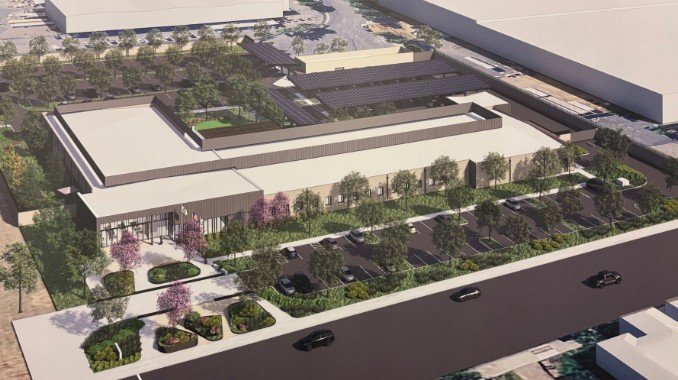
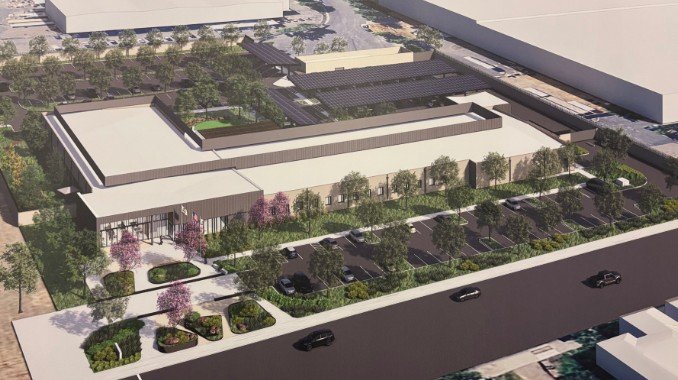
*Building a new police station.
*Constructing a six fire station.
*Moving toward training a firefighter on each of the city’s six engine companies in advanced life support or paramedic training.
And all three endeavors are being leveraged by the three-quarter cent Measure Q sales tax in place through 2045.
The official decision to actually fund all three efforts means they are no longer talk, but are now on course to become reality.
*The $57 million contract to construct the 50,531 square-foot police station in the 600 block of South Main Street was awarded to Roebbelen Contracting. The complex will take 18 months to complete and will cost $10 million less than originally estimated.
*A deal was finalized to transfer a narrow strip of a Manteca Unified elementary school site on Joshua Street north of Woodward Avenue to the city to create a parcel that is the right-size to accommodate a new fire station.
*The council authorized the issuance of $57 million in revenue bonds as part of financing package to cover the combined $94.8 million cost of building the police station and fire station.
*Approved using Measure Q finds to secure a $952,000 federal grant to move toward having a firefighter on every engine trained in advanced life support.
The bond — which will require $4.8 million in annual debt service — is structured so the last payment is tied to the end of the Measure Q tax by 2045.
The city has $35.8 million in growth fees on hand that will be used toward the projects — $30 million in government building facility fees for the police station and $5.8 million in fire impact fees for the fire station.
The city is also using $6.3 million it set aside in Measure Q funds to pay down the two projects upfront.
Between growth fees and the upfront Measure Q funds that lowers the amount that needs to be borrowed for the two projects to $57 million.
Once bond payments start, the city will be able to commit new growth fees that are collected to pay down the debt.
Any shortfall in covering the $4.8 million annual debt repayment would come from Measure Q.
Move toward paramedics
The City Council approved $95,208 in Measure Q receipts to secure a $952,072 federal grant to start a phase in of firefighters trained as paramedics able to take advanced life saving measures at the scene of medical emergencies.
The goal is to have earlier advanced intervention to improve cardiac and respiratory outcomes before an ambulance arrives on the scene.
Having firefighters with advanced life support (ALS) training to perform paramedic tasks is expected to have a big impact in Manteca given 84.9 percent of all 9-1-1 calls to the fire department were medical in 2025.
Data shows:
*Survival rates for cardiac arrest increase from 10 to 30 percent with ALS fire-first response.
*California systems report a greater than 35 percent survival rate with ALS.
*Asthma/COPD patients who receive nebulized meds early show a 20 to 30 percent reduction in respiratory failure.
Manteca Fire medical calls have climbed from 8,664 in 2022-2023 to 9,226 in 2024-2025.
Among those 9,226 calls 910 were breathing problems, 1,004 cardiac and stroke, 1,720 fall and injury, 2,373 illness and other, 597 lift assist, 625, motor vehicle accident, 269 overdose and psychiatric, 1,252 seizure and in unconsciousness, and 476 lifts.
The additional ALS service would be done while partnering with Manteca District Ambulance to build a stronger system.
Manteca Fire would not transport patents. As such, taxpayers aren’t burdened with those costs nor would the city undermine the non-profit ambulance service that consistently matches and often exceeds private ambulance firms in terms of response and reliability.
Fire command staff will present a final ALS plan in July of 2027.
A study will also be conducted on a first responder fee that is a cost recovery mechanism allowed under California law for emergency medical responses provided by fire departments.
The initial $1,047,280 starts things rolling by covering $171,400 for tuition and $875,000 in backfilling firefighters via overtime allowing the training to take place.
The plan calls for a two-person ALS vehicle to be operated during high call times by late 2027.
Apparatuses would have one paramedic each by 2030.
The plan is to train existing firefighters.
The initial equipment costs needs for the 2027-2028 budget for equipment comes to $262,000.
The cost to startup with paramedic on one apparatus is $110,000 to $262,000 with an ongoing cost of $47,000 to $104,000.
The start-up cost for paramedic services on all six engines is $460,000 to $777,000. The annual ongoing cost for six engines with ALS capability is $97,000 to $224,000 annually.
Measure Q is likely to be the main source of funding after the training phase is completed.
To contact Dennis Wyatt, email dwyatt@mantecabulletin.com