The California Legislature in September approved a plan some saw as a move of historic proportions that had the potential of ending California perennial water wars that pit cities, farmers, and environmentalists against each other.
Gov. Gavin Newsom saw something else: Redundancy.
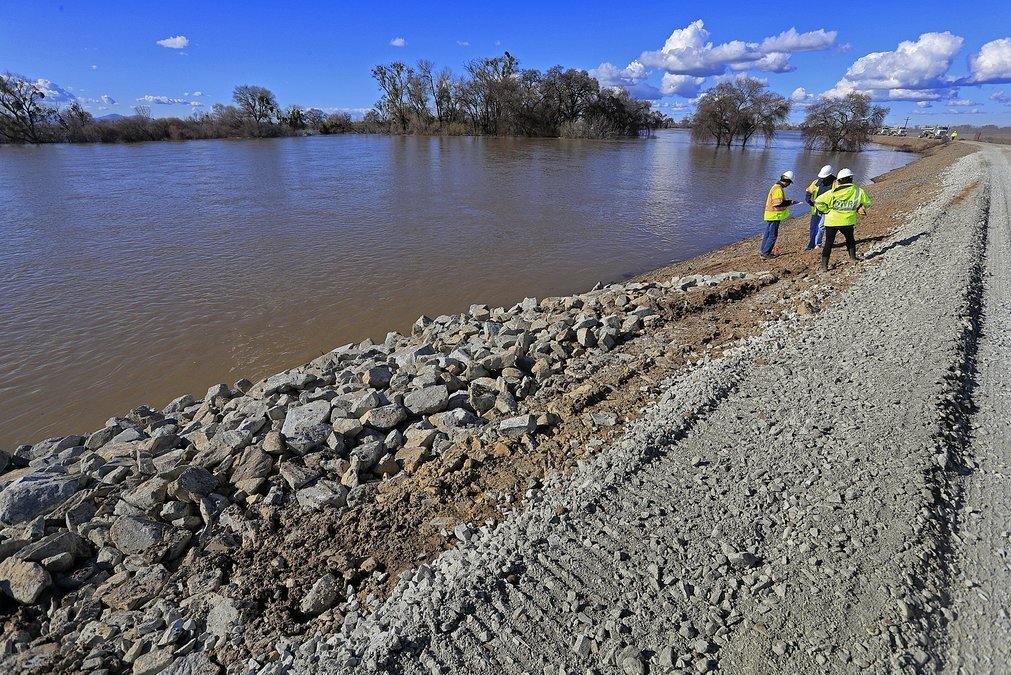
It is why Newson vetoed a bill co-authored by State Senator Jerry McNerney that launched a long-term strategy that in its initial year would have designated $92 million to protect the Delta and fortify its aging levees, along with up to $68 million to safeguard the State Water Project’s California Aqueduct and canals from flooding and subsidence.
“While well-intentioned, this bill is unnecessary,” the governor said in his veto message, pointing out there was already $170 million in the state budget for such work.
The state’s own data indicated the $170 million that Newsom references isn’t even close to what is needed to protect the Delta that is where nearly 70 percent of the state’s water supply passes through.
McNerney’s bill was the first year of a 20-year solution. The $170 million Newsom referenced is a one-time shot.
“While the $68 million allocated from Prop 4 for (State Water Project) aqueduct repairs caused by subsidence is greatly appreciated and much-needed, this is just a fraction of the funding necessary – in the billions of dollars – to fully repair this vital backbone infrastructure. SB 872 (McNerney’s bill) would have provided a critical conduit for that funding,” indicated Jennifer Pierre, General Manager of the State Water Contractors.
Pierre noted canal subsidence remains one of the greatest threats to California's water infrastructure and the overall reliability of the SWP, which delivers water to 27 million Californians and 750,000 acres of farmland.
“SB 872 would have established a pathway to program funding for necessary improvements that ensure the SWP is climate resilient, can move water when it’s wet for use when it’s dry, and remains an affordable source of clean water,” Pierre said. “Without this pathway, the costs of repairing damage caused by subsidence fall on the 27 million Californians who rely on the SWP, resulting in increased water costs and reduced water reliability.
The measure was supported by over 60 organizations, including environmental groups, labor, builders and business interests. It would have established the Delta Levees and Canal Subsidence Fund to support critical levee and canal subsidence projects.
San Joaquin County
Impacted on large scale
Two thirds of California’s water flows through the Delta. San Joaquin is by far the largest county within its boundaries in terms of land area, population, and farming.
McNerney crafted and rolled out a plan that could effectively change the myopic focus on the tunnel project that is not friendly to the Delta ecological system, will put some of the world’s most productive farmland out of production due to salinity issues, and hurt local cities.
McNerney’s Senate Bill 872 addressed dicey levee stability — a longtime core argument to build a Delta tunnel to help assure water deliveries to 27 million Californians in the aftermath of a catastrophic seismic event.
And it does two other things that the Delta Tunnel project doesn’t do:
*It addresses subsidence issues that have substantially reduced the capacity of the California Aqueduct by as much as 40 percent in spots such as near Mendota.
*It gets Delta water users, environmentalists, and 27 State Water Contractors providing water to 27 million people and 750,000 acres of farmland on the same page.
Subsidence issues involving the aqueduct through the San Joaquin Valley imperil water deliveries to the same 27 million people as well as agricultural users.
McNerney’s measure would have directed $300 million annually from greenhouse gas reduction fees slapped on polluters for the next 20 years to protect the reliability of California’s primary water source for decades to come.
That included:
*$150 million annually to the Delta Conservancy for levee improvements, including projects that restore habitat.
*$150 million annually to the Department of Water Resources for subsidence repairs along State Water Project canals.
The tunnel project would have significant impacts on San Joaquin County given 55 percent of the 1,153 square miles that constitute the Delta are within the county.
It is also where the largest chunk of Delta farm production — 60 percent of $432 million — occurs.
San Joaquin County is the seventh most productive county for agriculture in both California and the United States.
Environmentalists — plus the five counties where the Delta is located — oppose the tunnel project while the 27 public water agencies that compose the state water contractors support the buried conveyance system.
The basic premises driving the backers of SB 872 were:
*Subsidence of water infrastructure is one of the biggest threats to Californians’ water security — more than 200 miles of the State Water Project have been impacted and require significant repairs as soon as possible, or else there is a risk of an 87% reduction in delivery capability.
*The Delta is the largest and most important estuary on the West Coast. It consists of 1,100 miles of levees that protect farms, ecosystems and freshwater from saltwater intrusion and provide essential flood protection for the region, including for more than 500,000 people, along with farms, businesses, and historic resources.
*Many of the Delta’s critical levees date back to the 1800s and no longer meet the US Army Corp of Engineers safety standards. The levees are at risk of breaching.
The Delta Stewardship Council estimates that necessary levee improvements will cost, in total, about $3.24 billion, but will protect $22 billion in state assets.
Repairs caused by subsidence – the collapse of land due to groundwater over drafting — are estimated to cost $3 billion over the next 20 years according to the State Water Project.
To contact Dennis Wyatt, email dwyatt@mantecabulletin.com