Ben Franklin would be impressed.
The San Joaquin Council of Governments has taken not a whole penny — but a half a penny — to save untold lives and spur economic prosperity across the county.
The latest handiwork of the half cent countywide Measure K sales tax restricted for road and transit projects delivered yet again on Wednesday.
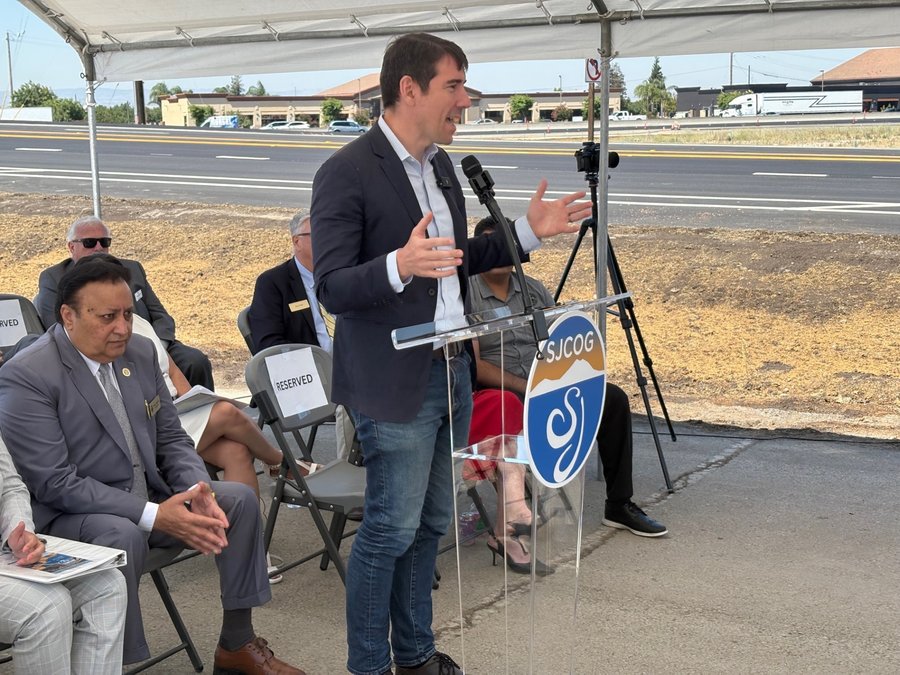
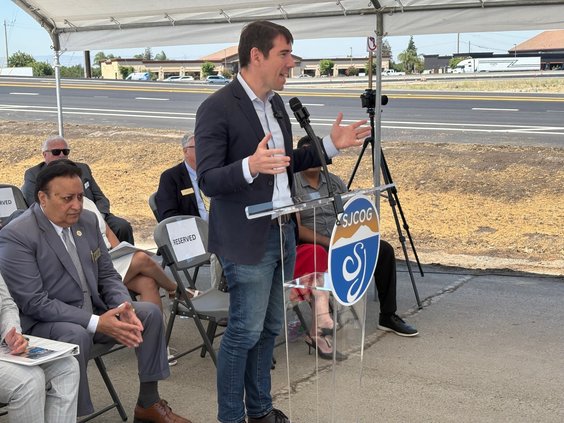
This time it was the $50 million first phase of the 99/120 Bypass Connector Project that included the completion of a new Austin Road interchange and the addition of a second transition lane from the eastbound Bypass to southbound Highway 99.
It was also a first for SJCOG as the first freeway project they have managed from start to finish.
As such, it allowed the local regional agency to do the heavy-lifting that took much of the workload off of Caltrans and allowed the project to move forward quicker.
The sales tax measure currently collects more than $80 million from annual taxable sales in San Joaquin County’s eight cities and rural areas.
Measure K’s biggest function is arguably leveraging federal and state road and transit funds that require local matches. That, in turn, increases the spending power of every half cent on a dollar collected many times over.
That is what allowed San Joaquin County to get a massive $381 million share of Senate Bill 1 funds dedicated specifically to modernizing the Highway 99 corridor to widen the freeway to six lanes from Yosemite Avenue in Manteca to the Crosstown Freeway in Stockton.
That work included new interchanges at Lathrop Road in Manteca and French Camp Road north of the city.
Other projects in the immediate Manteca area that have occurred thanks in part to the Measure K includes, among others:
*Altamont Corridor Express commuter rail service.
*The Union Road/120 Bypass diverging diamond replacement interchange and the accompany pedestrian/bicyclist bridge.
*The new McKinley Avenue/120 Bypass into change.
*Land acquisition and initial development of the 3.4-mile Tidewater Bikeway.
*Widening Highway 99 between Manteca and Ripon.
*The Manteca Transit Station.
*The widening and upgrading of the Louise Avenue railroad crossing between Louise Avenue and Airport Way.
*Widening Interstate 205 to six lanes between Interstate 5 and through Tracy to Interstate 580.
*Various arterial upgrade projects in Manteca.
*Allowing the Bypass to be improved to freeway status in the mid-1990s five years ahead of schedule by advancing Caltrans the money that was eventually reimbursed to SJCOG.
*Supplementing local street repair funding.
SCJOG also serves as a clearinghouse for other state and federal funding.
On more than one occasion, staff has made Manteca aware of available state and federal funds such as what is being used to upgrade Yosemite Avenue from Walnut Avenue to the Lathrop city limits along the railroad tracks later this year that no one else is claiming.
While SJGOG isn’t able to provide a local match, Manteca has been able to take advantage of such opportunities when other cities can’t due to the passage of the local Measure Q three-quarter cent, 20-year sales tax passed in 2024.
Measure Q is allowing Manteca to secure $3.1 million for the Yosemite Avenue pavement improvements using several hundred thousands in local dollars.
County voters in 1990 approved the Measure K sales tax for 20 years.
It was extended for another 20 years to March 31, 2041 by the electorate in 2006 with a 78 percent favorable vote.
An estimated $2.5 billion the tax is projected to raise between 2006 and 2041 with 35 percent earmarked for local road repairs and safety improvements; 32.5 percent for congestion relief; 30 percent for passenger rail, transit, and pedestrian projects; and 2.5 percent for rail crossing safety.
To contact Dennis Wyatt, email dwyatt@mantecabulletin.com