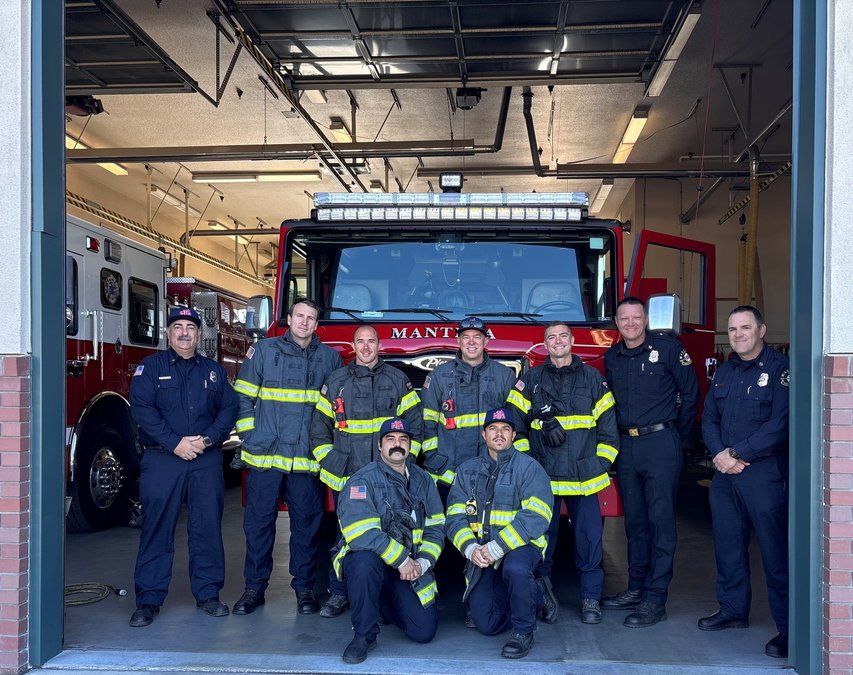
A sixth fire station — and strategic use of ladder trucks — could improve response times and have the potential to lower insurance premiums citywide.
It is part of a consultant’s study examining how to improve the effectiveness of Manteca’s fire service that is being presented tonight to the City Council.
Manteca currently has a Class 3 rating by the Insurance Service Organization.
The ISO rating is used by insurance firms to help determine premium charges.
Generally speaking, a Class 3 rating can lead to a reduction of 10 to 15 percent in insurance premiums.
If Manteca improves to a Class 2 rating, it could lead to insurance premium reduction of up to 25 percent.
How the Class 2 rating would impact specific Manteca homeowners and businesses is not absolute as it depends on how insurance firms use the rating.
In most cases, firms do take a jurisdiction’s fire rating into account to determine the cost of insurance coverage.
That said, the addition of the sixth fire station that will cost $12 million to build in southwest Manteca should be able to get response times — from dispatch to arrival on scene — to four minutes 83 percent of the time.
That is up from 80 percent for the current five station configuration.
The degree of a successful outcome on many medical and fire calls is dependent on help arriving as quickly as possible. It’s also a race against the clock when it comes to fire suppression.
Fire science has established every 30 seconds a fire can double in size.
In medical emergencies — strokes, cardiac events, major trauma, and such — the longer initial in-field medical care takes to start, the lower the odds for a good outcome.
The city’s adopted general plan — essentially a blueprint for growth with targeted policies — calls for response times no longer than five minutes.
Using the longer time, a sixth station should allow firefighters to respond within five minutes 95.5 percent of the time as opposed to the current 93.36 percent of the time.
Adding a second seventh station — roughly where Joshua Cowell School is on Pestana Avenue in east Manteca — could increase four minute response times citywide to 89 percent and five minute response times to 96.9 percent based in current development.
The consultant recommends pursuing the placement of a seventh fire station in Manteca east of the Highway 99 freeway as an initiative that should be tackled in the next four to eight years once the sixth station is built and opened.
Adequate personnel and response time is seen as a way to reduce the point rating gap between a Class 3 and Class 2 ISO rating.
Strategic use of the front line ladder truck and the reserve ladder truck to be within 2.5 miles of needed fire flows greater than 3,500 gallons per minute and/or 3-story buildings would also help move the city toward a Class 2 rating.
Historic service demands
Manteca is now averaging between 28.4 and 29.8 calls 9-1-1 fire and medical fire calls per day
Medical emergencies account for 84.9 percent of all of Manteca Fire calls while actual fire calls are 13.3 percent.
There were 10,873 calls in the 2024-2025 fiscal year, up from 2.8 percent from 10,375 in 2022-2023.
Actual fires are down 98 on an annual basis over the three years.
Meanwhile, medical calls reached 9,226 last year, up from 8,664 or 552 from three years prior.
More telling, cardiac and strokes — the two categories that have the highest risk for worst outcomes — have gone from 910 to 1,004 annually in the past three years.
To contact Dennis Wyatt, email dwyatt@mantecabulletin.com