It arguably is the most sanctimonious song ever written.
“Little Boxes” dripped with disdain.
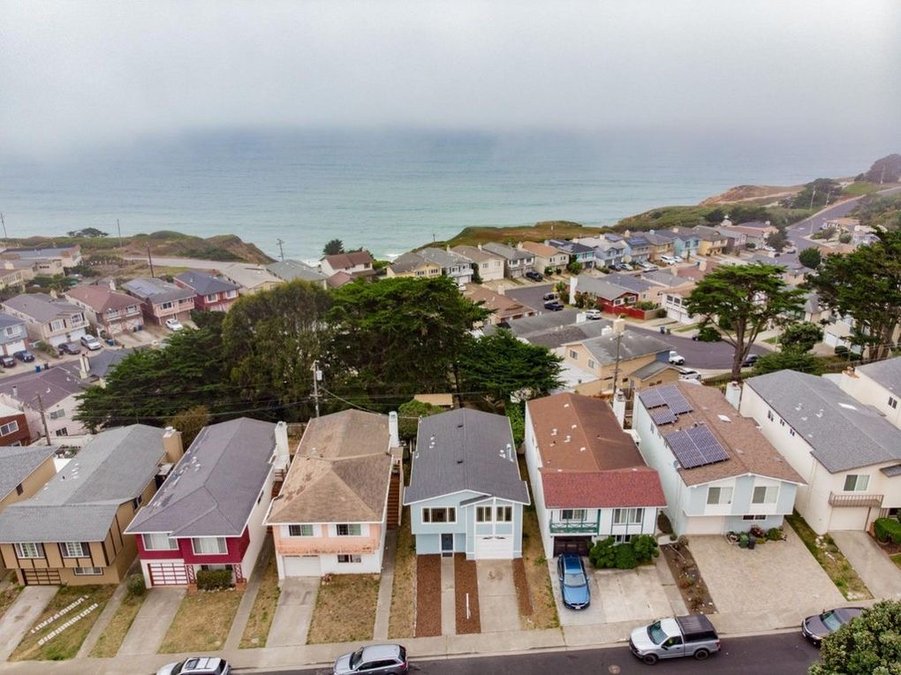
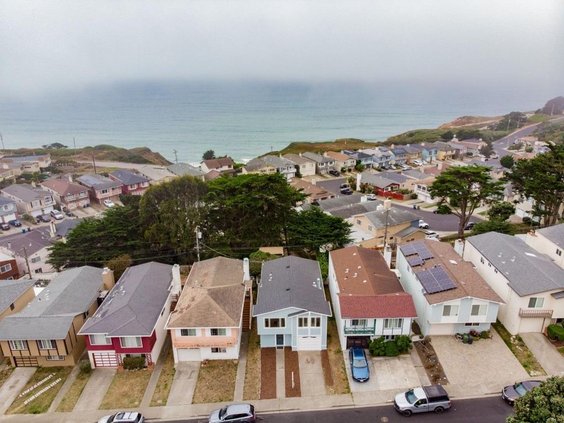
It was inspired by folk-singer/political activist Malvina Reynolds heading out of San Francisco to a gathering in LaHonda when she was driving past a recently built subdivision in Daly City where the homes were virtually built on top of each other.
It starts out as follows:
Little boxes on the hillside
Little boxes made of ticky tacky
Little boxes on the hillside
Little boxes all the same
There’s a pink one and a green one and a blue one and a yellow one
And they’re all made out of ticky tacky and they all look just the same
That was just the warm-up.
Subsequent lyrics smugly paint a picture of repetitive sameness: People put in those “boxes” all go to universities, land professional jobs, drink their martinis dry, play golf, have pretty children, send them to school, send them to summer camp, then off to university before they end up in little boxes as well.
The 1962 song about the conformist middle class almost defined the concept of a “holier than thou” altitude.
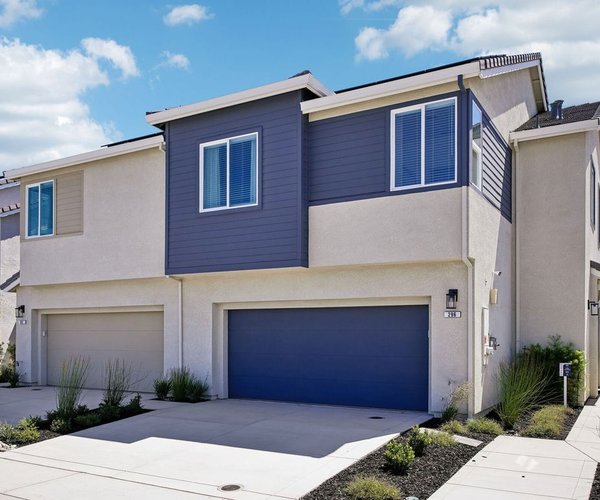
One can only imagine how Reynolds would unload if she were to see the tract neighborhoods built in Manteca, Tracy, Lathrop, Mountain House, and basically anywhere in the California or the United States since the 1960s.
Dismiss what sameness you see that exists in basically every subdivision that typically offer variations on three to eight basic models with arguably even more limited color options that popped up in the aftermath of World War II when pent up housing demand triggered an unprecedented housing construction explosion.
Demean all you want the “walled” off neighborhoods, homes lining streets in cookie cutter configuration, and parks strategically dropped here and there.
At the end of the day — especially as they age and newer generational waves of buyers with inflation fattened paychecks rise in an era where a four-pack of prefabricated public restrooms cost $600,000 a pop — the private sector economic realities of scale that trigger such sameness house more people than any direct “housing development program” ever devised by Uncle Sam or Sacramento.
Yet, we are supposedly in a perpetual housing crisis.
And the deficit when it comes to how many houses we need to “catch up” with the demand and bring prices in California more in line with the national average range from 1.3 million to 3.7 million housing units depending upon who in Sacramento or what think tank is defining the numbers.
Even taking the low end of how much the “crisis” keeps growing, we are supposedly adding a minimum shortfall of 70,000 units with each passing year.
That is after construction started on 102,700 housing units — single family homes and multiple family units — in 2025.
Perhaps we don’t have a housing crisis but rather a cultural expectation crisis.
Extended families and multiple generations living under the same roof was the norm and not the exception before World War II.
As for those $700,000 unaffordable new tract homes being built today, they will be affordable homes 40 years down the road when the average household PG&E bill is $3,500 a month and minimum wage is $60 an hour.
Of course, homes were more “affordable” in 1962.
People weren’t diverting incomes into getting a new $1,000 pocket computer ever year, taking multiple vacations, buying vehicles that were way beyond basic transportation, or paying 50 percent more for a meal by using app delivery services.
Cars, as an example, have been improved in terms of safety and performance. Such advances do come at an extra price.
The same goes for the drain on our collective pocketbooks for better healthcare outcomes.
So do state mandates for everything from solar power to sprinkler systems.
That cost is loaded in the front-end of a home purchase as opposed to being addressed down the road in future years where households more often than not are better positioned financially.
The bottom line is our homelessness numbers are a mere drop compared to the extreme housing shortage one is led to believe California has based on the non-stop channeling of Chicken Little.
There are housing challenges and there is a need to have an economy where people are willing — and can — move up to better paying jobs.
The millions that needed to be housed have either moved to another state, have living arrangements that are working whether it is with other family or friends, or simply don’t exist.
As for the ticky tacky built by private sector developers that Reynolds so famously scorned, don’t knock what is successfully doing much of the heavy lifting.
Without private sector new home builders, we would have a real housing crisis.