The Lincoln in Placer County that I grew up in was part factory town, part commuter town, and still part farm town.
It was a place of loud whistles and loud sirens.
The most common emitted from atop a building at the “pottery” — now 151 years old and still ticking — that started out as Gladding, McBean & Co, was bought by Interpace, and then resumed the original name when bought in 1976 by Pacific Coast Building Products.
The pottery in its heyday employed 300 people turning clay into roof tile, sewer pipe, and terra cotta architectural facades.
Our home was within two blocks of the factory.
You could set time by the factory whistle that was clearly audible across the town of then 3,100 residents.
The exact time of the start and end of shift whistles escapes me, but the lunch whistle went off at high noon and the return to work whistle was at 12:55 p.m.
The pottery whistles that pierced the air like clockwork Monday through Friday weren’t as jarring as the fire department siren.
Lincoln was an all-volunteer fire department at the time.
One loud blast signaled a medical emergency or an accident.
Two successive blasts were for a fire.
Three blasts was a mutual aid call, most of the time to assist the California Department of Forestry with a rural structure or grass fire.
The largest chunk of volunteers worked at the pottery. Plant management had no issue with those workers departing during a shift to respond to a community emergency.
The fire siren didn’t go off that much. Sometimes a week would go by before it was heard.
All volunteers had radios in their vehicles along with turnout gear.
The siren was the initial alert that did double duty. It also warned residents to be prepared to clear the streets.
That’s because volunteers would be jumping into their vehicles and making a bee-line to the fire station on the edge of downtown next to the civic auditorium near Leles’ Public Market four blocks from the front gate of the pottery.
Basically, the first firefighters there were the drivers for the engine and the rescue van.
Some would literally hop on a running board and grab handle bars on the rear of the engine as it pulled out of the driveway.
Others, arriving late, would follow in their vehicles as would others still enroute.
That level of fire and emergency response model worked for Lincoln until it didn’t.
In the early 1990s as the city grew and calls increased, Lincoln switched to a full-time fire department.
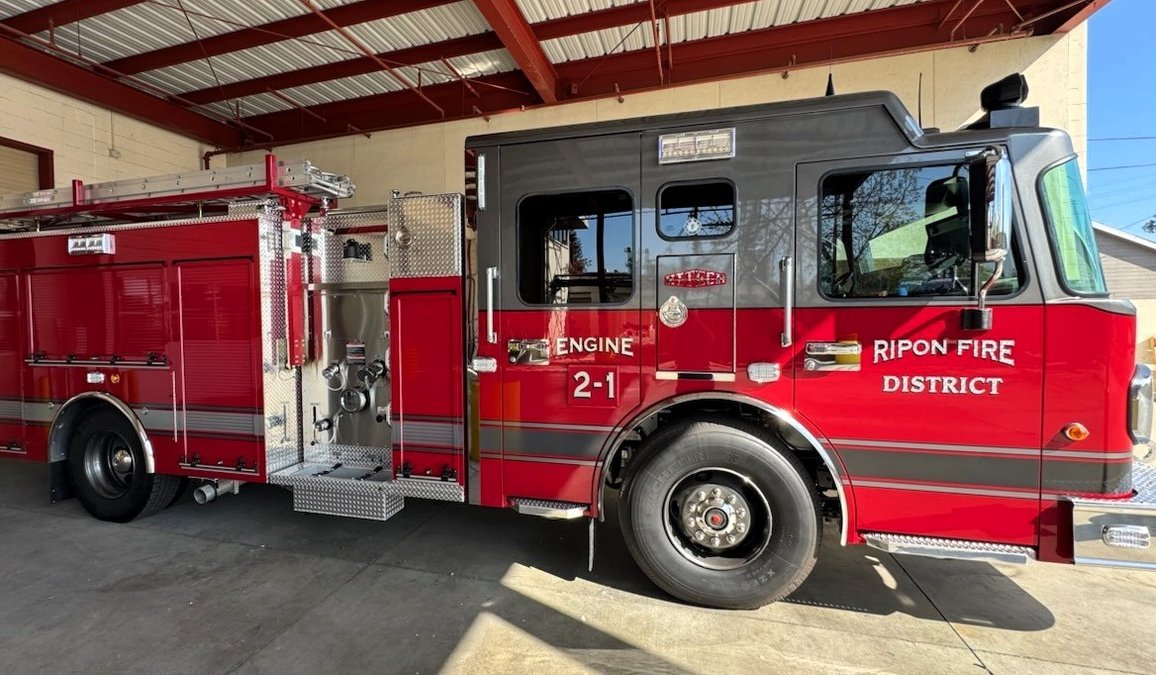
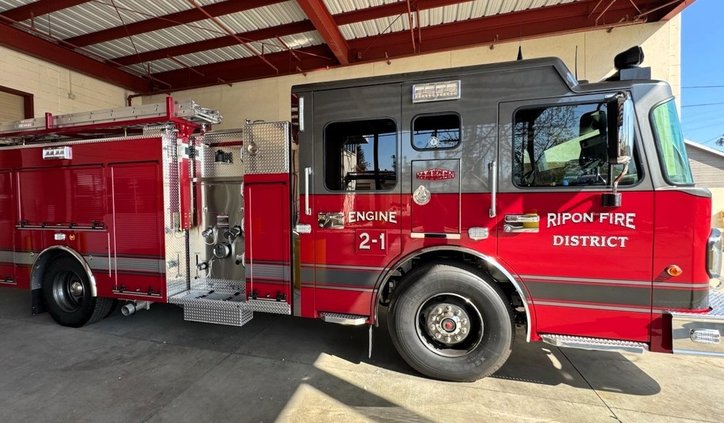
What brings this up is the crossroads property owners in the Ripon Consolidated Fire District are at today.
Lincoln, which is now at 58,000 and growing, did not spread the burden of running an urban fire department across non-city property owners across the 196 square miles that comprises the Western Placer Unified School District.
There was no need to as the county helps fund the Lincoln CDF station through a rural tax assesment.
But in Ripon, the decision was made years ago to consolidate districts, wedding one with the township to one that was 100 percent rural.
A reasonable person wouldn’t disagree that the City of Ripon needs a properly staffed department to handle urban needs.
An argument might be made that those in the rural parts of the district farthest from the existing manned station and the second that would be manned on River Road at North Ripon Road should the additional parcel tax assessment pass in August will benefit the least.
That’s not true, however.
Increased call volume primarily within Ripon city limits means the odds the lone manned engine company is tied up on a city call when an emergency occurs in the rural are.
Passage of the tax hike means both rural and city response times in a best case scenario will decrease and in a worst case scenario won’t increase.
Without the tax, response times will continue to increase to further undermine the best possible outcomes in a medical emergency fire.
Mutual aid only goes so far. The pullback Salida Fire District will have to do after their tax measure failed last month, is an ominous sign.
Splitting rural from city is a non-starter given the money needed to do so.
Like it or not, the city and countryside are in this together.
As far as those that think you can turn back the clock and rely on volunteers to man a second fire engine, that isn’t going to happen
This is 2026, not 1976.
Not only do volunteers have to be in district most of the day meaning they work here, but they have to be able to walk out the door on a second’s notice.
Then enough of them have to make their way to the fire station.
Those days are long gone.