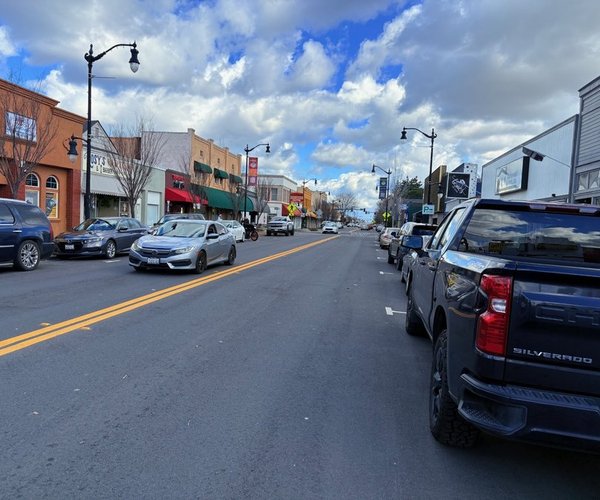
The growing trend of transit villages in California — where housing is clustered above stores and offices near passenger stops on light and heavy rail commuter lines — could help pump more life into downtown Manteca.
That’s because when expanded Altamont Corridor Express service starts in 2023 you will be able to board a train and reach job centers in San Jose and Sacramento from the downtown transit center.
The first step toward the possibility of Manteca developing a unique abnormality in a non-urban California city of a transit village developing in the heart of a downtown took place Thursday.
That happened when the Manteca Planning Commission recommended the City Council approve changes to municipal rules about what is allowed to be built and open in the downtown core. It’s a special overall zoning district that is almost all within a quarter mile walk to the transit center.
New housing was banned in the city’s heart several years ago in a bid to combat issues with boarding house style apartments downtown.
Over the years poorly managed second floor housing led to a concentration of individuals that were substance abusers that in turn exacerbated the downtown homeless problem.
The second floor living quarters are also home to those that don’t create issues such as farm workers and those needing shelter that have minimum financial resources.
The new rule being proposed will allow second floor housing as long as units have their own kitchens and bathrooms as well as working thermostats that allows occupants in each unit to control the temperature of heating and air conditioning.
The requirement is designed to prevent more housing like what already exists downtown.
Many of the units now in use in second floor space are simply rooms — sometimes just big enough for a bed dresser, and chair. Tenants share a common bathroom. In most cases there is not a cooking area provided meaning they need to resort to hot plates and microwaves.
That said, in the past decade at least one business owner resided in a traditional apartment above their store.
The proposed rule change — just like the zoning prohibition for the core district that eliminated housing as a use — doesn’t impact such operations already in place. They are grandfathered in as a non-complying use.
However, no housing that fails to meet the proposed stipulations would be allowed.
The rule change would allow owners of existing buildings — or those that would build new structures — the ability to have housing above store and commercial space.
That would mean there could be multiple stories of housing.
And while nothing major may happen for years, it opens the door to changes in existing buildings as well as structures built from the ground up to incorporate housing into private sector investment strategies.
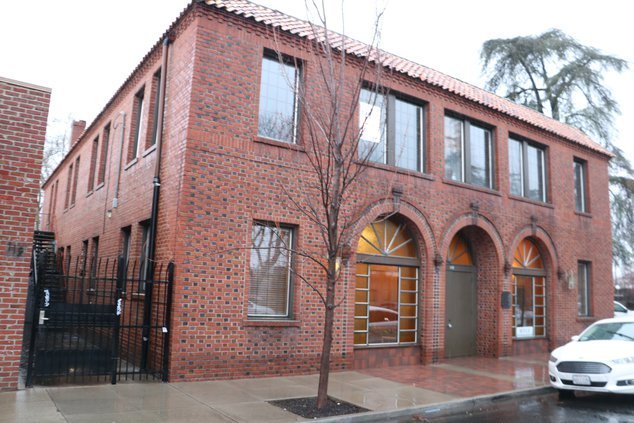
As an example, owners working to restore the Old City Hall — the two-story brick structure damaged by fire last year that borders both Sycamore and Manteca avenues across from Library Park — are exploring options that could include a restaurant on the ground floor and several apartments or condos on the second floor.
Community Development Director Chris Erias said that the start of ACE service gives the city a unique opportunity.
The environmental report for the ACE service extension to Ceres and Sacramento projected as many as 1,500 initial weekday boardings at the downtown Manteca transit center. The city has been buying land to expand the existing parking lot to accommodate commuters.
Most are expected to either drive or be dropped off at the Manteca station. The city also intends to make Manteca Transit service more muscular to accommodate train arrivals and departures.
Based on what has happened in other communities, state officials anticipate that areas within a mile of the transit station will see an increased interest over time in existing housing from transit-orientated people that could eventually lead to tear downs with replacement housing being designed with multiple units.
Much of that area is just outside the core district near Manteca High.
Such a strategy is clearly long-term. But as Manteca literally keeps growing in importance as an exurb within the greater San Francisco Bay Area when it comes to housing and the movement of goods it could create a synergy.
Most transit villages such as the one that River Islands at Lathrop is pursuing at the Valley Link rail station typically have concentrated housing units that can support up to 1,600 people.
Having 1,600 consumers plugged into a transit village lifestyle is considered critical to lure shops and restaurants people can walk to as it represents a critical economic mass.
Manteca could easily piggyback on the transit village concept to pump up downtown while at the same time creating higher density housing. That could happen due to the ACE service being in close proximity. Such a hybrid approach without the need to find a private sector investor to invest tens of millions of dollars to get the ball rolling could slowly create the plugged-in consumer base to further downtown’s transformation.
Manteca already has housing within close proximity that can serve as a magnet for commuters seeking living space near the station to allow them to walk to and from trains.
As such housing turnover via renting or buying could create a built-in population more likely to frequently use the types of restaurants and venues that some envision for downtown.
That, in turn, could attract private sector investment to purchase and replace existing homes and buildings with multiple units including those with commercial space on the first floor.
Manteca was able to build the synergy needed to go from a fledgling stop along the railroad to planting roots as a town thanks in part to second floor housing. Between 1910 and 1920 the building of what might be considered in today’s vernacular as residential hotels, provided housing alternatives for those not in a position to secure or build a house when they initially moved to Manteca to seek work at Spreckels and other ag-related employment.
To contact Dennis Wyatt, email dwyatt@mantecabulletin.com