Manteca Unified has three water problems when it comes to being able to build two needed elementary schools in southwest Manteca.
They need protection from it, access to it, and to get rid of it.
A $363 million project moving forward will protect both school sites from San Joaquin River flood events that have a 1 in 200 chance of happening in any given year.
That said — the current alignment for a cross-levee that is part of the flood control solution — would render a third elementary school site on the back burner known as Rustic useless as the levee would cut the campus site in half.
One of two sites the district is trying to start building on in the next year, 17 acres dubbed Tara after the plantation in “Gone with the Wind”, needs to get rid of water.
The other — part of a 56-acre site on Tinnin Road that may eventually include the fourth comprehensive high school within the City of Manteca — needs access to it.
The most perplexing problem is getting rid of water.
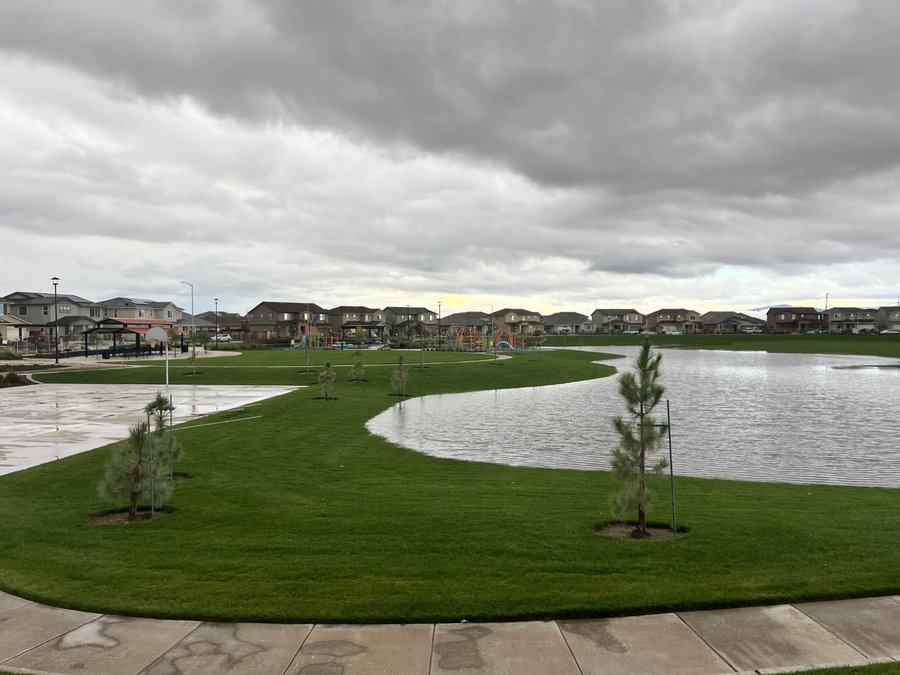
Getting rid of storm runoff is also an issue that is requiring developers to hold off on building homes on approved lots to allow large swath of land to be used as temporary retention basins.
And while the school district has been working with the City of Manteca, South San Joaquin Irrigation District, and developers for the better part of two years, the only thing for certain is the school that there is the biggest pressing need for — the elementary school on the Tara site — won’t open in the fall of 2027 as originally hoped.
Efforts to come up with a temporary solution that Mayor Gary Singh believes could come together in the next month or so is key for the district to be able to proceed with building a campus for 1,200 to 1,500 students.
There’s been the expected finger pointing as to who is to “blame” for the storm drainage issues in southwest Manteca.
It is being done without taking into account three major realities — the unique natural hydrology of the area, how major infrastructure is paid for, and state rules governing storm runoff.
The hydrology
Groundwater is typically found at 25 feet in eastern Manteca.
And for years, it was generally accepted that the water table rose to 15 feet as you moved east.
Then more than a decade ago, the city — in extending Daniels Street and its accompanying infrastructure such as sewer and water lines to McKinley Avenue as part of its endeavor to lure an indoor water park resort — ran into groundwater 6 feet down.
Various developers — from east of Tinnin Road to near the Oakwood gated community — started approved projects without running into groundwater issues.
But in subsequent phases, it was found to be higher when pipelines were installed.
That has led to projects in the heart of southwest Manteca dealing with even higher groundwater tables, with temporary basins holding water weeks and even months after the last storm.
Basically, the closer to the San Joaquin River and the outer edge of the Delta non-potable water tables are much higher.
The 17-acre Tara site has groundwater currently at roughly 5 feet. It has, over recent years been tracked higher and lower.
The State of California requires MUSD to demonstrate it has the ability to dispose of storm runoff before the site can be approved.
And it has strict guidelines restricting any storm retention basin that is placed in a school site can be in terms of how deep it is due to safety concerns involving students.
As such, an on-site storm retention basin would likely render the 17-acre Tara site too small to build an elementary school
The aforementioned ground water levels reflect non-potable water. Municipal wells, in order to tap into drinking water, go down at least 190 feet.
The blame game
There are some that place the problem squarely on the shoulders of the City of Manteca for not having required development to provide adequate storm runoff infrastructure.
Test bores the closer you get to the river can easily miss the locations of underground water tables.
Manteca, like all other cities, engineer storm systems based on runoff generated by non-permeable surfaces such sidewalks, roads, rooftops, and parking lots over a defined area.
They then create a model that determines the ultimate size for storm system pipes to handle the runoff. A cushion of safety is built in and then the fees to pay for the improvements are assessed accordingly.
That said, there is no indication when the district obtained the Tara site that any tests were conducted by the MUSD regarding groundwater.
Paying for the needed
runoff improvements
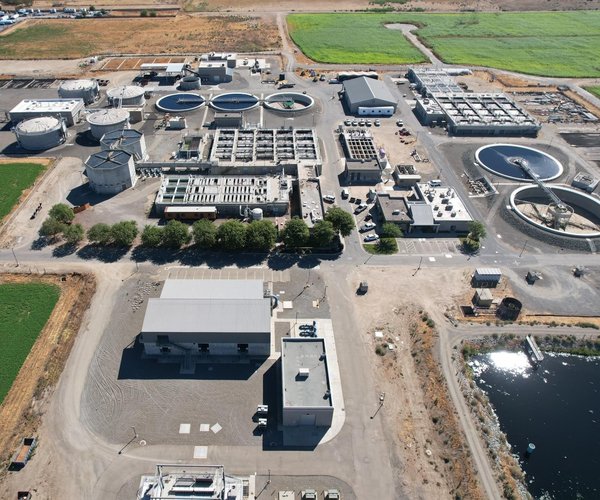
The City of Manteca has been working on getting a second outfall for storm water to dump into the San Joaquin River for years.
Currently, the only outlet in place is the SSJID’s French Camp Outlet than runs along the train tracks separating the cities of Manteca and Lathrop.
The city, after a number of years, has successfully completed the state permit process to create a second outfall to the river to basically drain much of Manteca south of the 120 Bypass.
The contract for the outfall and a partial pipeline was awarded last month with construction expected to start in June.
The $7.9 million cost is being picked up by development fees. The city also needs to put in place a pump station and pipeline to connect with what developers have installed for various neighborhoods.
The city has a policy of requiring development to pay for infrastructure — including main trunk lines — instead of bonding against general fund and putting existing residents on the hook for improvements needed to accommodate growth.
Such a policy can mean a long-time for a project to be completed.
A prime example is the gravity line to move wastewater under Woodward Avenue from south of the 120 Bypass neighborhoods to the treatment plant.
It was started in 2010. Work on the last segment will get underway June 1.
Once completed, the forced line that was a “temporary” solution that developers also paid for, will be cleaned and used to convey treated recycled water by gravity from the treatment plant to irrigate parks and such.
MUSD pursuing two
options for Tara, Tinnin
Manteca Unified is pursuing two options for the Tara and Tinnin campuses.
One assumes they can access the city storm water system for Tara as well as for Tinnin that would also include a connection for wastewater and drinking water.
Tara is within the city and can access existing sewer and water lines.
The other option is to for the district to address its storm runoff needs on its own as well as develop its own water and septic system for Tinnin.
The district is now working with a developer to see if a nearby existing storm retention basin can be increased in size to handle the runoff from the Tara site.
Meanwhile, the City of Manteca is trying to work out a temporary solution with SSJID to use its facilities — the French Camp Outlet — to handle the Tara runoff.
Keep in mind the SSJID needs to make sure it doesn’t create problems by exceeding the current capacity of the French Camp Outlet.
The outlet was also built originally to drain farmland including excessive irrigation flows and not for urbanized development.
The SSJID, a number of years ago, completed a study on needed improvements, but the city wanted to double check it based on the assumptions of a previous city public works director that didn’t agree with the needed outlet improvements as outlined by SSJID.
Tinnin site issues
City officials want the school district to force adjacent property owners to the Tinnin site to annex to Manteca as part of the MUSD bid to annex to the city so they can build a school on that site to serve homes that the city is approving to be developed.
The district, for its part, doesn’t believe they should have to convince nearby property owners to annex.
At the same time, the city hasn’t offered an alternative which is providing an exception to its rule that it doesn’t allow sewer and water service to be extended to land that is not willing to be annexed eventually to the city.
There is only one reason the Tinnin school will be needed; residential development within the City of Manteca.
The city had no qualms in working with MUSD to extend a water line to Nile Garden School — a rural elementary campus roughly a mile south of the city limits where more that 95 percent of the students body resides within the city.
The district is developing a plan that would include a water well, large septic system, and a storm retention basin that could easily add 10 percent or more to the cost of the Tinnin elementary school development .
The need to make
a decision soon
The school district has made it clear it needs in the near future to move forward one way or another with the two elementary schools.
They are already more than a year behind the adopted timetable.
If they can’t be part of the city’s storm system at Tara — or access city water, city wastewater lines, and city storm lines at Tinnin — it will significantly increase school development costs.
In addition, it would saddle the school district with outgoing maintenance costs for a septic system and water well at the Tinnin site.
Manteca Unified has three elementary schools they need to build in the next few years. The third is Ethel Allen in Lathrop.
School officials noted Lathrop city leadership have made sure MUSD’s sewer, water, and storm runoff needs for Ethel Allen are being addressed.
That could mean the school that there is the least amount of need for among the three, could be build first.
In doing so, it could set the stage for students from fast growing southwest Manteca to be bused north of the 120 Bypass or even to Lathrop if the issues can’t the resolved with Tinnin and Tara in a timely manner before Manteca growth created a classroom crunch.
The three schools will cost $150 million or $50 million apiece.
The district is using community facilities district funds to secure state bond money for new schools.
To contact Dennis Wyatt, email dwyatt@mantecabulletin.com