Otto Robinson, a master mechanic, was killed on Dec. 6. 1955 when a six foot-diverting pipe burst and he was swept away in muddy water and debris.
Coonrad Huckson, 50, of Jamestown, and Walter Hooper, 37, of Pollack Pines, were killed on Jan. 13, 1956 by flying granite when vibration of a drill set off buried explosives.
Wesley Allen Osbourne, 27, of Oakdale was killed June 4, 1956 when he fell from a “bucket” elevator in an air escape shaft.
Arthur Carlson, 56, was killed on Dec. 11, 1956 when a giant rockslide buried him beneath 100 yards of rock and earth.
The five died building either Bearsdley Dam or Donnells Dam that were part of the Tri-Dam Project that also included Tulloch Dam constructed on the Stanislaus River by the San Joaquin Irrigation District and the Oakdale Irrigation District
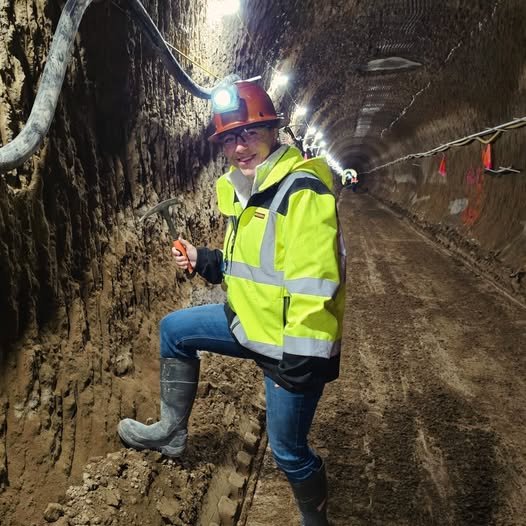
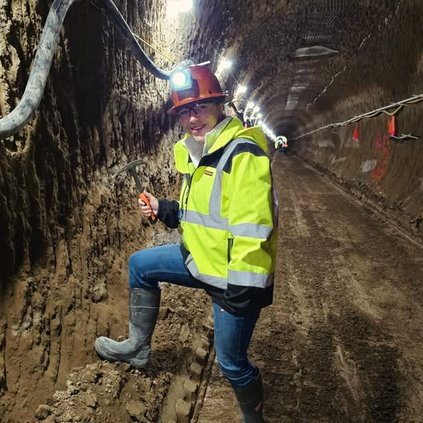
Last week, geologist Twyla Cappuro, 35, of Coulterville died in a tunnel collapse working on the SSJID-OID Canyon Tunnel Project below Goodwin Dam northeast of Knights Ferry on the Stanislaus River.
There are 110,00 acres of farmland that are now irrigated — and will continue to be irrigated — in San Joaquin and Stanislaus counties.
That is in addition to water flowing to 215,000 people in Manteca, Tracy, and Lathrop dependent on SSJID for part of their municipal water supplies.
Rarely doesn’t water flow when people turn on their faucets or farmers open an irrigation gate.
In the case of urban users, water not flowing is an issue on their side of the shut-off valve.
For farmers, it is either a drought or a canal blockage of some type.
The 12,000 foot tunnel project that Cappuro was working on as part of the Provst Pritchard Consulting Group was designed to assure water deliver reliably.
A 110 year-old plus open canal — along with a series of short tunnels — cut into the steep canyon wall has been plagued with rockslides over the years.
SSJID relies 100 percent on the canal being replaced to divert water from Goodwin Dam.
OID relies on the canal as well to serve part of their district with a second canal that diverts the majority of their water needs
Given SSJID has only the 36,000 acre-foot Woodward Reservoir for in-district water storage, a major slide at the height of the growing season could have dire consequences especially when irrigation runs are an average of every 10 days.
You just don’t clear a major rockslide and stabilize a canyon wall in a couple of weeks.
The SSJID does have some in-district wells but not enough by far to cover irrigation needs.
The cities have well water, but they’d be hard-pressed to meet spring, summer, and fall when demands on water wells alone.
Providing reliable water supplies has always been — and will continue to be — a risky business.
Ninety-six workers died building Hoover Dam on the Colorado River between 1931 and 1936.
The Bureau of Reclamation history regarding Hoover Dam notes a father and son who were killed 14 years apart.
Technically, though, both did not die working on the dam per se. when Reclamation employees J.G. Tierney and Harold Connelly — who were conducting geological surveys from barges in the Colorado River — fell into the river and drowned. That was 6 years before the dam was authorized, and 8 years before construction began.
Tierney’s son, Patrick Tierney, fell from a water intake tower on Dec. 20, 1935. He was the last death during the dam’s construction.
That ironic tidbit gets little play but a gigantic myth does.
The myth? It’s been widely asserted that workers are encased in concrete in in the 726.4-foot dam. The Bureau of Reclamation said it never happened.
Closer to home, 14 died building Shasta Dam between 1938 and 1945 while 34 died building Oroville Dam from 1960 to 1967.
Building dams and tunnels is risky business.
But so are a lot of other tasks needed to keep traffic flowing and provide infrastructure as well as to power the economy — and keep it moving.
Eleven died between 1980 and 1981 during the construction of PG&E's Helms Pumped Storage Project in the Sierra east of Fresno.
In 2024 across the United States, 1,034 workers were killed on construction sites, 475 in agriculture and forestry, 353 in manufacturing, and 92 in mining or oil drilling accidents.
The Canyon Tunnel Project mishap last week was a stark reminder that the things we take for granted — water systems, freeways, bridges, tunnels and such — often come at a great cost.
A GoFundMe account has been set up to assist with Capurro’s funeral expenses and to support her two young children.
To contact Dennis Wyatt, email dwyatt@mantecabulletin.com