Growth — in terms of either stopping it or slowing it down — is likely to weigh on the minds of Manteca voters in the Nov. 3 municipal election.
Candidates might promise to either stop it or slow it but there’s one problem with such rhetoric — they can’t do it.
State law through 2030 suspends the enactment of local downzoning and housing construction moratoriums.
Senate Bill 330 signed into law in 2019 by Gov. Gavin Newsom was designed to address California’s historic housing shortage.
The ban on growth caps was originally set to end in 2025 but it was extended to 2030 by the California Legislature. Housing experts — based on the state’s continuing shortage of housing — believe it is likely the moratorium on growth restrictions will again be extended beyond 2030.
Not only can cities not add new restrictions on growth — or outright moratoriums — but existing ones can’t be enforced until 2030.
Even with that being the case, Manteca is highly unlikely — short of more than doubling current housing production — even to come near the city’s current growth cap of 3.9 percent on sewer allocation while the state has effectively suspended it.
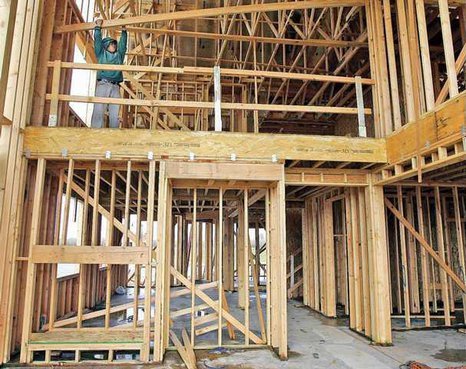
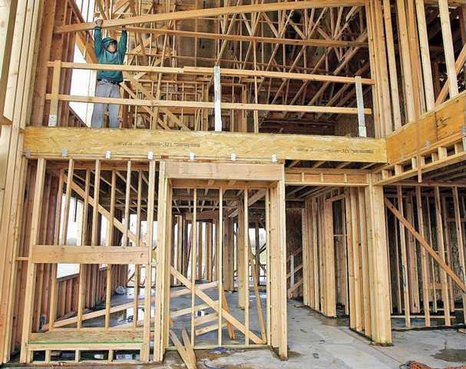
Manteca last year issued building permits for 818 new single family homes.
In terms of population, Manteca grew 1.5 percent last year — roughly 40 percent below the growth cap rate
The 818 homes is down from the record 1,306 new homes started in 2024.
The 2024 home production number easily outdistanced the No. 2 year of 1,075 housing starts in 2000. That was three years after the first tract home south of the 120 Bypass was built near Woodward Park.
Manteca’s growth cap
was first in SJ Valley
Manteca set the trend when it comes to controlled growth in the Northern San Joaquin Valley.
The 3.9 percent growth cap on residential housing permits was tied to the number of sewer allocations that could be issued in any given year was codified in Municipal Ordinance No. 800 in 1988.
It was years before any other jurisdiction in the region even started seriously toying with the idea of growth caps.
That, though, still wasn’t enough for some people.
A group known as the Concerned Citizens for Planned Growth rolled out a plan to put a 2 percent growth cap on the ballot and started collecting signatures. It was countered by developers who wanted a 4.5 percent growth cap instead.
That prompted then Mayor Jack Snyder to roll out an initiative plan that basically mirrored the 3.9 percent growth cap on residential housing. Developers backed down and ultimately the more stringent 2 percent growth cap didn’t qualify for the ballot.
The political skirmishes 41 years ago basically made it clear to elected leaders to resist any efforts by developers to mess with the upper limit on the growth cap.
The city council, though, did make an exception 20 years ago for age-restricted housing — to accommodate Del Webb at Woodbridge — and affordable housing to have additional allocations in years the cap is reached.
The 1970s had ended with four strong growth years capped with a 12 percent gain in residents in 1980 that took the city’s population from 20,187 to 25,641 or an increase of roughly 25 percent in 48 months.
The growth rate slowed a bit but then it hit a record 12.1 percent in 1985 followed by a 9.2 percent jump in 1986 that took Manteca’s population up from 29,027 to 35,437 in two years. Manteca today — some 40 years later — has almost 97,000 residents.
The proverbial straw that broke the camel’s back was the city’s inability to keep up with growth. Fees on growth were inadequate or non-existent for a wide variety of amenities such as parks and fire services.
The city was still recovering from a near-bankruptcy episode in 1980 when the budget reserve was a razor-thin $1,800. Manteca’s financial trials were heavy on civic leaders’ minds during the building boom of 1984 to 1987.
They didn’t want a repeat of the 1980s experience which forced the city to leave the just completed Louise Avenue fire station unopened because they couldn’t afford to staff it while city police were using old CHP cars with excess of 90,000 miles on them when the city took delivery of them as primary patrol units.
Many residents shared the concern that Manteca was growing faster than basic services could keep up with. The sentiment was Manteca was growing too fast as neighborhoods such as Mayors Park in the triangle formed by the railroad tracks, Louise Avenue and Union Road seemed to develop overnight.
The ordinance — the first growth restriction of its kind in the Northern San Joaquin Valley — went into effect just as the economy started receding. It would take 12 years before the cap would be reached in a particular year to effectively stop issuing sewer connection allocations.
Tying into sewer allocations was viewed by legal experts and civic leaders at the time as the easiest way to implement a growth management plan.
How growth cap works
Ordinance No. 800 was put into effect on Aug. 16, 1988 as the guideline for how the first phase of the municipal wastewater treatment plant expansion would be utilized to divide sewer capacity. It was subsequently extended in future years to govern how the second phase of the treatment plant would have its capacity parceled out.
A percentage was set aside for every category in terms of how much capacity of the plant would be allocated to a particular use. Those percentages set aside 60 percent of the overall capacity to housing with no distinction being between apartments, single family homes, duplexes or mobile homes. The other categories — schools, industrial, retail and office divided the rest of the capacity.
Based on the intent and the actual wording of Ordinance No. 800, city leaders view the growth management plan as a success.
That, however, isn’t a universal view. There are those who believe the city has been growing too fast.
Legal counsel steered the city toward using sewer allocations and not actual building permits when the ordinance was implemented due to ease of tracking as well as the economic realities of moving any development project forward.
To determine how many sewer allocations can be issued during a calendar year, city staff inventories all housing units existing in the city at year’s end and multiplies it by the 3.9 percent factor to come up with how many sewer allocations — not connections — can be issued in a given year.
Any unused allocations can be rolled over in future years. That has allowed the city to legally grow once since 1988 at a rate faster than 3.9 percent when 1,074 homes were built. Today the growth cap allows for more than 1,000 sewer allocations to be issued in any given year on top of any roll over of unused allocations.
Nearby cities such as Ripon and Tracy that have since adopted growth caps have tied the allowable number of homes to building permits issued and not sewer allocations. They also do not have rollover provisions like Manteca does.
To contact Dennis Wyatt, e-mail dwyatt@mantecabulletin.com