By allowing ads to appear on this site, you support the local businesses who, in turn, support great journalism.
Get ready for a national vehicle tax courtesy of Republicans in Congress
Perspective
tesla
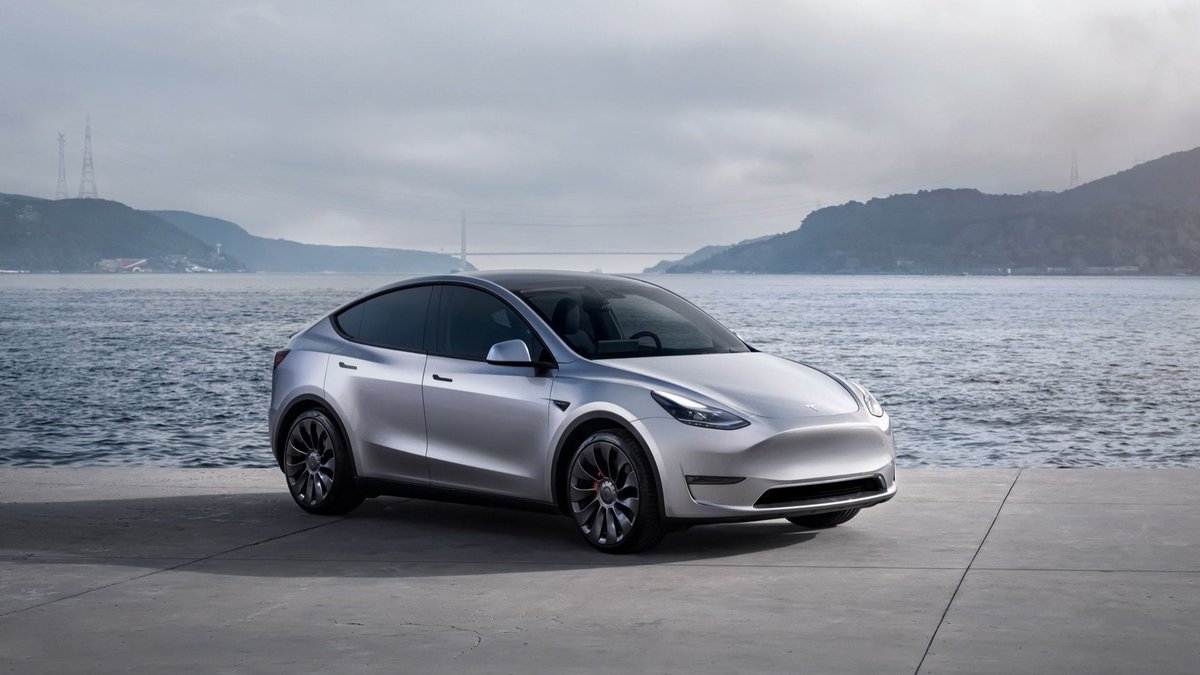
Congress wants to impose an annual federal tax on EVs.

Republicans in Congress are taking a different road than Republicans in Sacramento when it comes to taxing your wheels.

In California, Republicans are famous for opposing the gas tax — with many pushing or seeking to rescind it — as well as vehemently objecting to even additional exploration of a tax based on vehicle miles driven.

The House Transportation and Infrastructure Committee last month opened the door for a national tax on cars.

More specifically the bill — embraced as well by all but one Democrat on the committee — seeks to impose a $135 annual fee on EVs and a $35 fee on plug-in hybrids.

Those fees would be $150 and $50 respectively by 2035.

It also effectively requires the DMV in each state to become tax collection agencies for Uncle Sam.

Refusing to do so could mean the loss of federal funds that account for a fifth of the $44 billion California spent on highways and transportation in the 2022-2023 fiscal year, according to the California Legislative Analyst’s Office.

The proposal is designed as a replacement funding source for federal highway and transportation funding as more people buy vehicles that don’t run on gas or diesel or those that do but are driving ones that are much more fuel efficient.

EVs, are not only paying their “fair share” of the cost to build and maintain roads, but they are heavier which means they are helping accelerate the deterioration of everything from pavement to bridges.

In all honesty, it seems like a fair approach.

But like almost every tax proposal advanced by Democrats and Republicans alike it is being sold aa one thing while leaving plenty of loopholes to expand and commander money generated for other purposes.

There is no “educating” of drivers or even voters in general about how roads are public transportation is funded. There are, of course, plenty of photo ops of said Sacramento and DC politicians cutting ribbons of such endeavors funded by the state and federal government.

It was a Republican President by the name of Herbert Hoover who, 94 years ago this week, signed legislation imposing a 1 cent federal tax on fuel for the expressed purpose of paying down a ballooning federal deficit triggered by the Great Recession.

Congress during World War II increased it to 1.5 cents to fund the buildup of the nation’s defense.

In 1956, it was increased three cents a gallon to fund the Highway Trust Fund with the primary purpose of creating a “national defense” transportation system better known as the Interstate Highway System.

The current charge of 18.4 cents was put in place in 1994 with 0.1 cents dedicated exclusively to addressing LUST — Leaking Underground Storage Tanks.

Thanks to more fuel efficient cars, the advent of EVs, and the federal gas tax not being indexed for inflation, the Congress Budget Office projects the Highway Trust Fund — based on current spending trends — will have a $22 billion deficit starting in 2028 that will reach $295 billion by 2030.

Had Congress imposed a 15 cents per gallon increase several years ago, the CBO indicated there would be no deficit spending into the 2030s.

Gas tax increases are wildly unpopular.

Hard blue Oregon voters in May rejected a gas tax increase for that state with 83 percent casting “no” votes.

Distrust of government and resistant to taxes for the “public good” are the direct result of pandering, misleading, or outright calculated misinformation campaigns by state and federal leaders regardless of their party affiliation.

First, going after EVs and plug-in hybrids does open the door to a national tax on cars that are powered by fossil fuels, biogas, or even hydrogen.

That may indeed be fair, but it is hard to convince people that’s the case when it looks like you are culling the herd by going after those currently in the minority.

A complete shift from a gas tax to either vehicle miles drive or a vehicle tax is likely perceived as political suicide.

But it would be the cleanest, most transparent, and arguably the fairest thing to do.

Better yet, perhaps it is time to rethink the entire way we fund roads in this country.

All but a handful of states get more back from DC in federal road funds than they send to DC in the form of federal gas taxes.

Why send it to DC at all? Cut the federal gas tax completely, and put state-level elected politicians on notice they need to figure out how best to replace it.

There is no reason 20 percent of Californian’s road and transit funds essentially has to go from here to DC and back with the federal bureaucracy taking a cut or Congress putting conditions on how it can be spent.

There is other federal funding involved that can still be distributed as long as there is an overriding need for the federal government to do so.